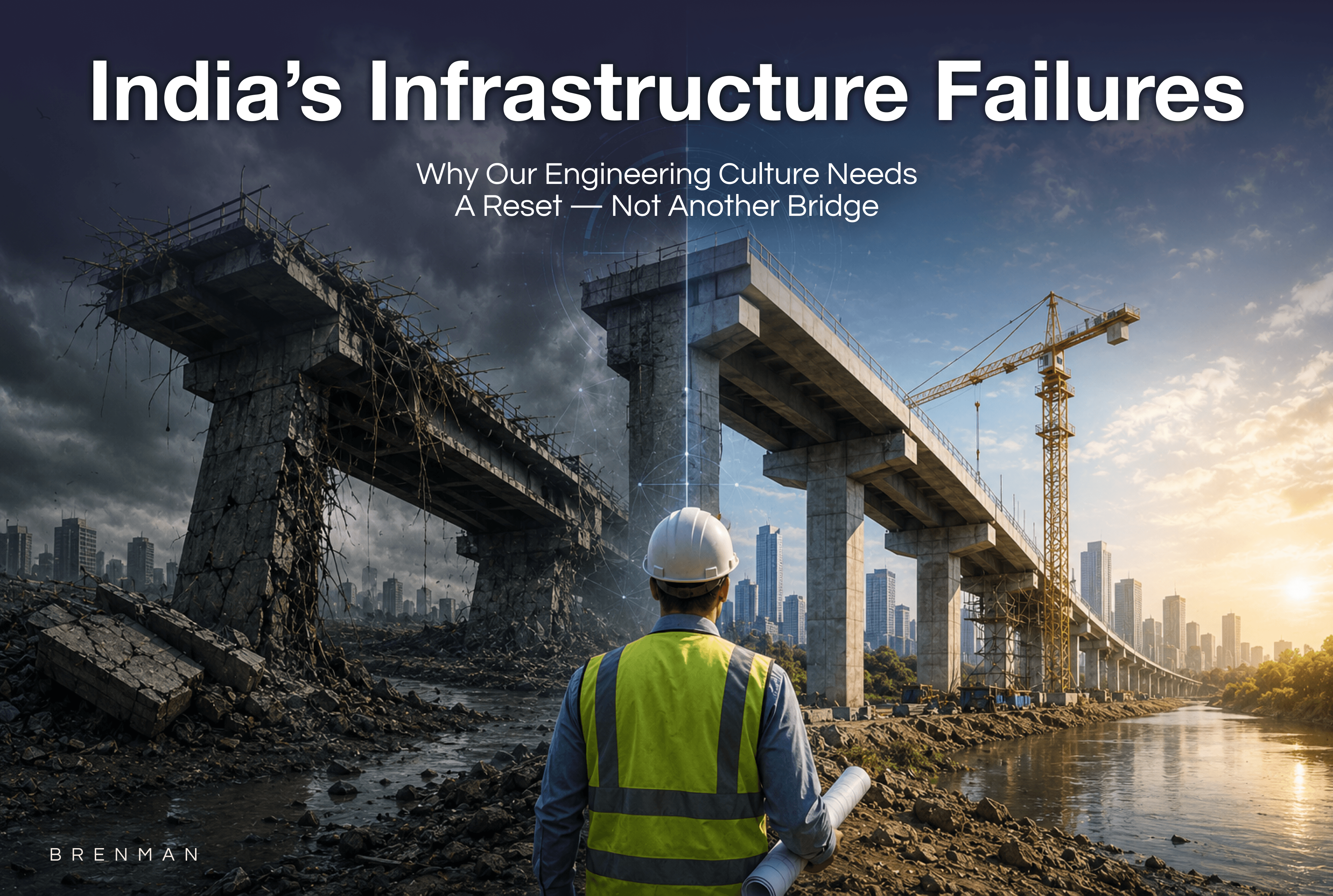
India’s Infrastructure Failures: Why Our Engineering Culture Needs a Reset — Not Another Bridge
Introduction
India is building infrastructure at a historic pace — expressways that slice through states, coastal roads that redefine skylines, and bridges that promise connectivity for decades. Yet, the uncomfortable truth remains:
India is constructing more than ever before — but failing faster than ever before.
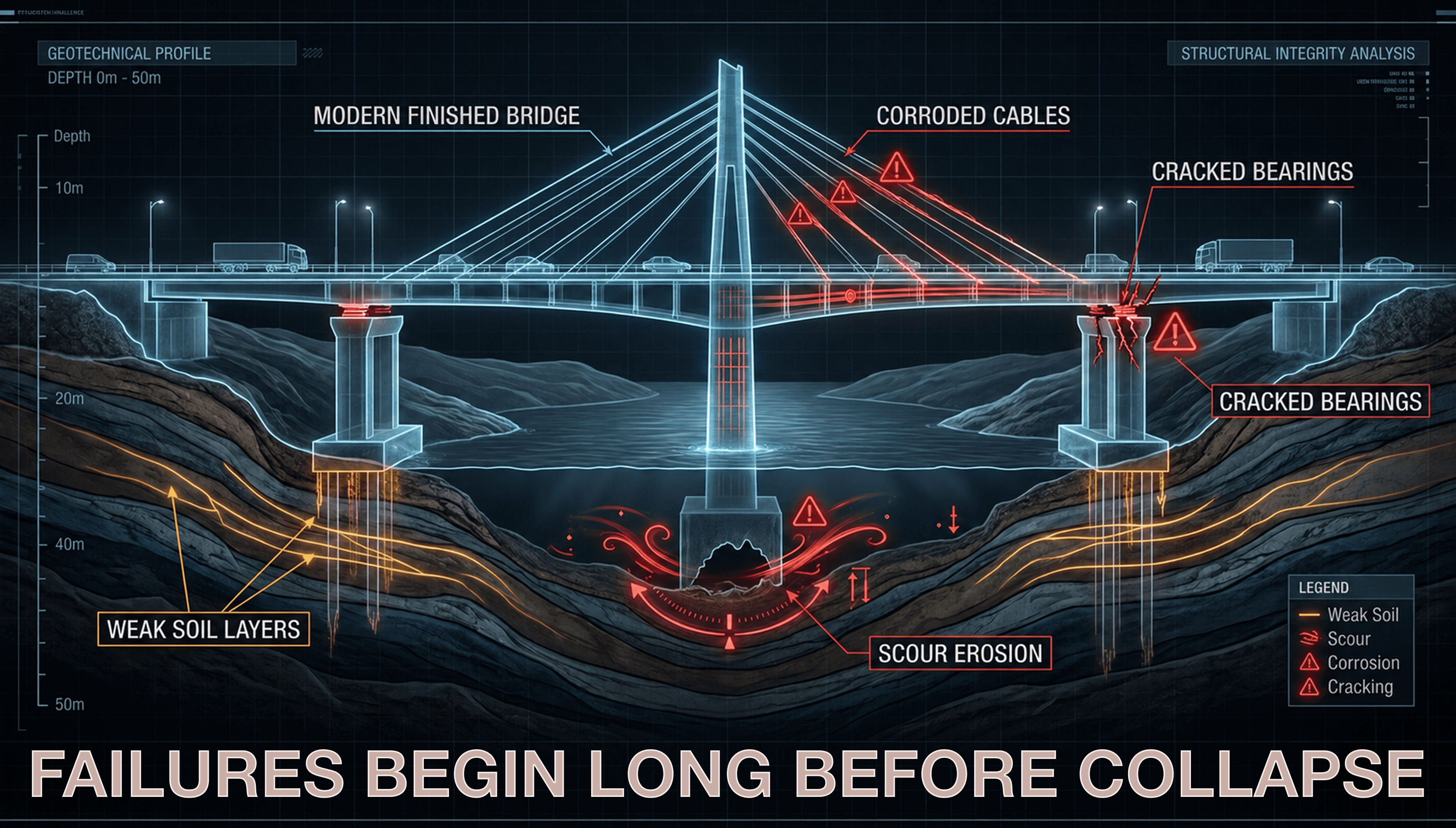
From NH‑66 to Vikramshila Setu to Morbi, our collapses are not accidents.
They are symptoms of a deeper engineering culture that prioritizes speed over science, cost over competence, and inauguration dates over lifecycle integrity.
After three decades in infrastructure, I’ve learned one thing:Structures don’t fail. Systems do.
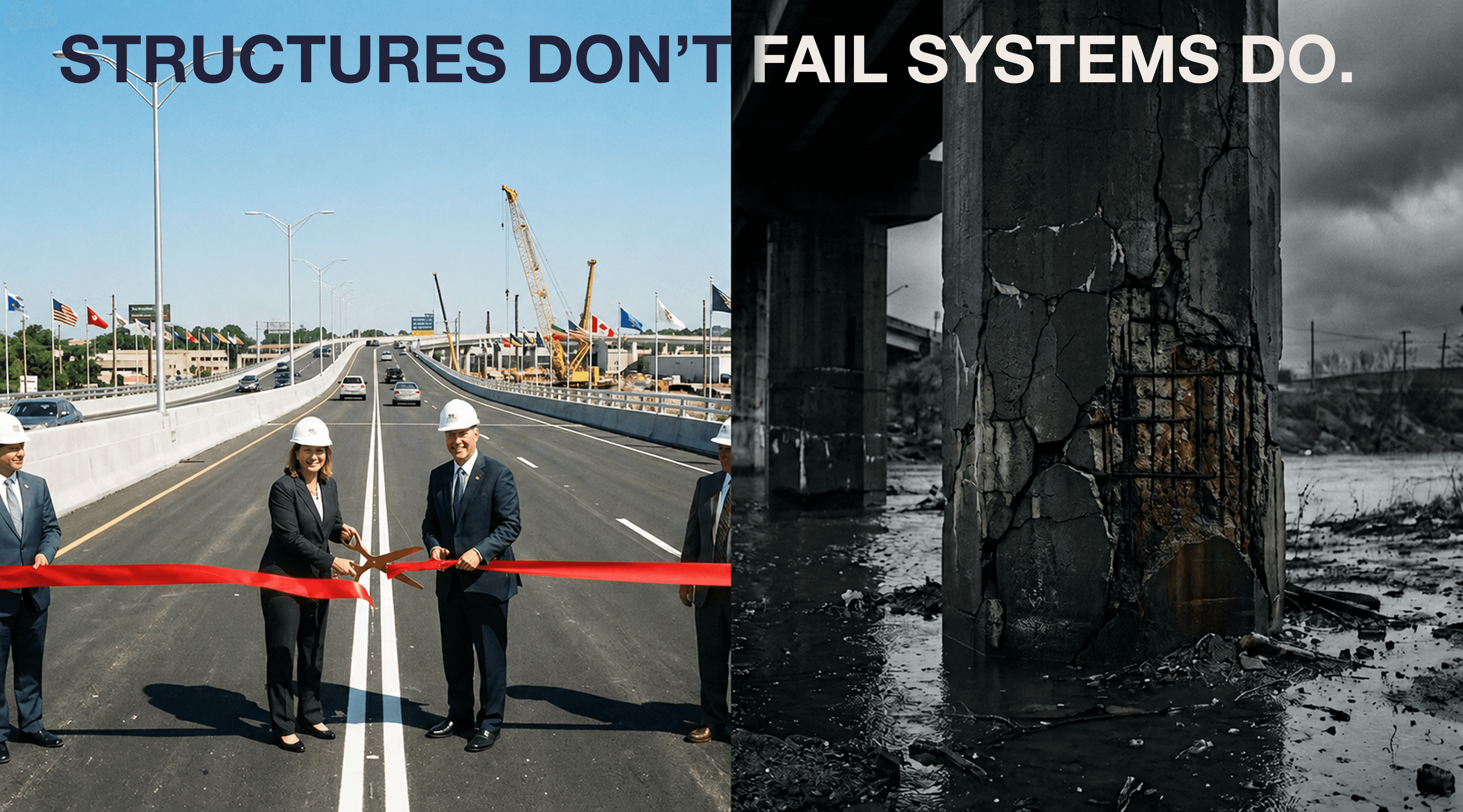
The Most Predictable Failures Are the Ones We Choose to Ignore
Geotechnical Neglect: NH‑66, Kerala
Every major collapse begins underground — in soil we never bothered to understand.
NH‑66 was built on soft, saturated alluvial clay with shear strength far below safe limits. No ground improvement. No preloading. No drainage. No consolidation modelling. This wasn’t a surprise. It was a scheduled failure.
Soil doesn’t lie. It’s the engineers who ignore it.
Bridges Don’t Collapse Overnight — They Die Slowly
Vikramshila Setu: A Case Study in Progressive Failure
Months before the collapse, protective walls around piers had already failed.
Scour had eaten into the foundation. Expansion joints were screaming for attention. Bearings were distressed. No structural health monitoring existed.A 4.7‑km bridge was operating blind.
This wasn’t a sudden tragedy. It was a slow-motion structural obituary.
India’s Design Stage Has a Blind Spot — Reality
Across Majerhat, Morbi, and Gambhira, the pattern is identical:
Load paths not analysed for redundancy
Hydrology based on outdated return periods
Poor detailing that accelerates corrosion
DPRs built on secondary data instead of site truth
We design for a world that doesn’t exist — and then act shocked when the real world pushes back.
A design is only as good as the data it stands on.Construction: Where Good Designs Go to Die
Even the best design collapses under poor execution.Embankments under‑compacted
Concrete with cold joints and honeycombing
PSC cables tensioned incorrectly
Reinforcement substituted
Curing skipped
Lab tests manipulated
And the supervision? Understaffed, overworked, and often powerless.
Construction shortcuts don’t save money. They borrow disaster from the future.
India Builds Assets — But Does Not Maintain Them
Most bridges in India operate without:Scour monitoring
Corrosion mapping
Bearing replacement cycles
Expansion joint maintenance
Structural health monitoring
Periodic load testing
We treat maintenance as an expense, not an investment.
By the time cracks appear, the structure is already in advanced deterioration.A bridge without monitoring is like a patient without a pulse check.
The Real Problem: A System That Rewards the Wrong Things
A. L1 ContractingThe lowest bidder wins — and quality loses.
B. Fragmented Responsibility
Design → Contractor → PMC → Authority
Everyone owns a piece. No one owns the lifecycle.C. No Forensic Engineering Culture
Failures are buried under political noise instead of being studied scientifically.
D. Skill Gaps
We lack geotechnical engineers, hydrologists, bridge specialists, and QA/QC experts — the very people who prevent collapses.
This is not an engineering crisis. It is a governance crisis inside engineering.
What India Must Do: A New Engineering Philosophy
This is not about more rules. It’s about a mindset shift.

A. Independent Design Checks (IDC)
Mandatory for geotechnical, hydrological, seismic, and foundation design.
B. Digital Project Delivery
BIM Level 2
Digital twins
Real‑time monitoring
C. Geotechnical Investigations That Reflect Reality
More boreholes.
More in‑situ tests.
More third‑party verification.
D. Modern QA/QC
Automated compaction monitoring
Concrete maturity sensors
NDT
Drone audits
E. Lifecycle Engineering
Annual structural audits
Scour profiling
Bearing and joint cycles
Corrosion protection systems
This is not optional. It is the minimum standard for nation-building on India’s scale.
Conclusion: India Doesn’t Need More Infrastructure — It Needs Better Engineering
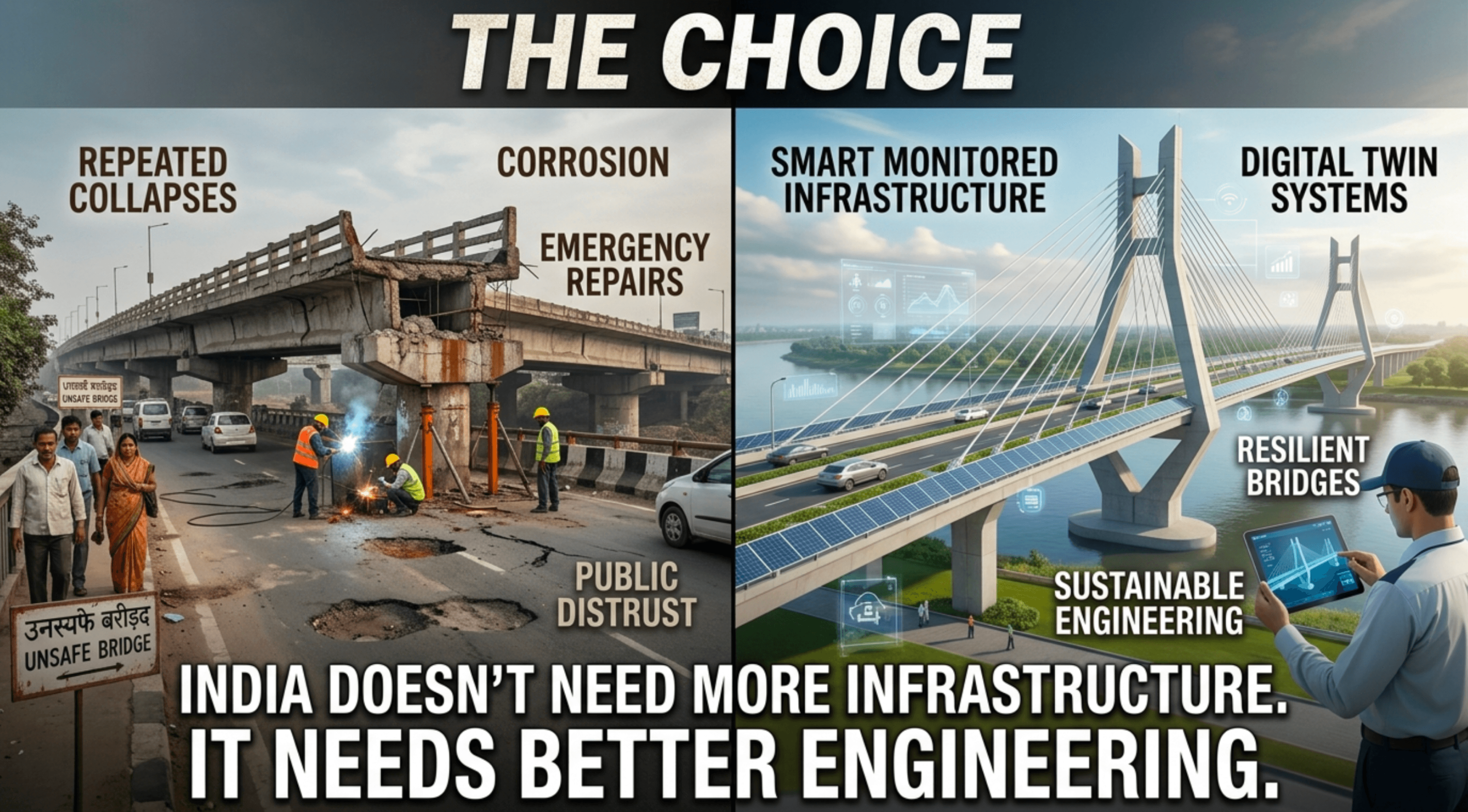
NH‑66, Vikramshila, Morbi, Majerhat — these are not isolated events.
They are warnings.If India wants world‑class infrastructure, we must stop treating engineering as a procurement exercise and start treating it as a national responsibility.
Our structures are not failing because we lack capability. They are failing because we lack accountability.
The next decade will define whether India becomes a global engineering leader — or a cautionary tale.