
India is building like never before. Expressways. Metro systems. Solar power plants. Highways across the country. But big dreams need big money. And the truth is, the government cannot fund everything on its own.
That is where Public-Private Partnerships or PPPs come in. But PPPs are just one piece of a much larger puzzle. There are also SPVs, funding agencies like IIFCL, and even global investors. Let us break it down together.
India Infrastructure Financing
What Is a Public Private Partnership (PPP)?
A Public-Private Partnership is when the government and private companies work together to build and run infrastructure. It is not just about sharing the cost. It is about sharing three important things:
Risks like delays or cost overruns
Responsibilities like who builds and operates
Rewards like payments linked to how well the project performs
These partnerships usually last a long time, sometimes 15 to 30 years. This gives private companies enough time to build the project, run it, and in some cases, give it back to the government when done.
India’s Infrastructure Boom and the Need for Smart Financing- PPP
Not all PPPs are the same. Different projects need different styles of partnership. Here are some common ones:
Build Operate Transfer or BOT: A private company builds it, runs it for some years, and then gives it to the government.
Build Own Operate or BOO: The private company builds and runs it, and keeps it.
Design Build Finance Operate or DBFO: One company handles the entire process from design to operations.
Lease or Concession Models: The government lets private companies run existing assets for a set number of years.
Each of these types is based on how ownership, risk, and control are shared.
What Is an SPV in Infrastructure Projects?
When a private company wins a PPP project, it usually sets up a separate company called a Special Purpose Vehicle or SPV. This SPV is created just for one project. It is like a dedicated team or mini-company focused only on that job.
Why do they do this?
It separates risk from the parent company
It keeps the money and accounts clean and easy to track
It gives investors and banks more confidence
The SPV handles the money, signs the contracts, builds the project, and runs it. It is the worker bee of the project.
Who Funds All This? Role of India Infrastructure Finance Company Limited (IIFCL)
The India Infrastructure Finance Company Limited or IIFCL is a government agency that helps make infrastructure projects happen. It supports long-term projects that regular banks often avoid. These projects usually need large loans for many years.
Here is what IIFCL does:
Gives direct loans to projects
Helps other banks with refinancing
Issues infrastructure bonds
Supports InvITs, which are a type of investment tool
Because of IIFCL, many highways and large industrial projects get the money they need to move forward.

Capital Market Tools That Help
Bank loans are not enough for big infrastructure dreams. So India also uses tools from the capital market to raise funds.
Here are two major tools:
Infrastructure Bonds
Issued by government agencies or private companies
Give tax benefits
Attract both big and small investors
Used to fund things like highways and corridors
Example: IIFCL issued tax-free bonds that helped fund the Delhi Mumbai Industrial Corridor.
Infrastructure Debt Funds or IDFs
Used mostly for finished projects
Offer stable and low-risk returns
Attract investors like pension funds, insurance companies, and foreign banks
Help developers repay earlier loans
Example: IIFCL has refinanced several road and power projects using IDFs.
Going Global: International Partners Step In
India does not only rely on its own institutions. Global banks, agencies, and private investors also play a big role.
They bring money, but also share knowledge, good systems, and environmental safety rules. Some important names are:
World Bank and IFC: Fund energy and transport projects
Asian Development Bank or ADB: Support metro systems and green energy
Asian Infrastructure Investment Bank or AIIB: Help build better cities
Japan International Cooperation Agency or JICA: Support big transport projects like metros and bullet trains, urban development including MTHL and coastal road.
Private Investors: Prefer steady and already-working projects where returns are predictable
Each partner has a specialty. JICA brings Japanese technology and funds expensive train projects. Private investors like brownfield projects, which are already built and earning.
Who Funds What? Role of Global Institutions in India’s Infrastructure Growth
Institution | Typical Project Size | What They Fund |
World Bank and IFC | 100 million to 1.5 billion dollars | Energy, transport, and cities |
ADB | 150 million to 2 billion dollars | Metro systems, green energy |
AIIB | 200 million to 1.5 billion dollars | Urban development |
JICA | 1,000 to 50,000 crore rupees | Rail and metros |
USAID and DFC | 50 to 300 million dollars | Clean energy and climate |
Private Investors | 200 million to over 2 billion dollars | Finished projects that earn steady income |
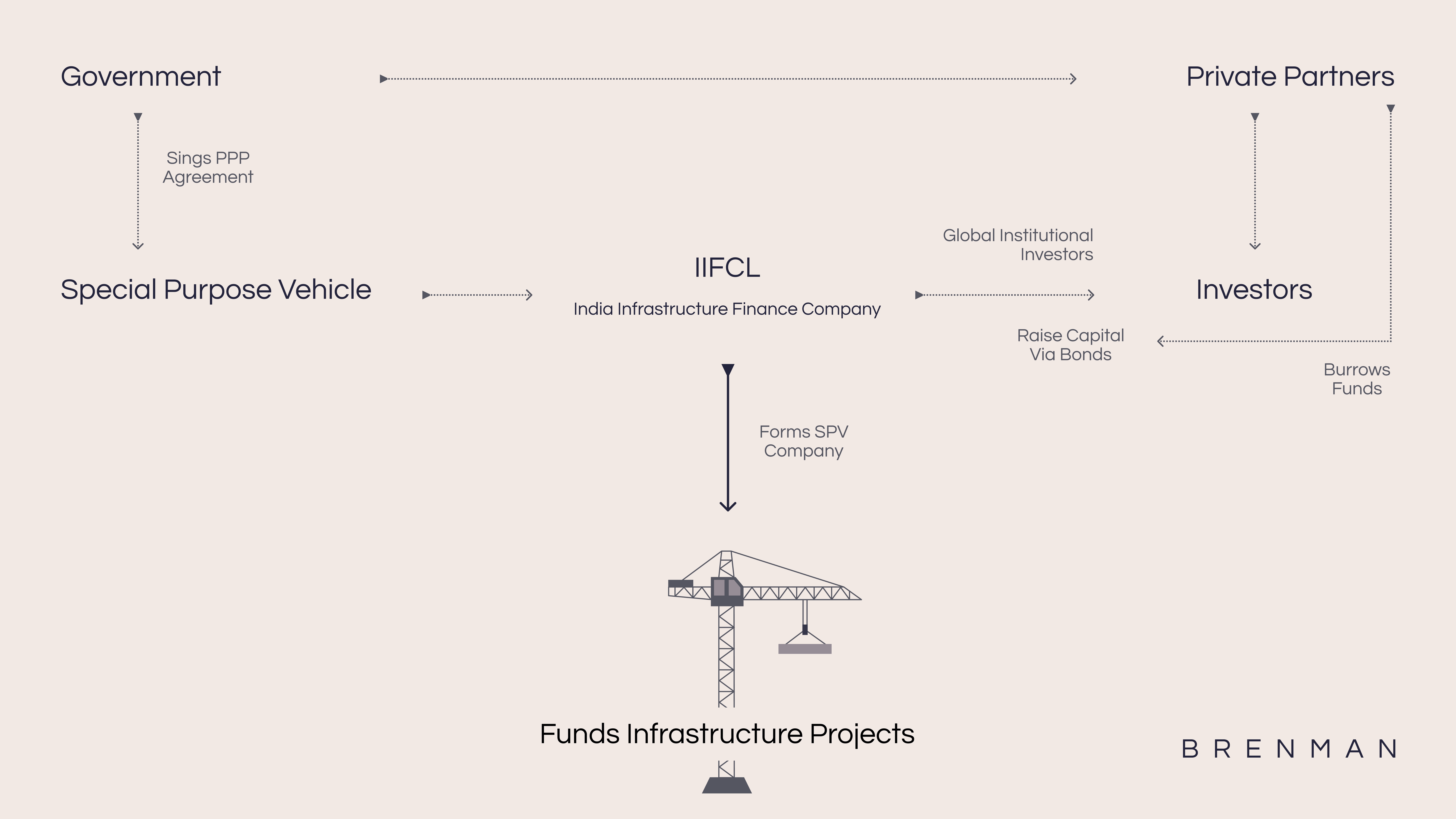
The Big Picture: PPPs, SPVs, IIFCL and Investors Work Together
India’s infrastructure mission is more than just building roads or power lines.
It is about creating an entire ecosystem. Here is how all the parts come together:
PPPs create strong partnerships
SPVs manage the actual project
IIFCL and capital markets bring the money
Global partners add trust, money, and smart practices
When all these pieces work as a team, infrastructure becomes more than a service. It becomes a driver of growth, jobs, and better lives.
Final Thoughts: Why This Ecosystem Matters
India’s goal to become a five trillion dollar economy depends on strong infrastructure. But that means doing it smartly.
We must:
Build partnerships, not just projects
Use creative ways to raise money, not just rely on banks
Build systems that attract both local and global players
If you are a policymaker, a developer, or an investor, understanding how PPPs, SPVs, and funding systems connect will help you take better steps for the future.
The more we understand these tools, the better we build. Not just faster, but smarter.