
When War Reaches the Jobsite: How Geopolitics Is Reshaping the Construction Industry
Introduction
Construction delays once meant bad weather, labour shortages, or design changes.
Today, they can stem from conflicts thousands of kilometres away disrupting fuel supplies, blocking material imports, or making key shipping routes unsafe.
The construction industry is no longer insulated from global events.It is operating on the frontlines of geopolitics.
A New Reality: Global Events, Local Consequences
Geopolitical instability has shifted from a distant macroeconomic concern to a direct operational risk. At the same time, strategic rivalries between major economies are fragmenting trade systems and reshaping supply chains.
For construction, the impact is immediate: cost assumptions are destabilised, timelines are uncertain, and reliability is no longer guaranteed.
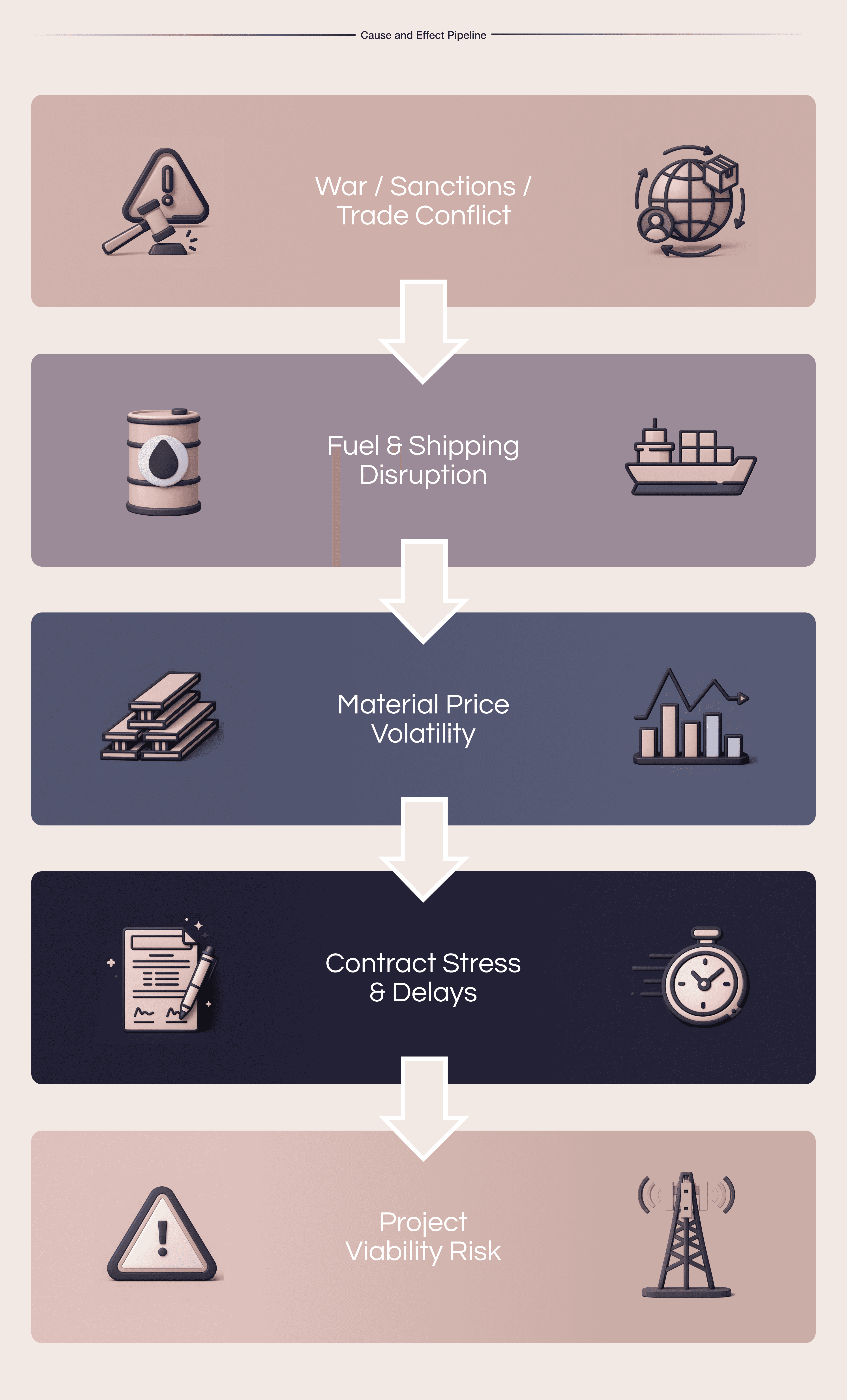
The Shockwaves Through Construction
1. Fragile Supply Chains
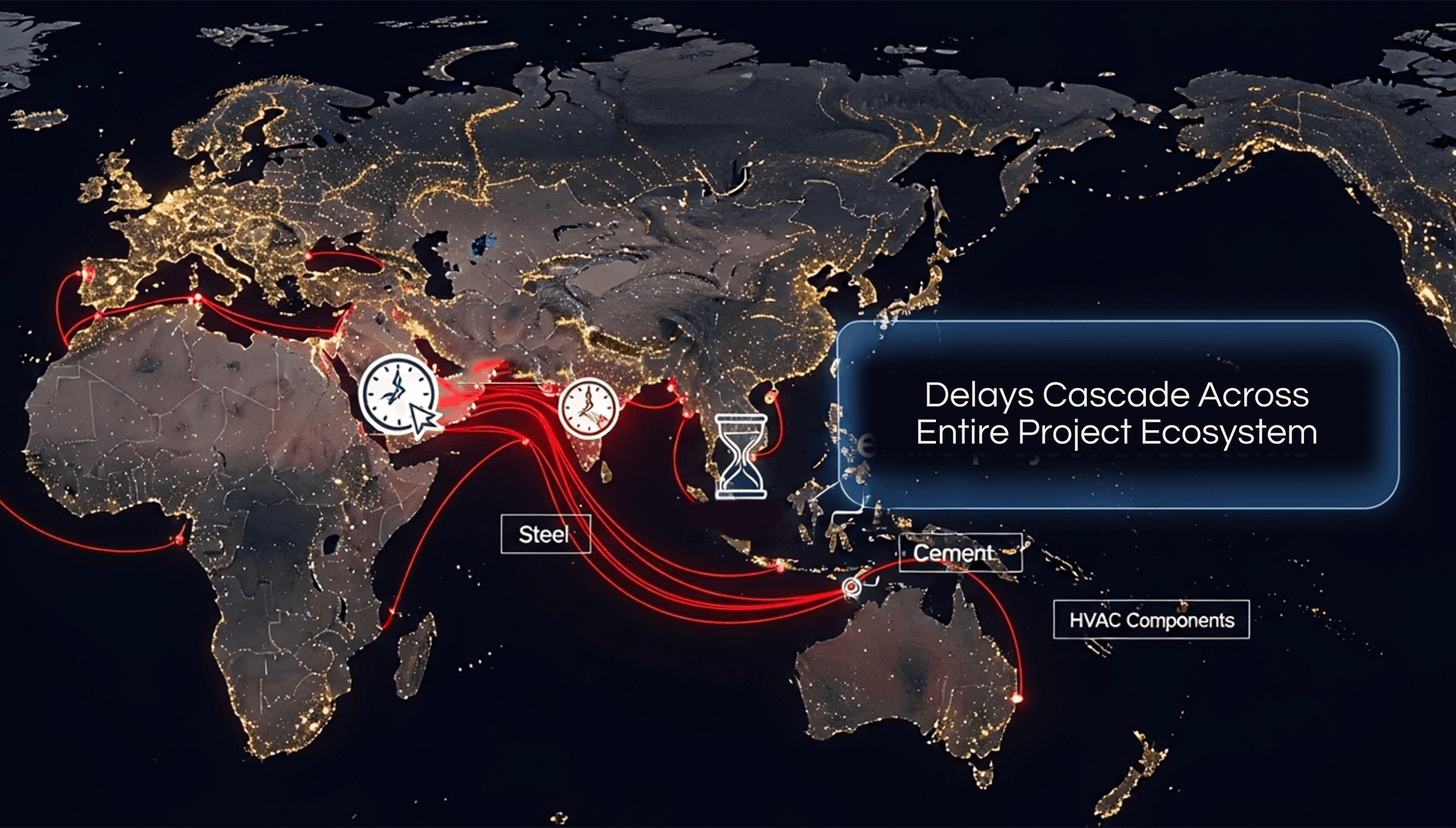
The long-standing reliance on just-in-time supply chains is breaking down. Critical materials such as steel, cement, and mechanical components are now exposed to export restrictions, sanctions, and shipping disruptions.
Delays are no longer isolated; they cascade across entire project ecosystems.
2. Energy as a Central Risk Driver
Construction is energy-intensive, from material production to on-site operations. Disruptions in oil and gas supply are driving fuel price spikes, increasing logistics costs, and escalating overall project expenses.
Energy is no longer a background variable; it is a core risk.
3. Unstable Cost Estimates
Material prices can rise dramatically within weeks, undermining traditional budgeting models. Fixed-price contracts are becoming increasingly fragile, and projects risk becoming financially unviable during execution.
4. Systemic Project Delays

Delays now extend beyond individual projects, affecting entire markets. Infrastructure timelines slip, housing developments stall, and large-scale projects face cancellation risks.
The challenge is no longer just delivery, it is project viability.
When Global Conflict Hits Local Construction
Recent residential developments in Australia illustrate this shift. Projects have experienced rapid cost escalations, sometimes exceeding $100,000 per unit within weeks, driven by fuel volatility and material shortages linked to global tensions.
These are not failures of planning. They are external shocks that traditional project models were never designed to absorb.
The implication is clear: no construction project is truly local anymore.
The Strategic Role of Contract Management
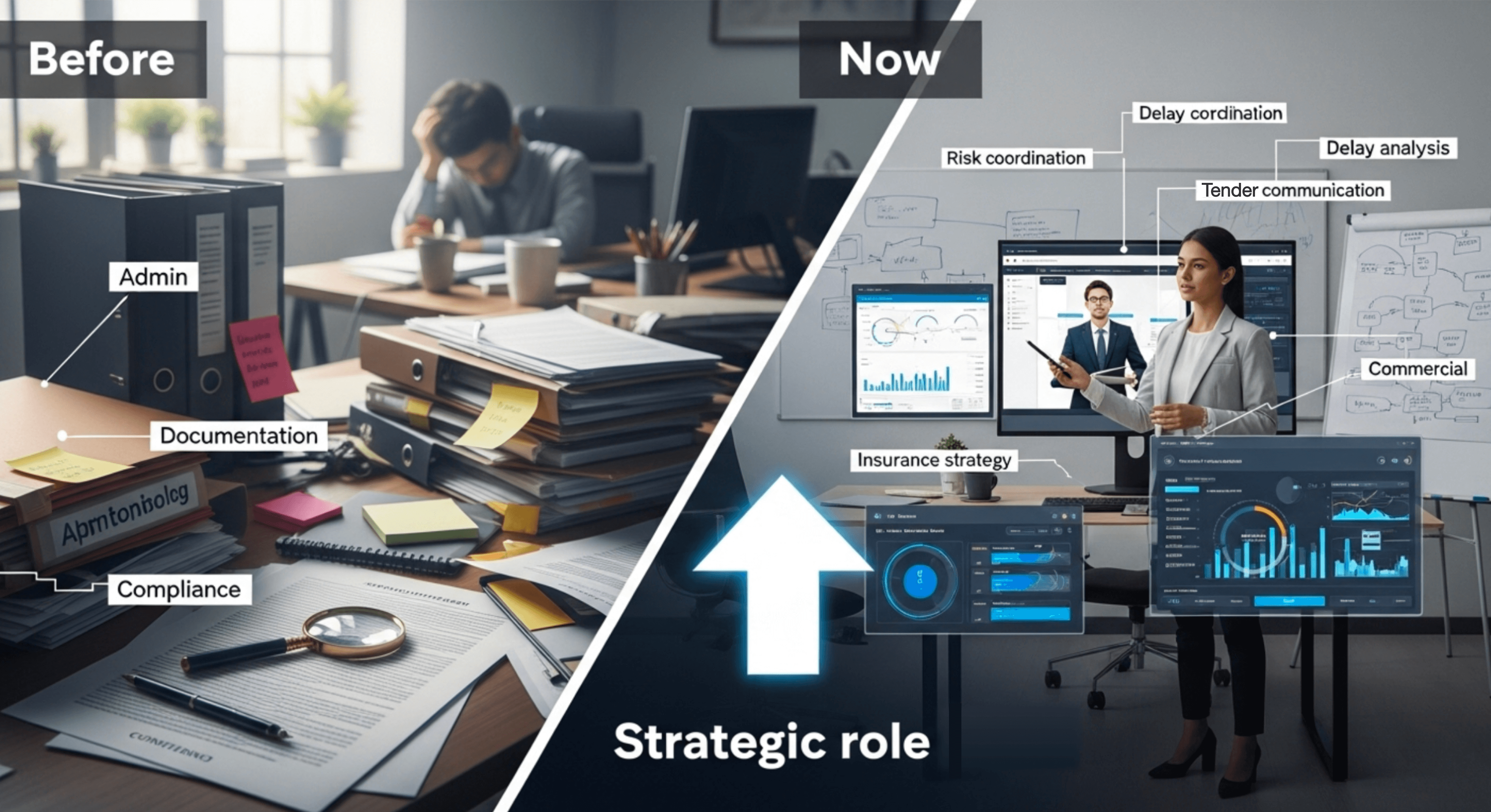
In this environment, contract managers play a critical role. Their responsibilities now extend beyond administration to:
Coordinating delay analysis
Managing insurance engagement
Communicating with lenders
Leading commercial negotiations
The objective is not just to protect contractual positions, but to keep projects viable during disruption.
When Banks Enter the Conversation

Most infrastructure projects rely on complex financing structures. When geopolitical risk escalates, lenders reassess exposure quickly. This often leads to:
Updated risk evaluations
Insurance validation
Schedule reassessments
Sponsors may need to increase contingency reserves or provide additional guarantees.
Force majeure is no longer just a contractual issue—it can affect the entire financial structure of a project.
Price Escalation and Contractual Survival
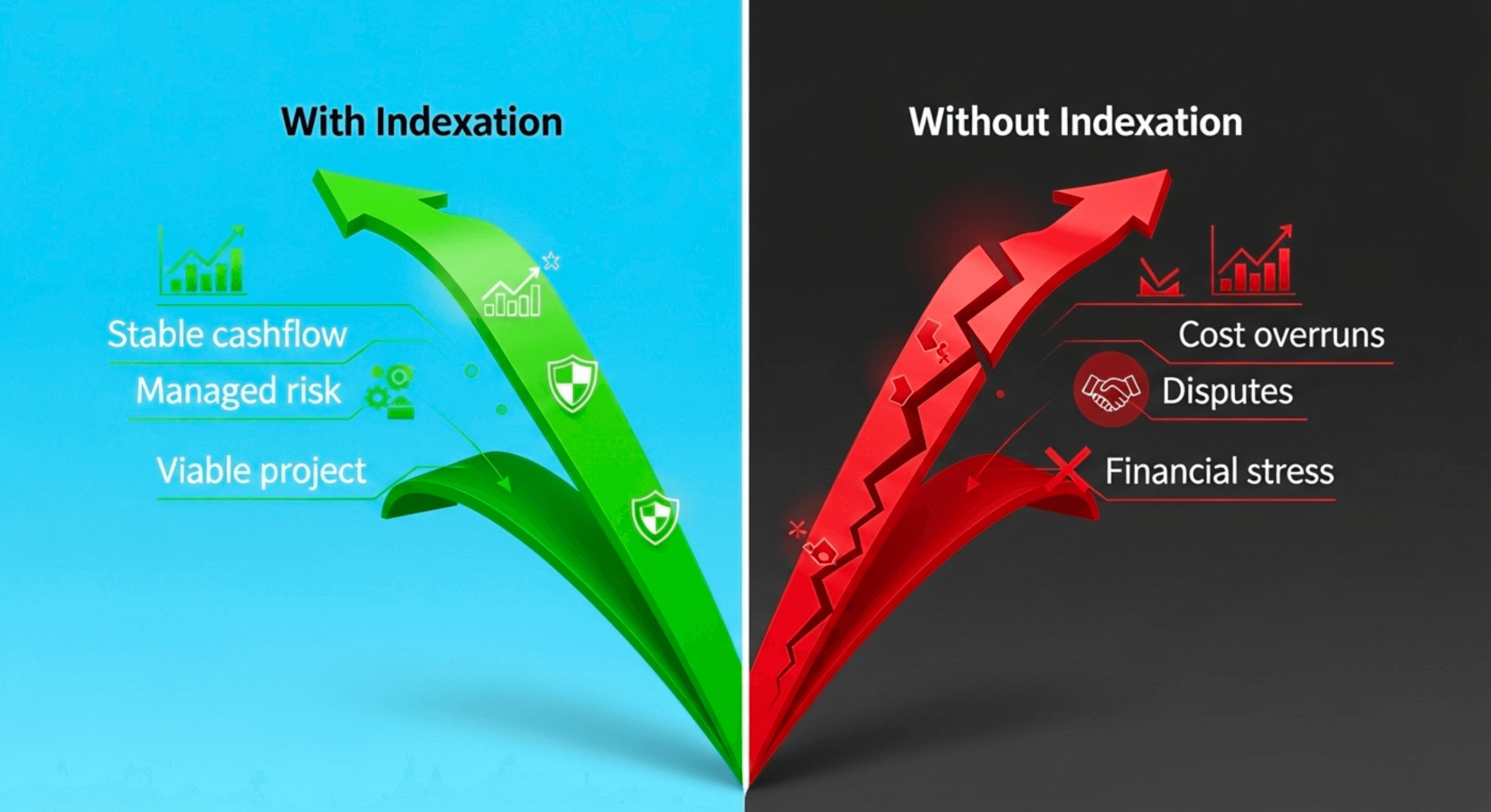
Geopolitical instability introduces rapid volatility in construction inputs. Contracts that include price adjustment mechanisms such as steel indexation or fuel escalation clauses are significantly more resilient.
Without these mechanisms, projects often depend on reactive negotiations to remain viable.
How Contractors Are Responding
Contractors are adapting by:
Issuing early protective notices
Documenting causation rigorously
Linking geopolitical events to cost and delay impacts
Many claims fail not due to lack of entitlement, but due to poor documentation or missed deadlines. In this context, documentation becomes a strategic tool.
Building in High-Risk Geographies
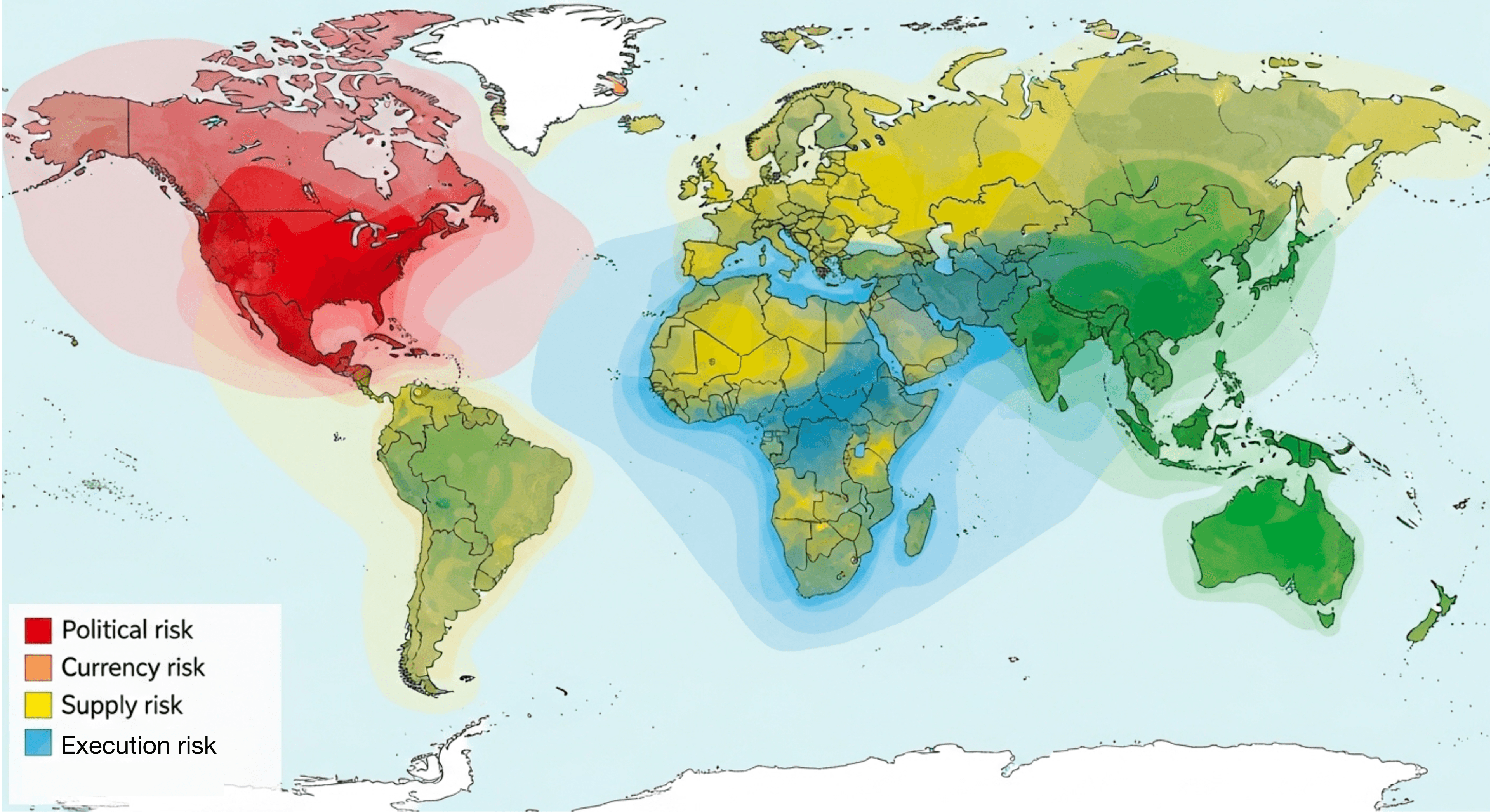
As contractors expand into emerging markets, geopolitical risk is becoming embedded in project delivery. This introduces:
Unconventional delay drivers
Country-specific risks
Greater execution uncertainty
The ability to anticipate and model these risks is increasingly a competitive advantage.
What Must Change: From Efficiency to Resilience
1. Resilient Supply Chains
Diversify sourcing, prioritise reliability, and develop contingency strategies.
2. Contracts Designed for Uncertainty
Include escalation clauses, address geopolitical risks explicitly, and allow flexible timelines.
3. Financial Models That Reflect Reality
Incorporate risk premiums and scenario-based analysis rather than relying on static assumptions.
4. Real-Time Risk Intelligence
Monitor indicators such as oil prices, trade restrictions, and currency movements to enable proactive decision-making.
5. Execution Flexibility
Adopt modular construction, phased delivery, and adaptive scheduling.
The Strategic Shift
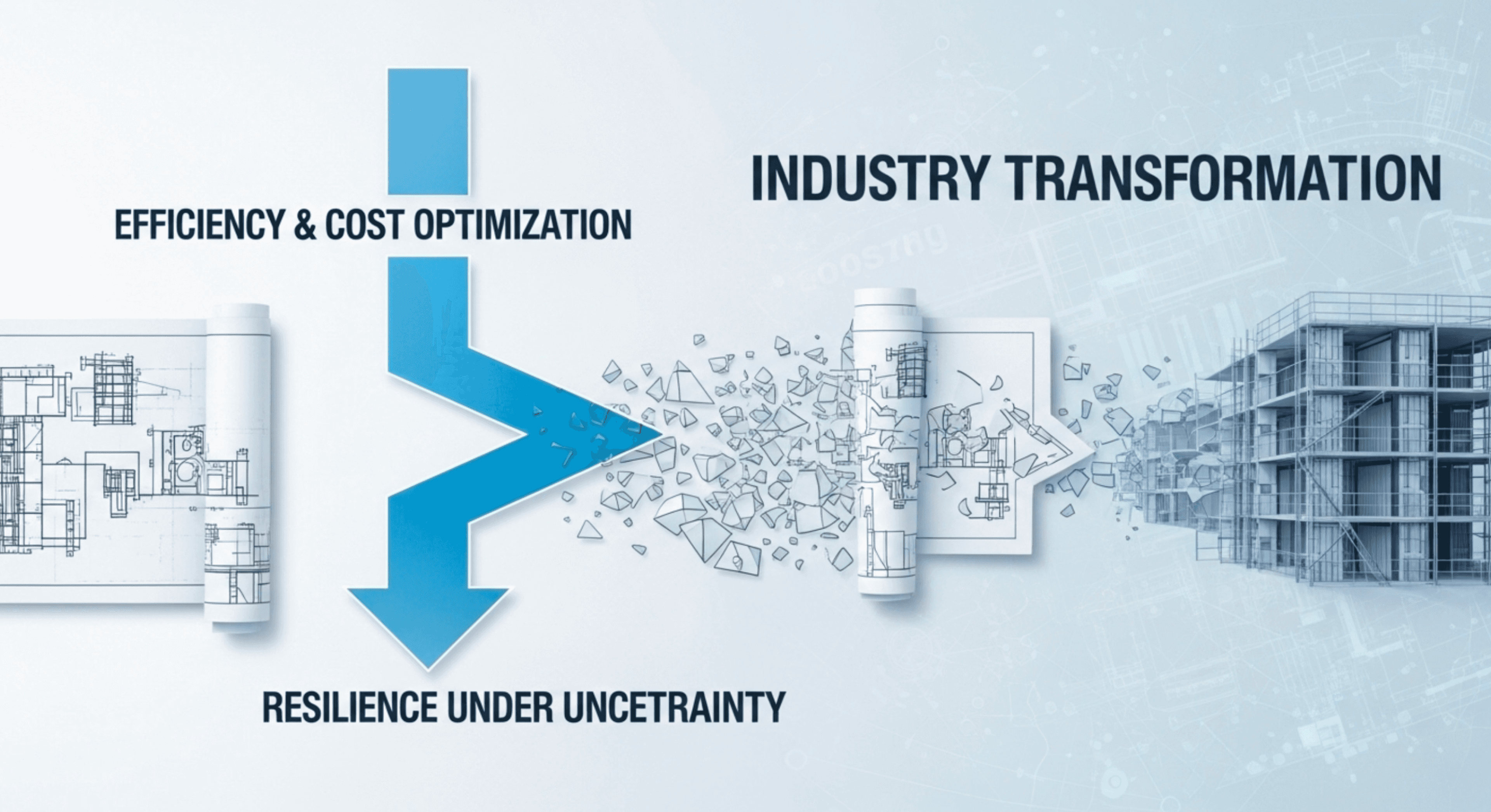
The industry is moving from:
Cost and efficiency optimisation → Resilience under uncertainty
Conclusion: Building in an Uncertain World
Geopolitics has permanently changed construction project management. The question is no longer whether global events will impact projects but how prepared we are to respond.
Success will depend on the ability to anticipate disruption, adapt quickly, and embed resilience across the project lifecycle.
Because today, the biggest risks to a construction project are no longer found on the jobsite they are shaped by global events.