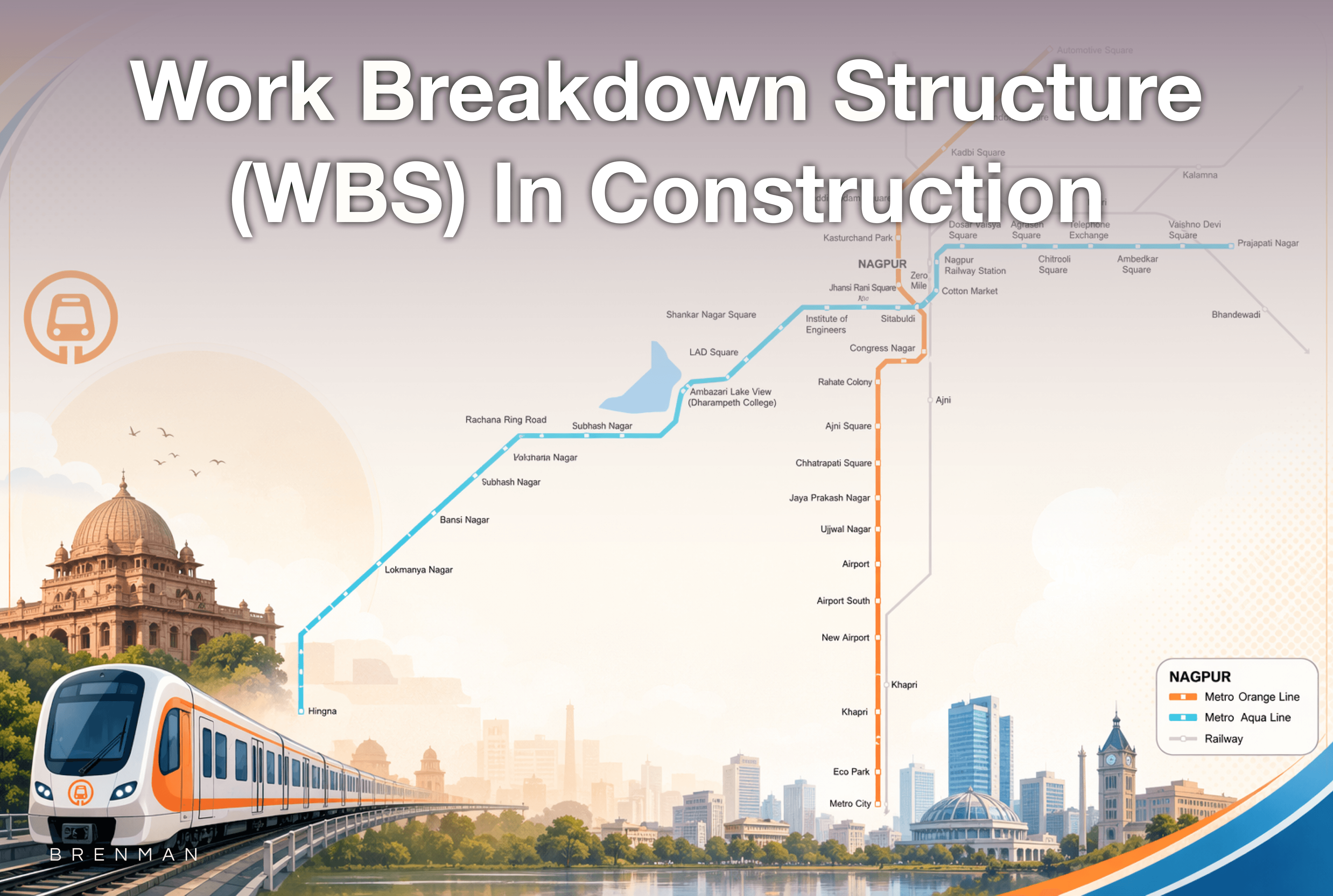
Work Breakdown Structure (WBS) in Construction
Introduction
A Work Breakdown Structure (WBS) is one of the most important tools in construction project management. It helps break large and complex projects into smaller, manageable work packages that are easier to plan, schedule, cost, and monitor.
In construction, a WBS supports better planning, cost control, scheduling, procurement, reporting, resource allocation, and long-term asset management. Without a clear WBS, it becomes difficult to coordinate contractors, track progress, and manage project risks.
What Is a Work Breakdown Structure in Construction?
A Work Breakdown Structure is a hierarchical system that divides the total project scope into smaller work packages. Each package is detailed enough to:
Assign to a team or contractor
Estimate costs
Develop a schedule
Allocate resources
Track performance and progress
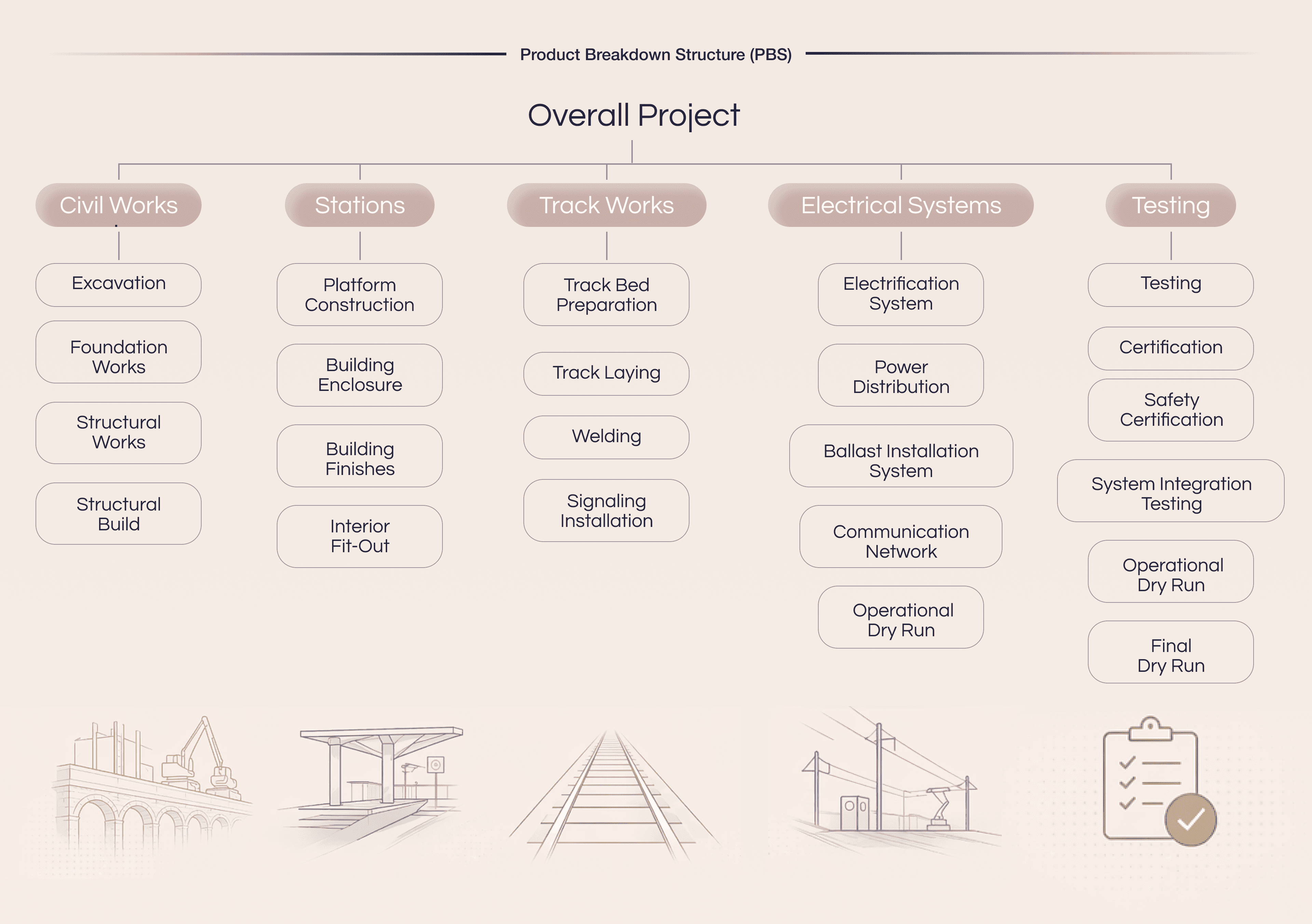
For example, in a metro rail project, the top level of the WBS may include:
Civil works
Stations
Track works
Signaling systems
Electrical systems
Rolling stock
Testing and commissioning
Each of these categories can then be broken into smaller sections until the work becomes manageable.
This approach gives project managers visibility into every part of the project and ensures no scope is overlooked.
Product Breakdown Structure (PBS) and Activity Breakdown Structure (ABS)
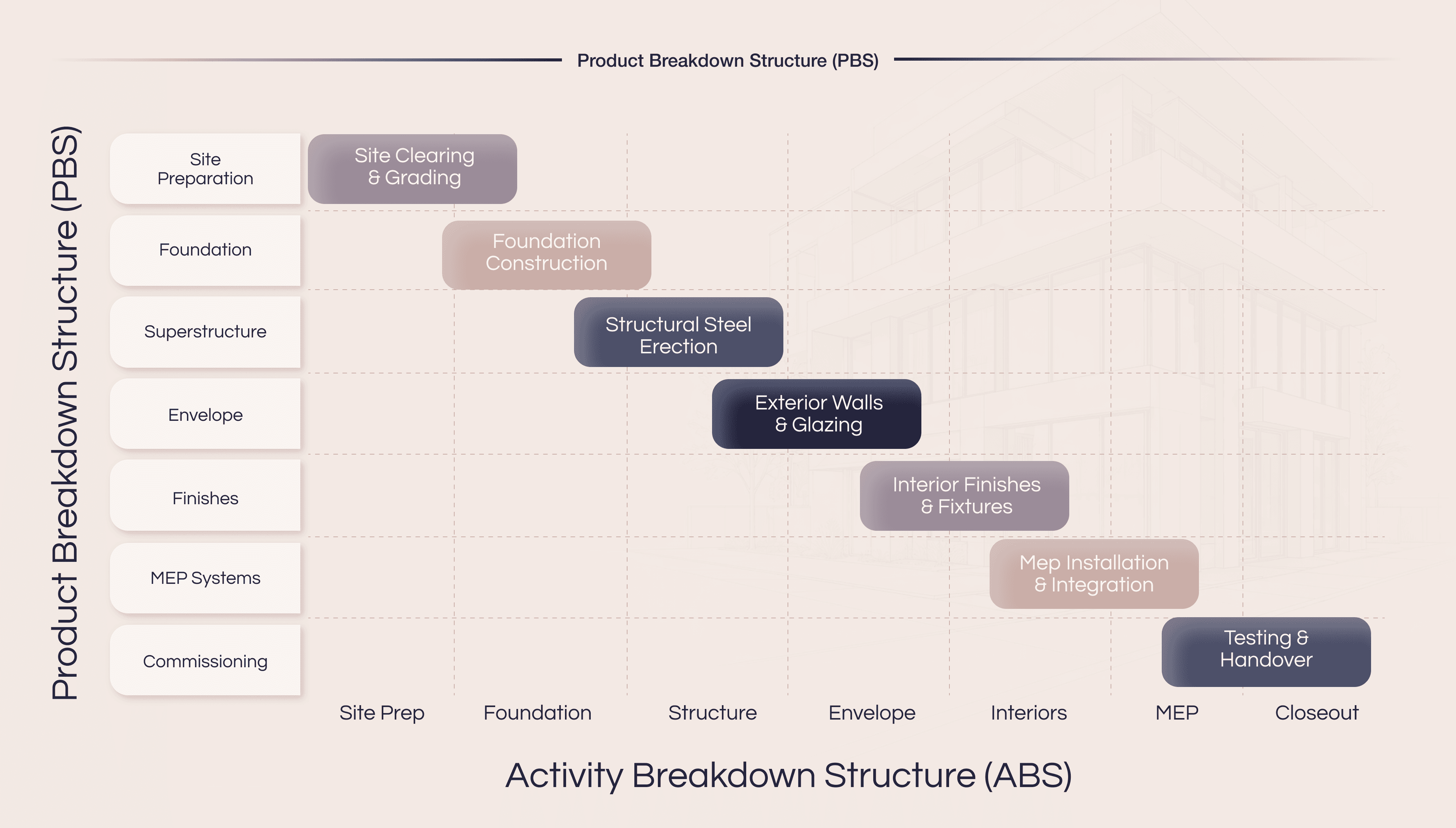
A construction WBS is often developed from two perspectives: Product Breakdown Structure (PBS) and Activity Breakdown Structure (ABS).
Product Breakdown Structure (PBS)
PBS focuses on the physical components of the project, such as:
Bridges
Tunnels
Stations
Buildings
Drainage systems
Viaducts
Activity Breakdown Structure (ABS)
ABS focuses on the work activities required to complete the project, including:
Excavation
Reinforcement
Formwork
Concreting
Electrical installation
Testing and commissioning
When PBS and ABS are combined, they create a WBS matrix. The product breakdown forms one side of the matrix, while the activity breakdown forms the other. Each intersection creates a work package.
This approach is especially useful in infrastructure projects because it explains both what is being built and what work is required.
Benefits of WBS in Construction Management
Better Planning
Breaking a project into smaller work packages makes planning more realistic and detailed. Project managers can define activity sequences, identify dependencies, and allocate resources more effectively.
Improved Cost Control
Each WBS element can be linked to a cost code or budget. This makes it easier to monitor spending and quickly identify where cost overruns are occurring.
More Accurate Scheduling
Every work package can have its own start date, finish date, duration, and dependencies. This allows project managers to build detailed schedules and identify the critical path.
Project management software such as Primavera P6 and Microsoft Project often use WBS structures to develop schedules.
Better Resource Allocation
A WBS helps allocate labor, equipment, materials, and subcontractors to specific work packages. This improves productivity and reduces delays.
Enhanced Risk Management
When a project is divided into smaller sections, it becomes easier to identify high-risk activities. Procurement delays, safety issues, design conflicts, and construction bottlenecks can all be tracked at the work-package level.
Clear Accountability
Each work package can be assigned to a contractor, team, or individual. This creates accountability and ensures every part of the project has a responsible owner.
Easier Reporting and Performance Tracking
Because every WBS element includes scope, cost, and schedule data, managers can compare planned progress with actual progress.
This supports:
Earned value management
Delay analysis
Cost forecasting
Progress reporting
Change management
WBS in Asset Management
The value of a WBS continues even after construction is complete. In asset management, the WBS helps owners organize information about completed assets throughout their lifecycle.
For example, assets such as bridges, stations, tunnels, escalators, HVAC systems, and signaling systems can be linked to:
Asset codes
Maintenance schedules
Inspection records
Operation manuals
Spare parts lists
Warranty information
Lifecycle costs
This allows project owners to move from construction into operations and maintenance using the same structured framework.
In many modern projects, WBS is integrated with Building Information Modeling (BIM) systems so that assets can be tracked from design through operations.
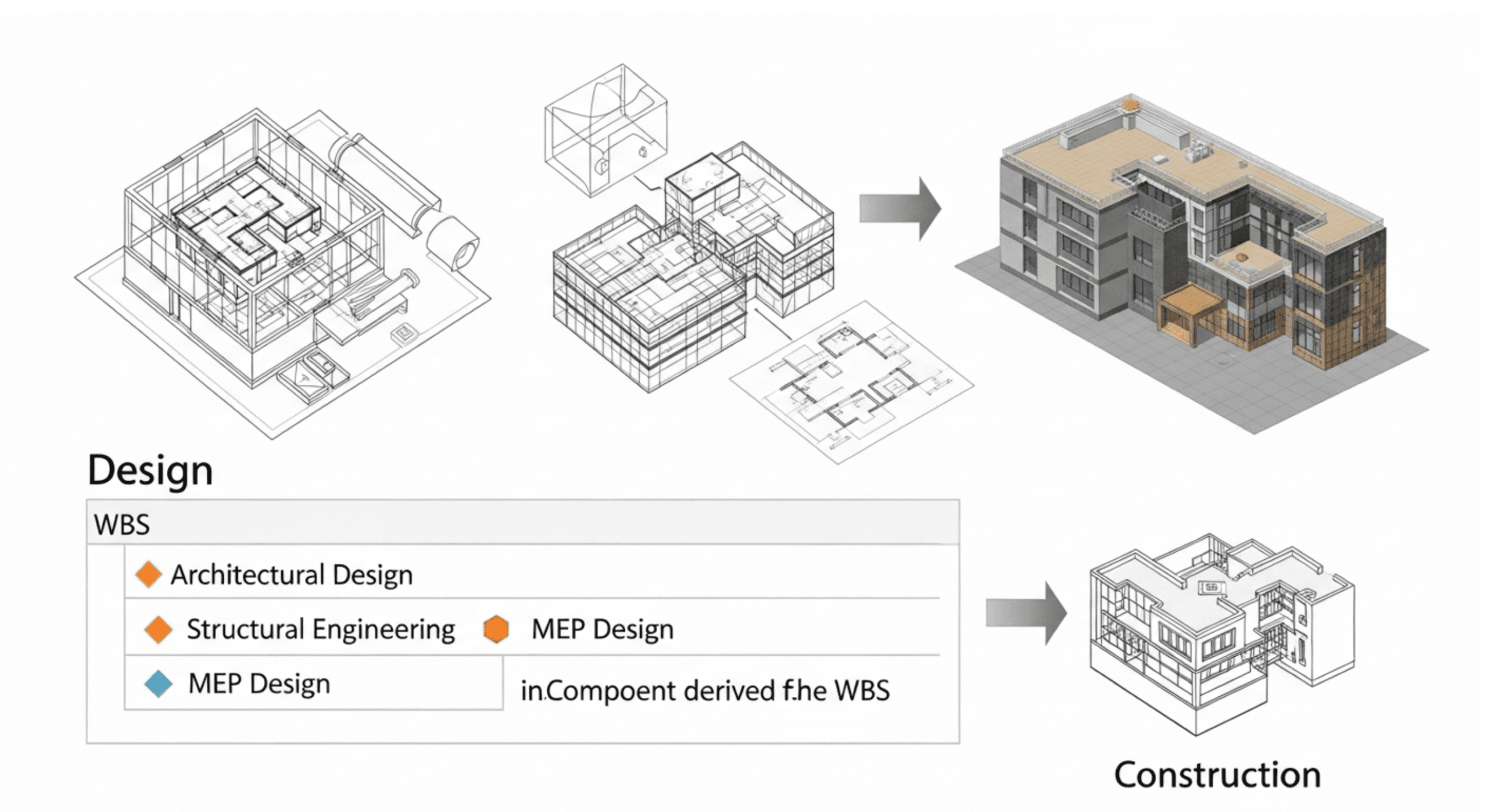
Integrating WBS with Cost and BIM Models
Modern construction projects often combine:
WBS for work packages
Cost Breakdown Structure (CBS) for budgets
BIM model breakdowns for digital design elements
When these systems are connected, project teams can link model elements with schedules, quantities, activities, and costs.
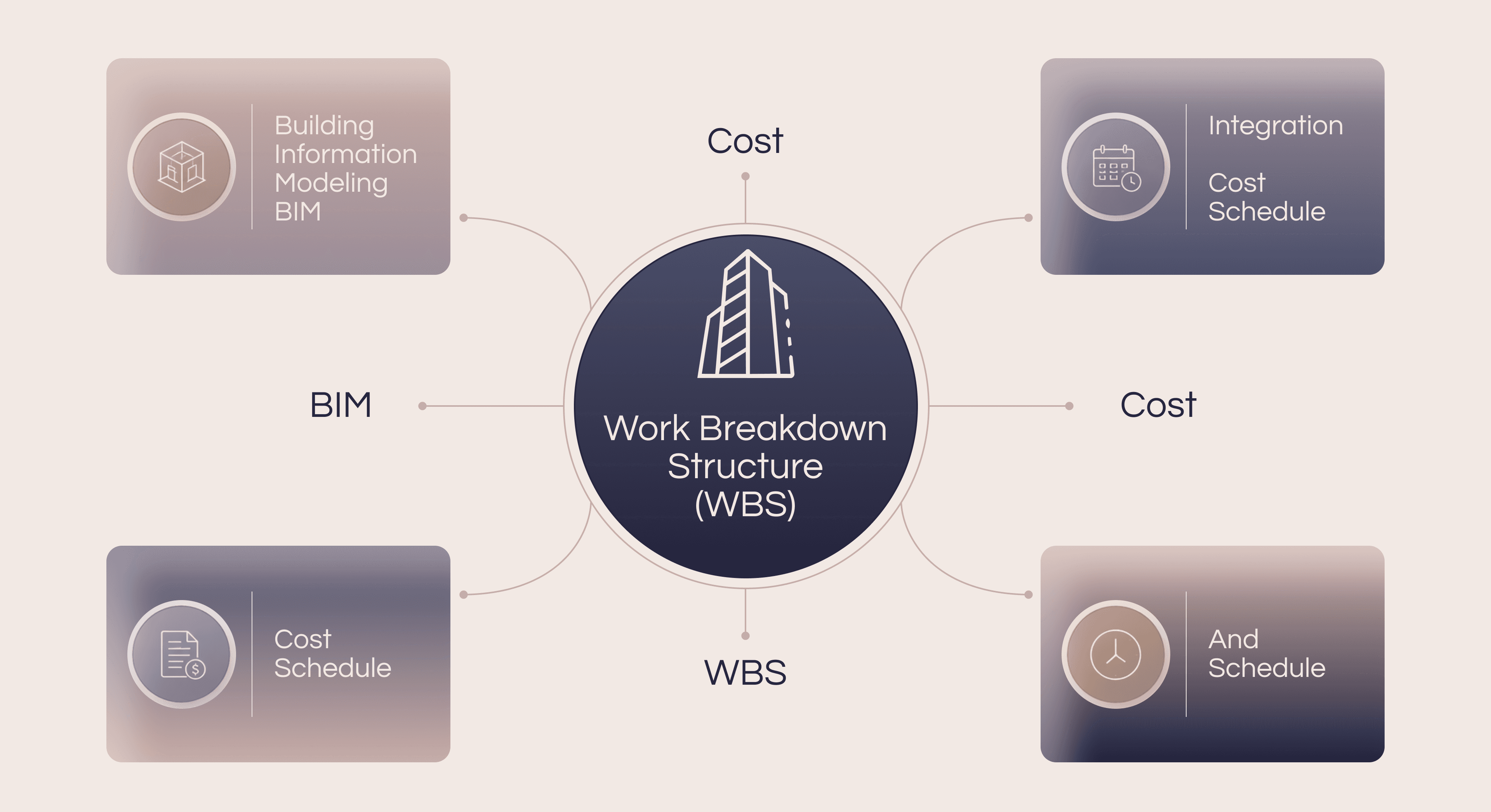
For example:
A platform slab in a BIM model can be linked to a WBS work package
That work package can be linked to a schedule
The same package can have a cost code and budget
Progress and costs can then be tracked in real time
This integration improves project controls, reporting, and forecasting.
Case Study: Nagpur Metro Rail Project
The Nagpur Metro Rail project is a strong example of how WBS supports construction and asset management.
The project involved more than 20 contractors and around 30 subsystems, including signaling, electrical systems, rolling stock, telecom, and air conditioning.
To manage this complexity, the project adopted a digital platform integrating:
3D BIM models
Scheduling data
Cost information
Asset management records
The project used RIB iTWO, SAP ERP, and Bentley ProjectWise to create a 5D BIM environment where schedule, design, cost, and asset data were fully integrated.
The WBS played an important role in:
Defining contractor scope
Building critical path networks
Linking schedules with BIM models
Tracking progress and resources
The digital system also supported:
Weekly delay analysis
Earned value management
Cost forecasting
Real-time reporting
Change order management
The project reportedly achieved cost savings of around 10% and time savings of 20–25%.
Why WBS Is Essential in Modern Construction
Construction projects are becoming larger, more digital, and more complex. Without a clear WBS, it becomes difficult to manage contractors, control costs, monitor schedules, and coordinate project teams.
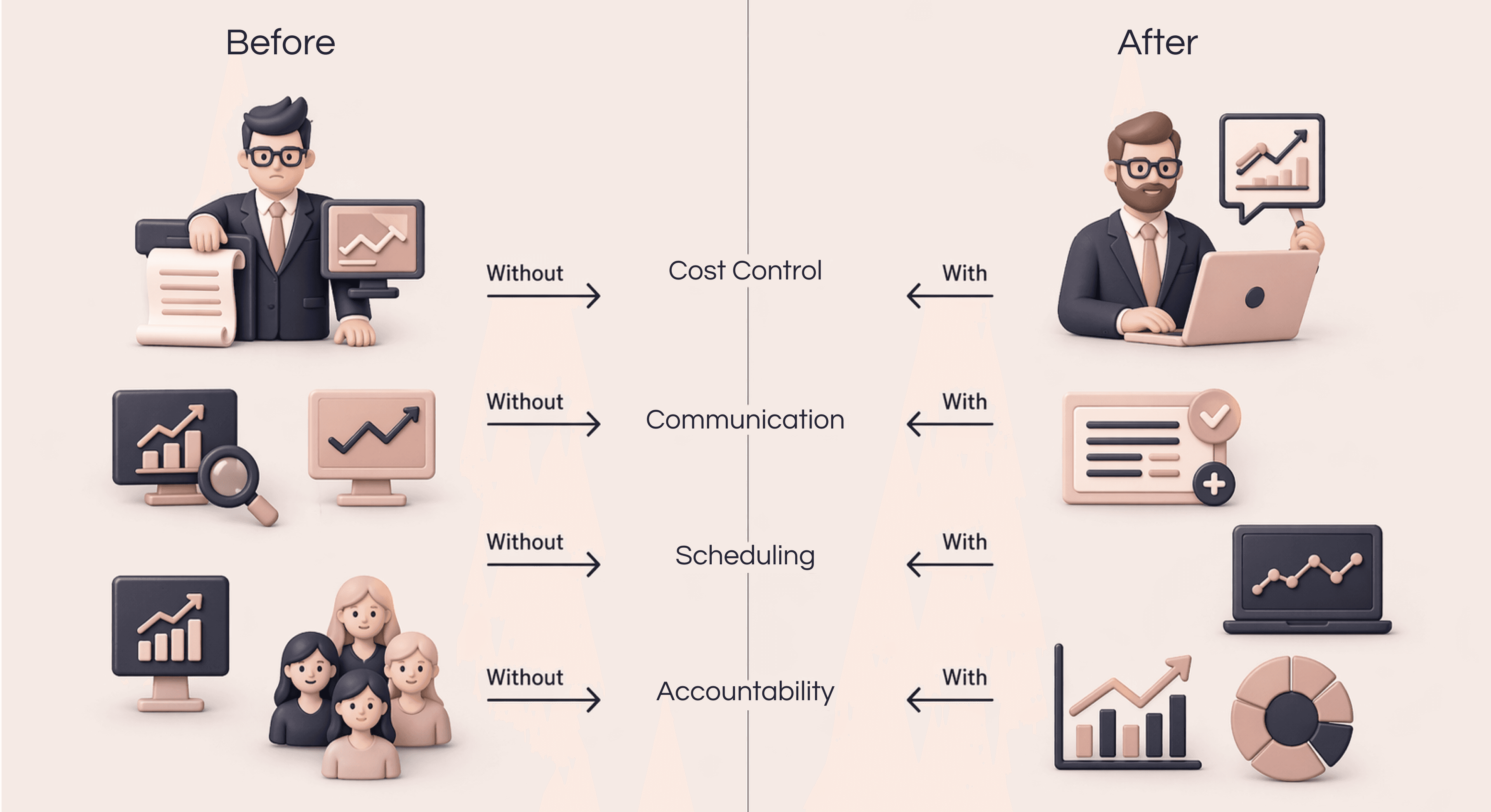
A strong WBS provides:
Better planning
Stronger cost control
Improved scheduling
Better communication
Easier reporting
Clear accountability
Better resource management
Seamless transition into asset management
Ultimately, a Work Breakdown Structure is more than a planning tool. It is the foundation of successful construction project management and long-term asset performance.