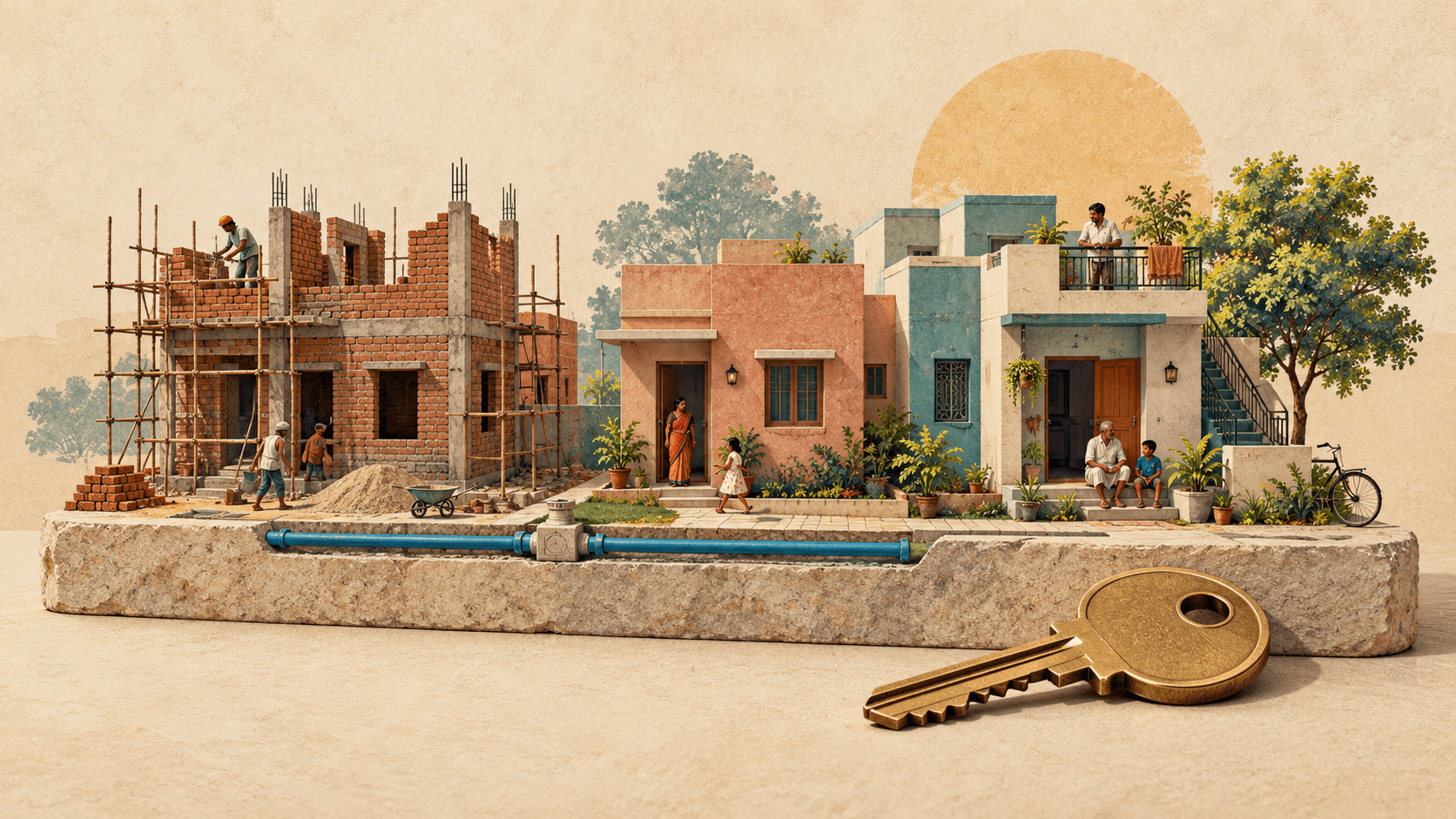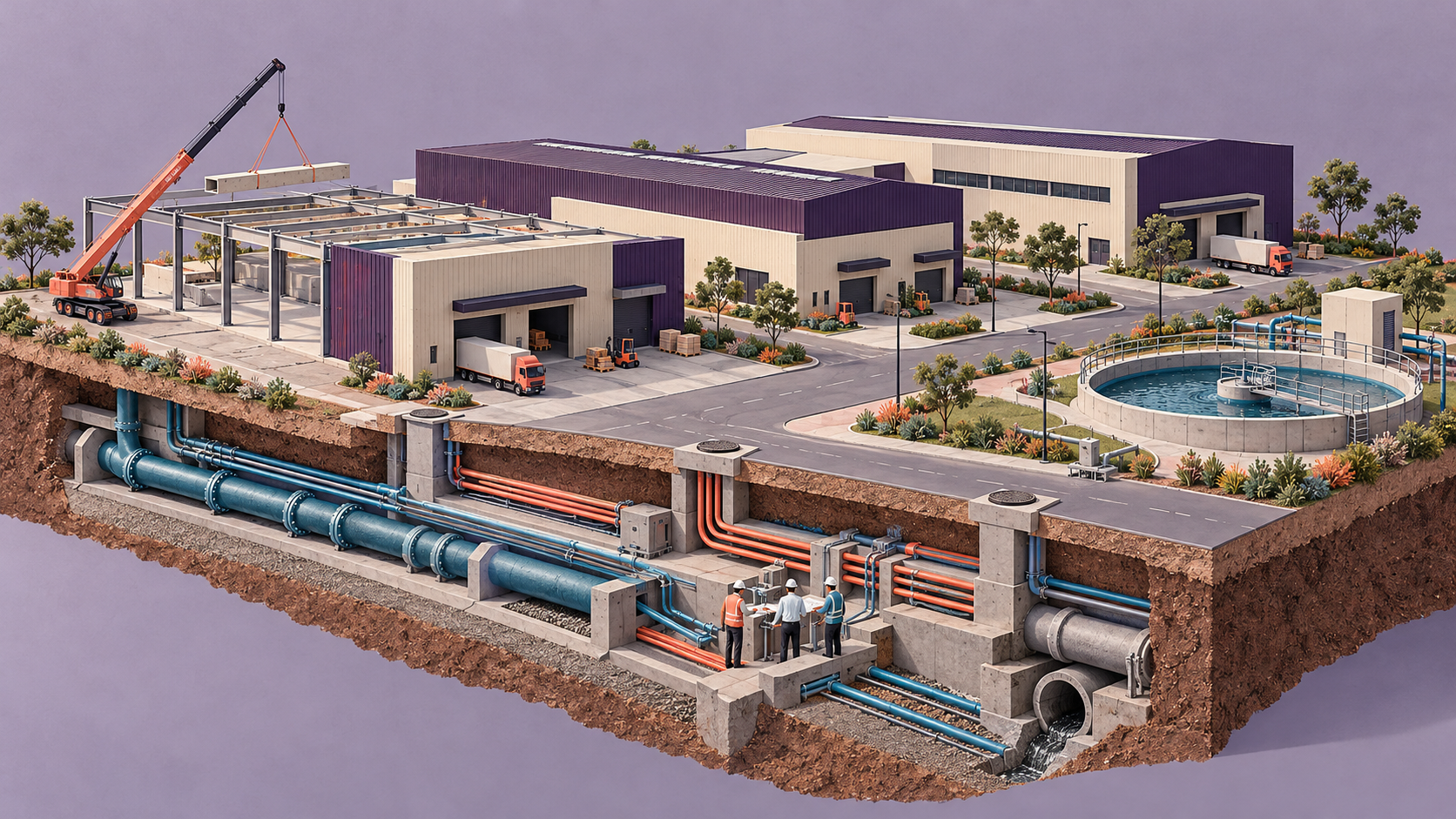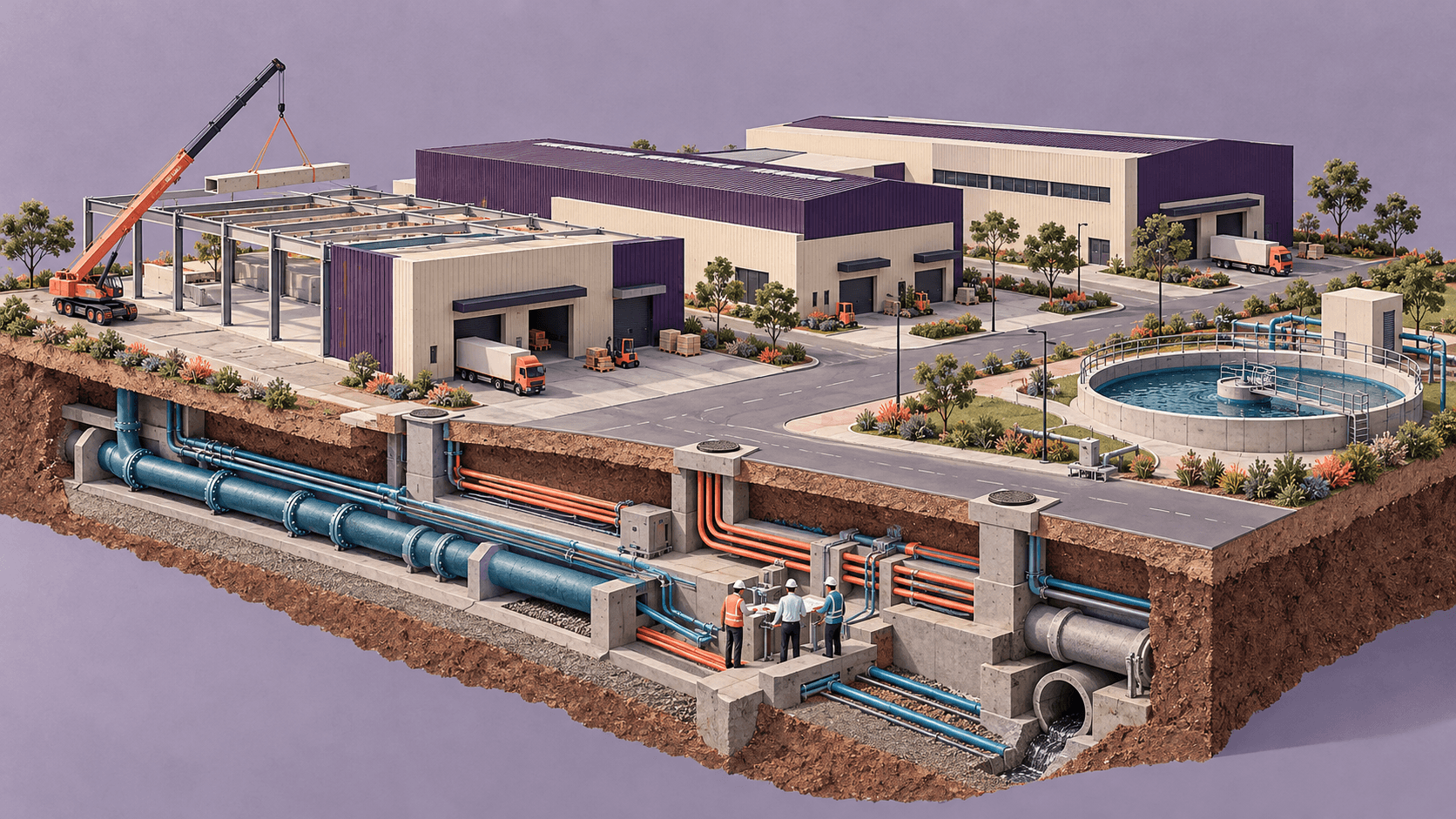
A factory plot becomes useful when production can begin on it. That requires dependable power and water, road access, drainage and a workable arrangement for waste treatment. India’s BHAVYA programme makes these shared services central to its industrial-park offer.
A government explainer published on 14 October sets out a ₹33,660 crore programme for 100 parks over FY2026–27 to FY2031–32. The publication explains an existing scheme; it does not announce that 100 parks have been built.
What the funding supports
The Cabinet approved BHAVYA on 18 March. Its announcement allows support of up to ₹1 crore per acre and identifies roads, drainage, water, electricity and common treatment systems among the infrastructure to be developed. Ready-built sheds, warehouses and testing facilities are also part of the stated approach.
For a manufacturer assessing a location, the distinction between a plot allotment and a functioning service connection is consequential. A completed internal road does not establish the capacity or availability of the power supply serving the factory. Each utility needs its own commissioning evidence and service terms.
The ₹33,660 crore figure is the programme’s approved outlay. It cannot be read as money already released to parks, expenditure certified on site or the value of completed assets. Those amounts require separate records and reporting periods.
Who carries the delivery work?
The 8 June portal-launch announcement describes a role for state governments in providing land and for the National Industrial Corridor Development Corporation in project management, implementation and monitoring. The portal is intended to handle proposals, appraisal and progress monitoring.
The October explainer assigns construction, operation and maintenance responsibilities to project special-purpose vehicles. This makes the operating arrangement worth examining alongside the civil-works contract. Who maintains a common treatment plant after tenants arrive? How are user charges set? Who remedies an interruption that affects several factories?
These are reporting questions, not findings that any particular park has failed. The documents reviewed here describe the programme’s design. They do not provide a reconciled park-by-park account of utility performance or tenant production.
What to check after an application window closes
The June announcement set out applications for an initial 20 parks and a later group of 30, with the latter window running to 30 September. A passed deadline does not demonstrate that proposals have been selected, sanctioned or contracted.
The next useful disclosure would identify selected parks, their approved scope, funding shares and release conditions. A construction schedule should then connect those commitments to land availability, external connections and the commissioning of common facilities.
For companies considering a park, a practical review would request the sanctioned project report, utility capacity commitments, a responsibility matrix and dated acceptance tests. For public-spending scrutiny, the same park should be followed through sanction, release, expenditure and certified completion without substituting one measure for another.
BHAVYA’s shared-infrastructure model gives the programme a clear delivery question: when will an incoming tenant be able to use the promised services? Answering that requires evidence at the park boundary and inside the site, beyond the national count of planned parks.
The dated record
18 March 2026: Cabinet approval announced.
8 June 2026: the application and monitoring portal is launched.
30 September 2026: the later application-window deadline stated in the June announcement.
14 October 2026: PIB publishes an explanation of the programme and its infrastructure model.