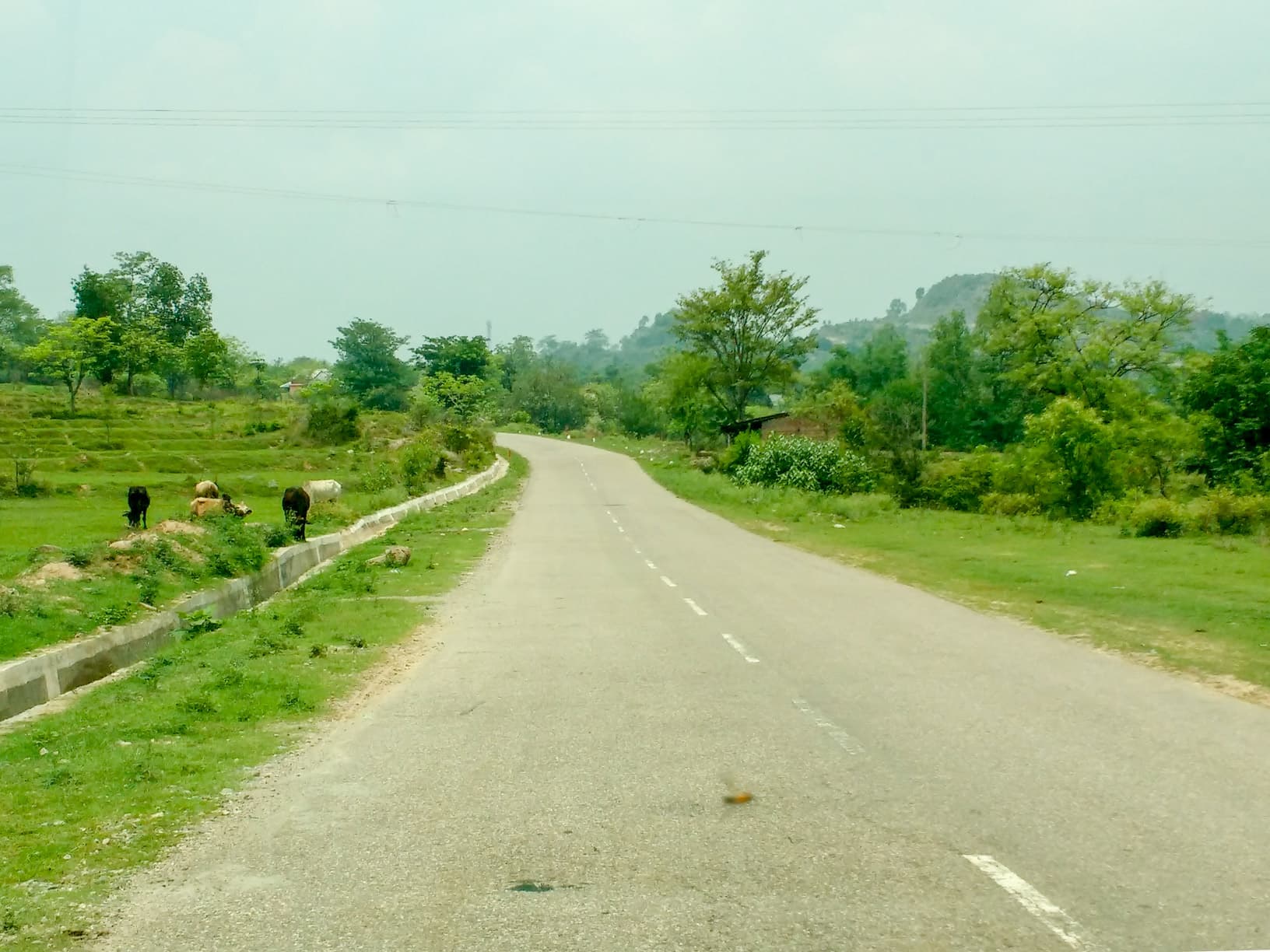
India's rural roads budget is easy to announce and harder to follow. The Union government says PMGSY received ₹19,000 crore for 2026–27. A July answer in the Lok Sabha offers a rarer view: a state and Union Territory table that places money beside road length. It is an early snapshot, not a verdict on the full year. But it shows exactly where the next reporting questions should begin.
Across 32 jurisdictions in that table, the Ministry of Rural Development listed ₹18,010.48 crore in programme allocations, ₹1,494.62 crore in central share released, and ₹2,069.29 crore in expenditure including state share as of 16 July. It recorded 2,847 km of road completed during the financial year and 41,848 km still in the balance column. That balance includes unfinished work from previous years. The table does not say that every kilometre is an active construction site.
These figures describe different things. The ₹19,000 crore is the national Union budget allocation cited by the government. The ₹18,010.48 crore is the total of the state and UT programme allocations in the parliamentary annexure. The release column records central transfers. The expenditure column includes state contributions. Dividing one by another would make a neat percentage, but not a sound measure of how much of the Union budget has been spent. We need the funding shares, opening balances, payment dates and reporting cut-offs to make that comparison.
Look at the range across states. Chhattisgarh had a ₹1,870 crore allocation, ₹135.14 crore in central releases and ₹225.23 crore in reported spending including state share. It completed 151 km in the financial year by 16 July, while its balance stood at 4,694 km. Manipur had a ₹1,240 crore allocation, ₹3.23 crore released by the Centre and ₹3.59 crore of reported spending. It recorded no completed kilometres in the same period, with 1,552 km in the balance column. Those numbers demand reporting, but they do not establish why work or payments moved at different speeds.
There are more useful questions than a league table. In Jammu and Kashmir, 1,600 km was newly sanctioned during the financial year, 24 km was completed and 3,874 km remained in the balance column. Newly sanctioned roads and completed roads need not be the same packages. In Nagaland, the answer records 538 km sanctioned and seven kilometres completed, but zero central releases and zero expenditure for the year to the July cut-off. That could involve timing, earlier balances or a reporting gap. The annexure alone cannot settle it.
For an infrastructure reader, the unit that matters next is the road package. Which stretch has an approved design, a contractor, a work order and a realistic construction window? Which bill has been certified, which has been paid, and which road is actually open in all weather? A state total cannot reveal whether a difficult bridge, land issue or drainage defect is holding up connectivity on the final kilometre.
The hard part of this comparison is the path of the money. An annual allocation gives an implementing agency room to plan. A central release makes funds available under a scheme. Expenditure can reflect payments from both governments, and may relate to roads sanctioned in an earlier year. Physical completion follows a separate clock: survey, design, tender, mobilisation, drainage, pavement, inspection and opening. One road can be financially active without appearing in the year's completed-kilometre tally. Another can be finished using funds released before this July snapshot. Those are explanations to test against records, not conclusions about any state in the annexure.
A useful state report would identify the five largest pending packages, their original sanction dates, revised costs, contractors, certified bills and site photographs. It would ask local officials which links remained unusable in the monsoon, then compare that account with OMMAS and payment records. The public deserves to know whether the last-mile problem is engineering, procurement, cash flow or simply a slow update to the database. Each possibility calls for a different remedy.
The next edition of this tracker will pair later financial records with OMMAS package data and district-level physical progress. It will retain each source's date and funding definition. That discipline is the difference between repeating a budget number and showing where public money became a usable road.
Timeline: FY2026–27 began in April. The road and financial totals were measured on 16 July. The Lok Sabha answer was published on 21 July. This analysis is dated 20 September and does not claim to show September execution.