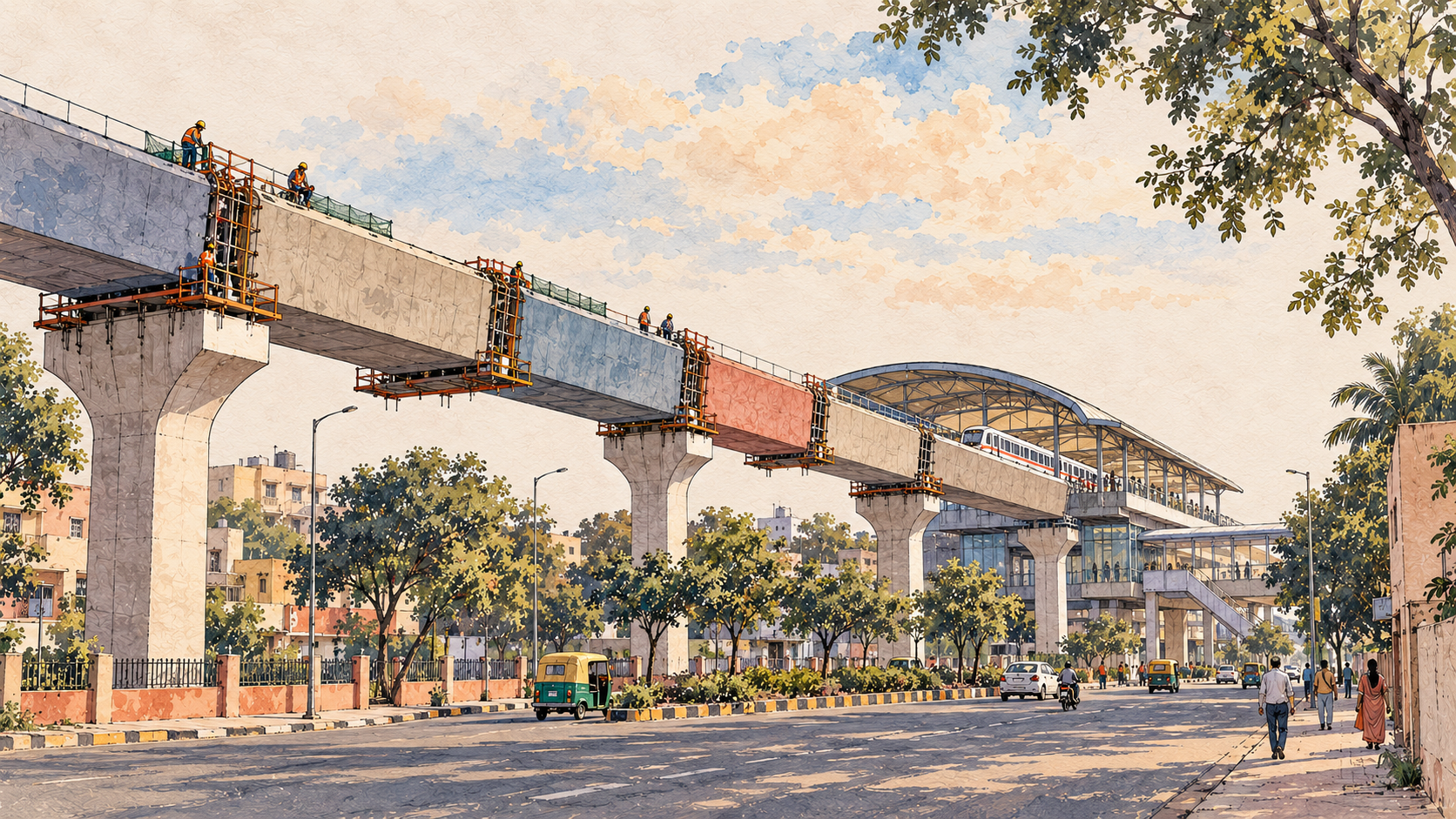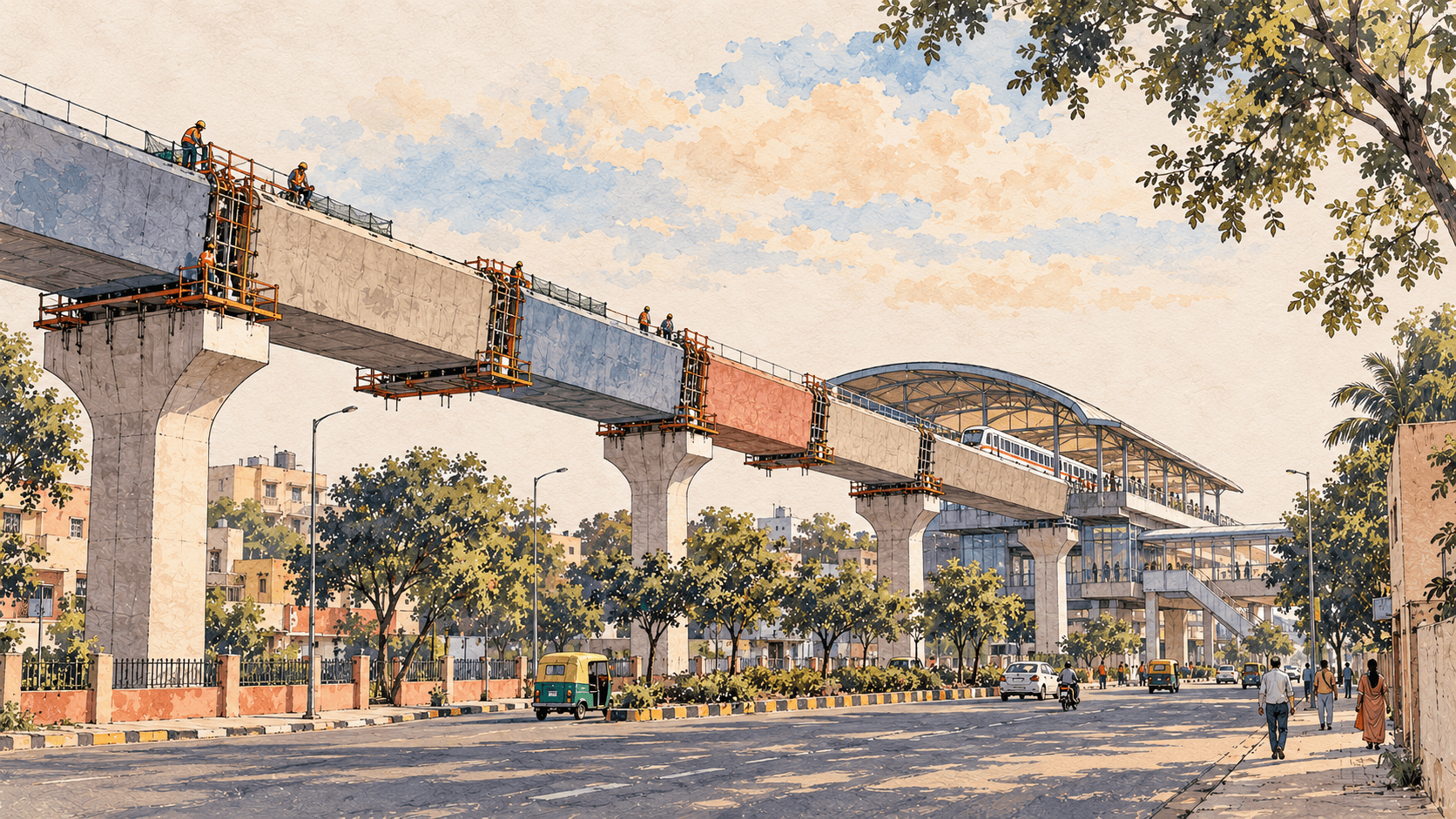
Gujarat Metro Rail Corporation has listed seven elevated viaduct and station contracts across Ahmedabad. Their tender schedules open over a week, and the bids close in three batches. It is a procurement programme taking shape on paper; none of these listings records a contract award.
Adding the seven lengths on GMRC's tender page gives 58.527 km. The listed station counts add to 43. The packages run from Naranpura to Nehrunagar (8.68 km, five stations), Veer Sawarkar Sports Complex to Arihant Nagar (4.84 km, five), Dudheshwar to Vadaj (4.62 km, three), Vishal Nagar West to Bapunagar North (11.04 km, ten), APMC to New Faisal Nagar (6.56 km, five), Shilaj Circle to Badrabad Dead End (12.527 km, seven) and Thaltej Gam Dead End to Godhavi Dead End (10.26 km, eight).
The document-sale windows on the listing begin between October 1 and October 7. Packages 1 and 2 are due on November 16, packages 3 and 4 on November 20, and packages 5 to 7 on November 21. GMRC has also listed two depot contracts, near Gyaspur and Shela, and two General Engineering Consultant selections. Their bid deadlines fall from November 19 to November 21. The work is divided across civil corridors, depots and consultant scopes before the first of these new civil contracts has been awarded.
Those packages will eventually meet at station handovers, depot readiness, power and other systems, and decisions that connect one stretch to another. The tender list alone does not show a coordination problem. It does show where one could emerge: a delay or design change at a shared boundary can affect work assigned to different contracts. The full notices and contract conditions will determine who owns those interfaces, what information must pass between teams and how changes are valued.
One visible difference in the listings deserves a closer read. The Thaltej Gam to Godhavi package explicitly includes electrical and mechanical works in its short description. The other six package descriptions shown on the same page refer to elevated viaducts and stations. That wording may reflect different scope boundaries, but the short summaries are not enough to conclude that the other packages exclude those systems. The detailed tender documents are needed before comparing the allocations. A tender is an invitation to compete. It does not establish the final price, bidder interest, award date, construction start or completion schedule. GMRC lists the notices separately from awarded tenders, so the current status is clear.
A recent DeshGujarat report also totals the seven packages at 58.527 km and 43 stations. The package arithmetic here comes from GMRC's individual entries; the matching aggregate is not independent confirmation because both accounts concern the same notices.
The next record to watch is the award schedule: how many bids each package attracts, which firms qualify, and whether awards preserve the boundaries shown in the tenders. Until then, 58.527 km describes the scale put to market, not track under construction.