
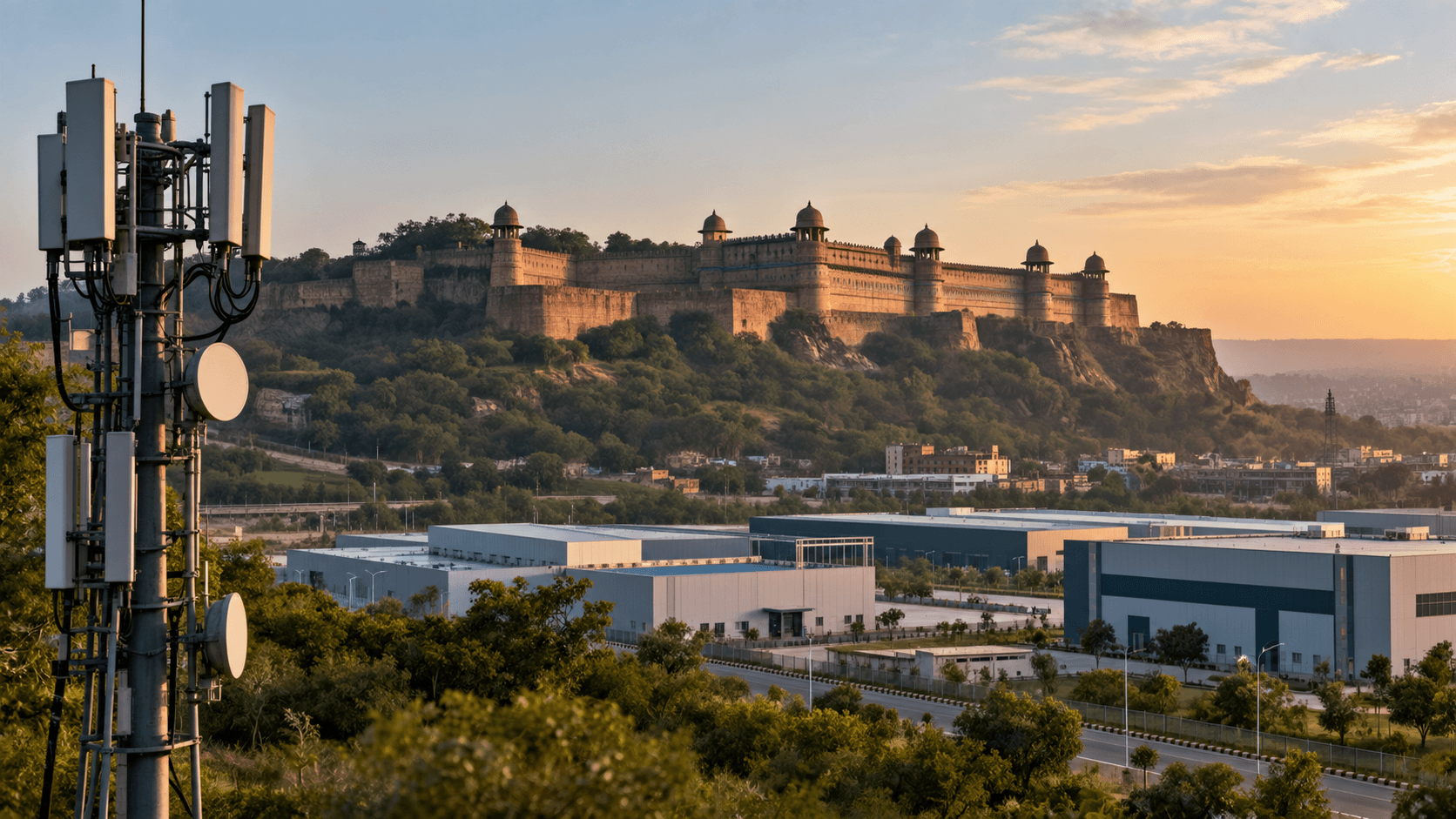
Gwalior is set to host Asia’s first Telecom Manufacturing Zone (TMZ). The proposed TMZ will cover about 170 acres in the city, with more than 90 acres identified within the Shrimant Madhavrao Scindia Counter Magnet City (SADA) and over 70 acres in the Gwalior IT Park. The zone is planned to bring together the production of telecom equipment and components with research, development, testing and certification. Its significance lies in putting these activities within one planned industrial ecosystem rather than developing them as separate facilities. The project is being developed jointly by the Centre and the Madhya Pradesh government and has now moved into the application stage, with 24 companies initiating applications to set up units. Investor meetings in Delhi and Mumbai generated proposed investments of ₹5,500 crore.
The TMZ is being planned around six telecom manufacturing verticals, with 24-25 units expected to manufacture telecom equipment and components. The plan also includes research, development, innovation, testing and certification, bringing different parts of the telecom manufacturing process into the same industrial zone. The government has described this as a complete industrial ecosystem rather than a single industrial unit. A proposed Common Testing Lab, with a package of about ₹500 crore, is part of that model. The July MoU also provides for dedicated R&D centres, common testing laboratories and certification facilities. These facilities are intended to support the development and validation of telecom products and technologies alongside manufacturing. The stated objective extends beyond manufacturing capacity. The government has linked the TMZ to strengthening domestic telecom supply chains, supporting indigenous product development, reducing import dependence and developing products for global markets. That makes the structure of the zone where manufacturing is planned alongside R&D and shared testing infrastructure a central part of what the project is intended to achieve.
The first phase of the TMZ is planned across about 170 acres in Gwalior. The Madhya Pradesh government has made the land available for development of the zone.The identified land is already under pressure from investor demand. Twenty four companies have initiated the application process to establish units in the TMZ, and the applications currently exceed the land available. Additional land will be identified as required as the project expands.The initial 170 acre footprint sits within a larger plan for the TMZ. The Centre -Madhya Pradesh agreement envisages the project as a 350-acre plug-and-play industrial cluster, with land to be expanded as required. This gives the project room to scale beyond the first phase as more companies enter the development process.
From land to infrastructure
Identifying land is only the first step in establishing an industrial zone. The next stage is putting the infrastructure needed to develop that land in place. For the Gwalior TMZ, this process has now entered the tendering stage. An EPC tender for “Infrastructure Development work of Telecom Manufacturing Zone at Gwalior -Package 1” has been issued by MPIDC at an estimated value of ₹91.61 crore. The contract has a stipulated work period of 365 days, with bids scheduled to open on October 6, 2026.The tender provides the clearest project-specific indication so far that development is moving beyond the identification of land and into physical infrastructure planning. It is still a procurement stage, however: the tender has been issued and the bidding process is underway, rather than the infrastructure being reported as completed or under construction.The wider project also includes infrastructure support through the Centre’s Phase-I funding. The Department of Telecommunications has allocated ₹493 crore for core infrastructure for Phase I, while Madhya Pradesh has provided the land and an incentive package covering areas including power.For the manufacturing units planned within the zone, the important shift is therefore from a defined land footprint to physical site development. The infrastructure tender is the first concrete procurement step visible in the project timeline; the next stages will determine how quickly that infrastructure is delivered and made available to the companies entering the zone.
From applications to buildable packages
The project has now reached two different stages of implementation. On the industrial side, companies have entered the application process to establish units within the TMZ. On the infrastructure side, a dedicated EPC package has been issued for development of the zone.The infrastructure package is valued at ₹91.61 crore and carries a 365-day work period. Its tender documents include an RFP, layouts and a bill of quantities, with bids scheduled to open on October 6, 2026. This provides a defined procurement package for the physical development of the TMZ rather than an infrastructure requirement stated only at the planning stage.The two processes are therefore running alongside each other: companies are entering the application process while infrastructure development is being taken to tender. As of September 2026, the documented position is that the project has reached the stage of a defined infrastructure package, but that package remains in the bidding process.
The Gwalior TMZ is significant for the infrastructure sector because it is not only a manufacturing investment but the development of a dedicated industrial ecosystem around that manufacturing activity. Its progress now involves converting identified land into an industrial site, providing the supporting infrastructure required for manufacturing units, and developing shared facilities for testing, certification and research. With companies in the application process and a dedicated infrastructure package at the tender stage, the project provides a concrete example of how industrial infrastructure is being planned alongside the manufacturing capacity it is intended to support.


