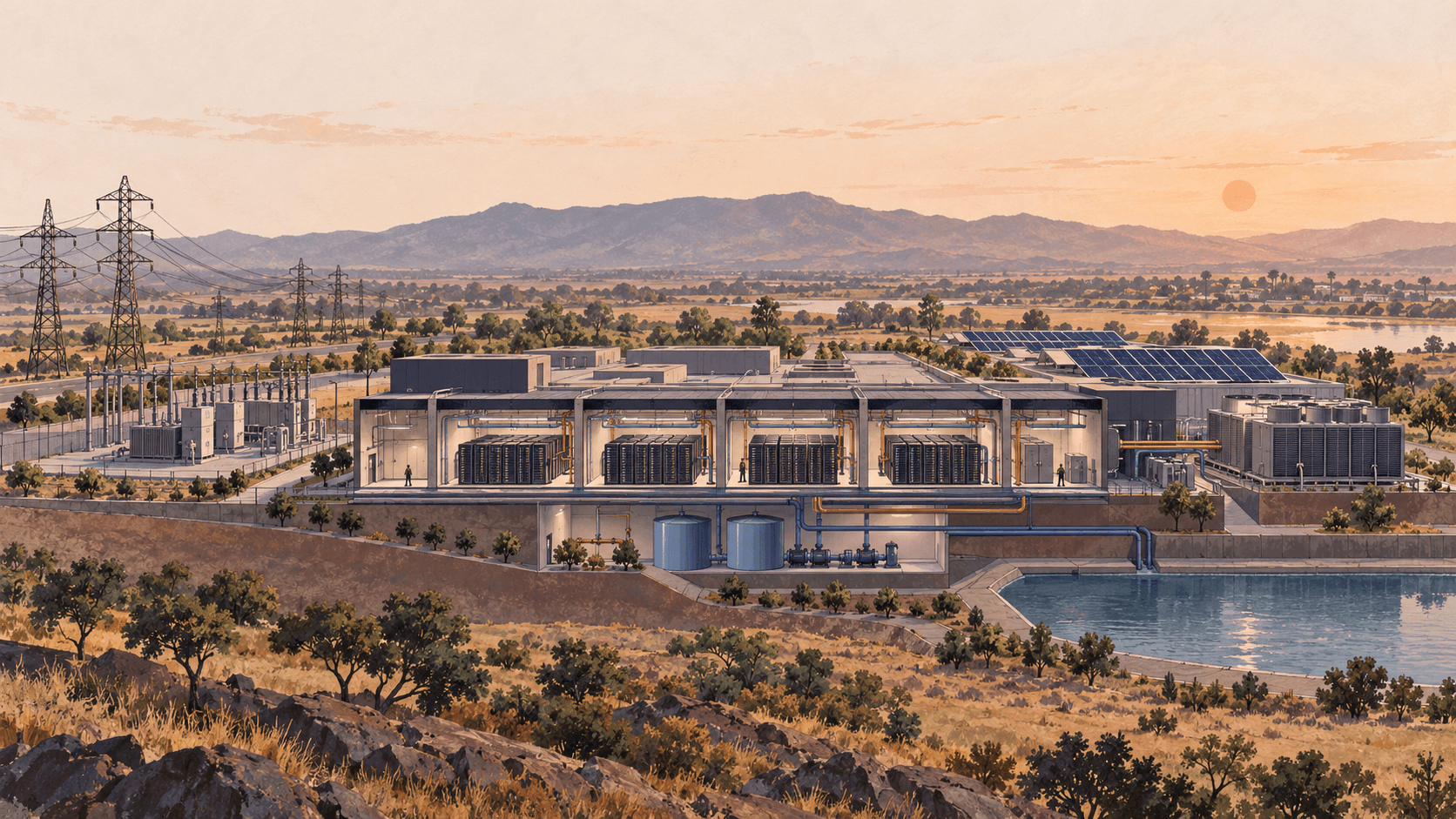
India’s data centre policy in 2026 combines national fiscal measures, state incentives and project-specific approvals. For developers comparing sites, the useful question is which benefit applies to their company, equipment and commissioning schedule.
Uttar Pradesh offers a timely example. Invest UP now lists implementation guidelines, with an upload date of 10 October, alongside its notified 2026 policy. That upload is a document update; it does not mean the policy began this week. The notification records 9 July 2026. The official policy page lets applicants distinguish those documents before relying on a headline incentive.
What is India’s national data centre policy?
The widely circulated MeitY Data Centre Policy 2020 is explicitly marked as a draft for discussion. It proposes investment support and regulatory changes. That document alone cannot establish an entitlement to a concession. A project team needs the applicable notification, implementation rules and approval from the responsible authority.
Separately, PIB’s September 2026 backgrounder describes infrastructure status for data centres and a tax holiday for eligible, notified foreign cloud providers using Indian data-centre infrastructure, covering tax years 2026–27 to 2046–47. This description does not establish a blanket tax exemption for every domestic developer or contractor. Infrastructure status also does not promise a particular loan rate.
How state incentives change the project calculation
Under Uttar Pradesh’s notified policy, a park requires at least 40 MW of total load capacity. A unit must exceed 2 MW and remain below 40 MW; captive units are excluded.
Eligible units can receive a 7% capital subsidy on eligible fixed capital investment, capped at ₹20 crore, disbursed within ten years with a ₹2 crore annual ceiling. Land and building costs are excluded from that calculation. Parks have a separate interest-subsidy mechanism, with a base overall ceiling of ₹50 crore.
Those definitions affect the appraisal. Applying a subsidy percentage to the entire development budget would overstate support. Treating a multi-year reimbursement as cash available during construction would also distort the funding plan. For illustration, ₹100 crore of eligible investment produces a base subsidy calculation of ₹7 crore, subject to approval and the stated payment limits. A ₹100 crore total budget containing ineligible land and building expenditure would produce a lower claim.
The state’s Letter of Comfort specifies approved incentives and conditions. It remains conditional on compliance. A policy announcement therefore needs to be translated into an approved project schedule, eligible-cost ledger and claim timetable before it enters the financing model.
What developers still need to establish
For a site comparison, ask for dated evidence of the electricity connection, cooling-water arrangement, land permissions and construction approvals. Assign an owner and deadline to each outstanding item. Our report on data-centre grid connections examines that physical delivery problem.
PIB also notes that cooling demand depends on technology and that groundwater extraction is regulated. A cooling proposal should identify its water source and operating requirement before a developer counts a site as ready.
This explainer establishes policy provisions, not evidence of incentive payments or completed capacity. The next records to watch are project approvals, disbursements and commissioning dates. For an applicant, the immediate task is to reconcile the proposed capital budget with the eligible-cost definition and obtain written confirmation of the benefits approved for that project.