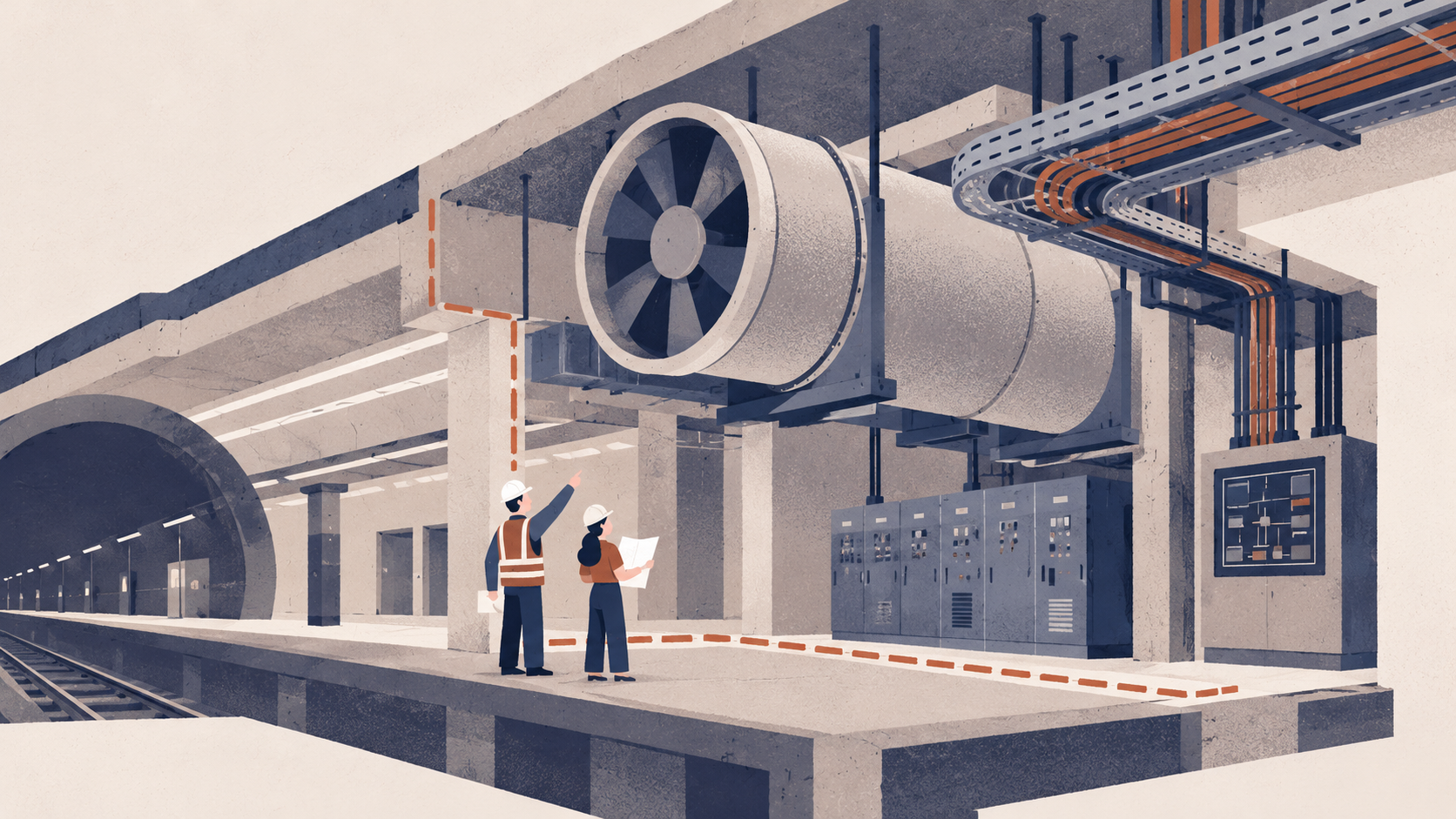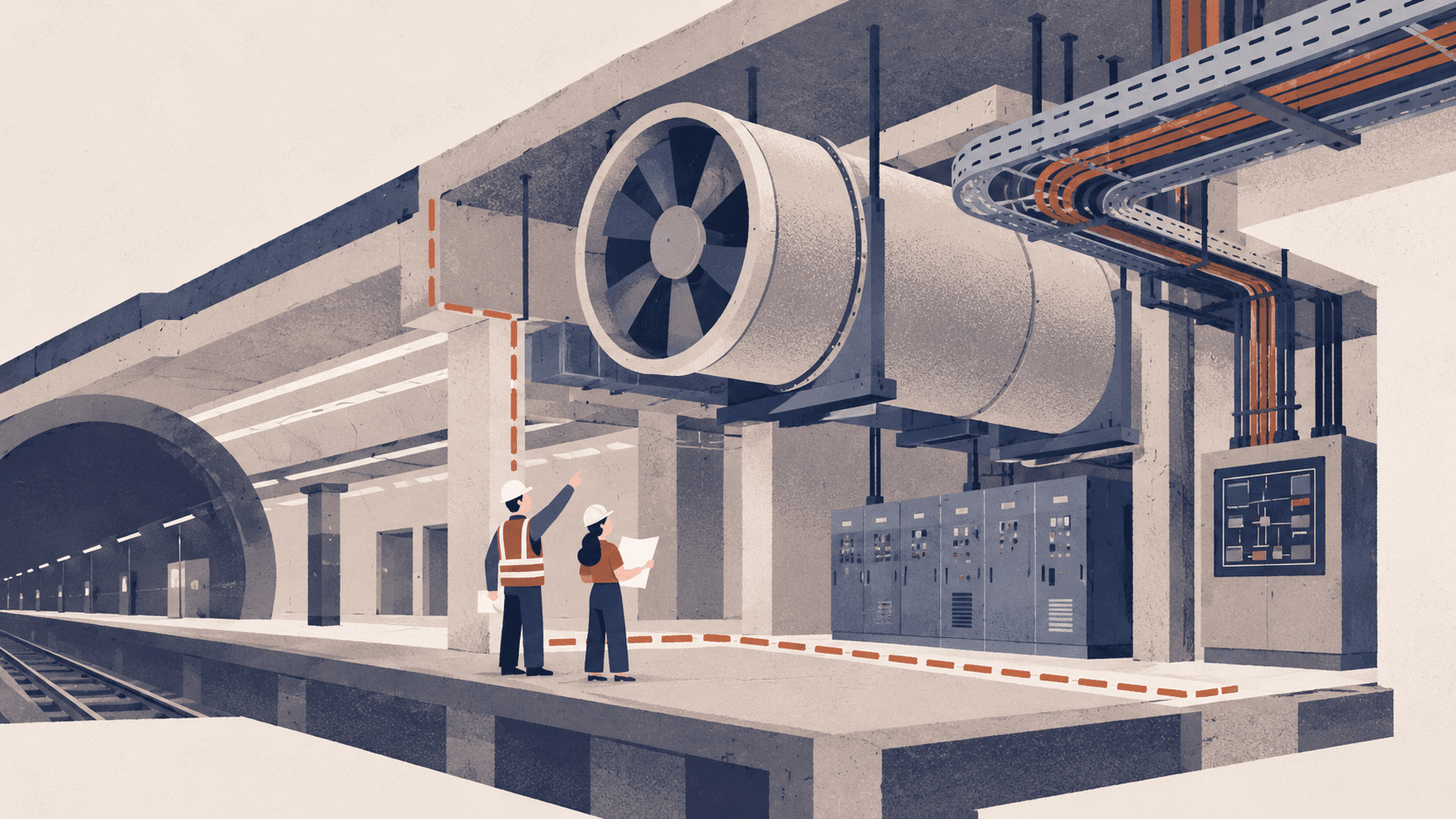
Uttar Pradesh Metro Rail Corporation (UPMRC) published a tender on 10 October for electrical and mechanical systems at seven underground Lucknow Metro stations. It calls for design verification, detailed engineering, supply, installation, testing and commissioning of diesel-generator sets, environment-control systems, tunnel ventilation and building-management systems. The estimate is ₹3,26,80,81,456, about ₹326.81 crore. That is the tender estimate, not a contract award or recorded expenditure. The official tender notice is listed as 2026_UPMRC_294005_1 in the Sources ledger below.
The procurement clock is now visible. UPMRC lists an online pre-bid meeting for 27 October, bid submission from 14 November, a deadline of 3 p.m. on 25 November, and bid opening at 3 p.m. on 26 November. The notice gives a 1,095-day work period. It does not say when that period starts, and it does not give a passenger-opening date. This notice remains an invitation to bid.
A separate UPMRC tender concerns civil works on an approximately 6.70-kilometre underground section from Charbagh to Chowk, including seven stations. The new notice procures station systems in a distinct package. That split makes coordination a central delivery question: when can systems contractors access each station, who signs off interfaces with the civil works, and how will integrated testing be sequenced? The earlier civil tender is also listed in the Sources ledger.
The high-level notice includes design verification and commissioning, but the detailed technical schedules and bill of quantities have not been reviewed here. The interface questions are points to test against the contract documents, not evidence of a design conflict or delay.
Next milestones
27 October 2026: online pre-bid meeting
14 November: bid submission opens
25 November: submission deadline; 26 November: bid opening
The next useful evidence will be the award and contract programme. Those records should show when the 1,095-day clock begins and how station access, system installation and integrated tests fit together. Until then, the tender establishes a procurement timetable, not when passengers can use the stations.