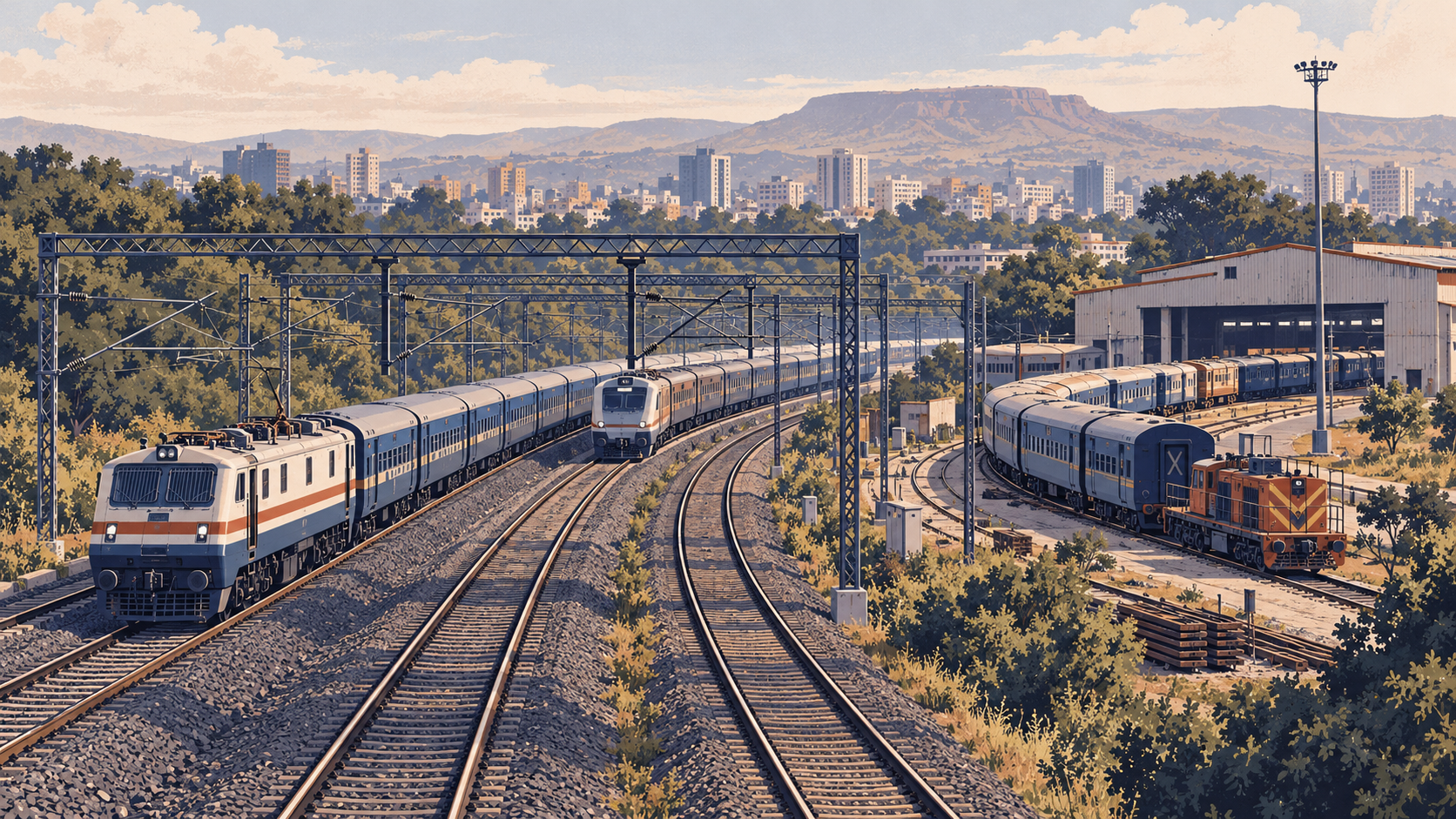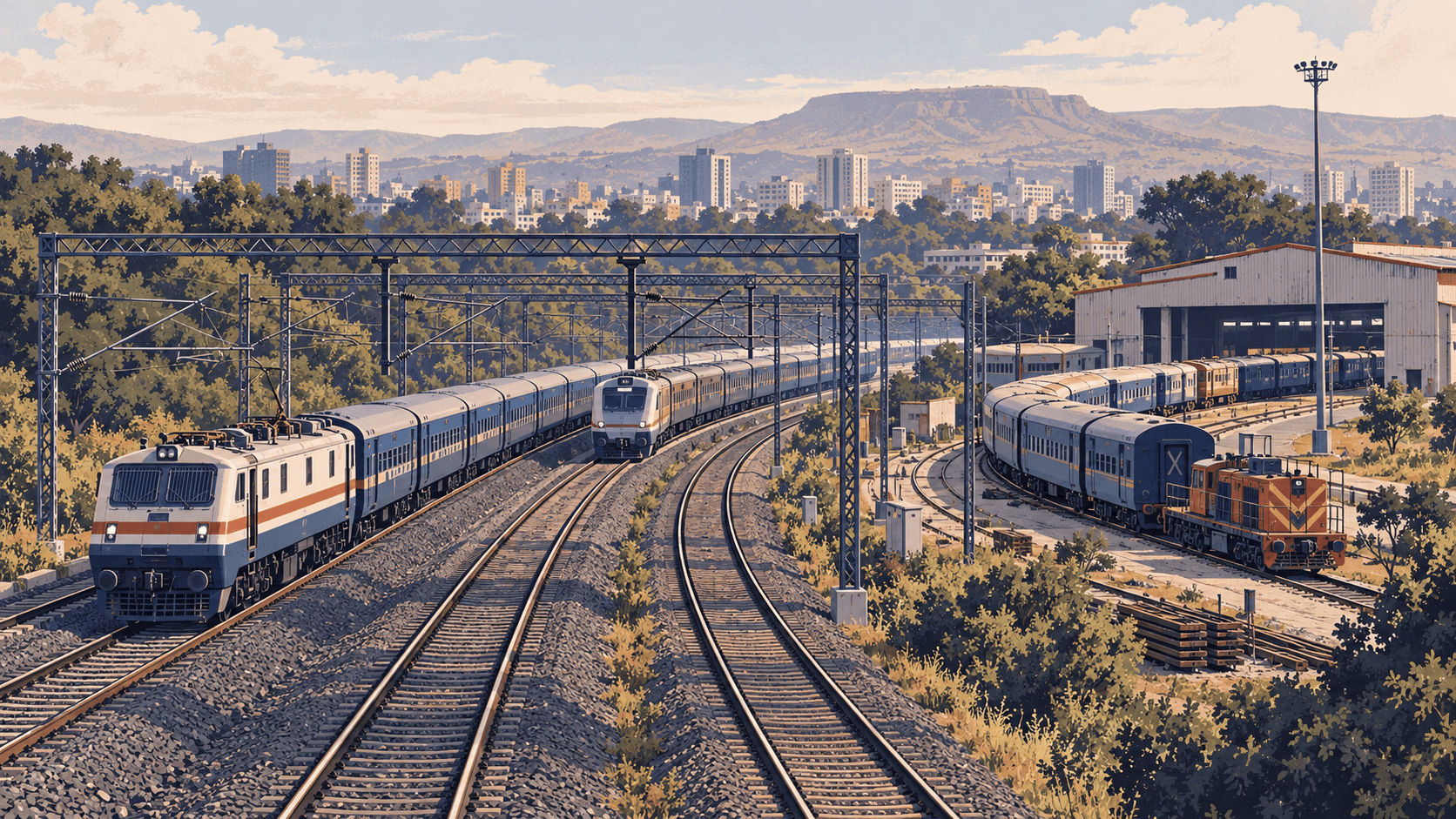
Central Railway has commissioned a third line between Hadapsar and Ghorpuri in Pune, after a block of engineering and signalling work that ran through early October. The line’s immediate job is operational: give train rakes a route for transfers and yard movements that would otherwise use the main lines.
A March reply by the Ministry of Railways to a Lok Sabha question listed the Hadapsar–Ghorpuri third line among capacity works being taken up in Pune. At the time, the ministry said the area handled about 33 originating Mail and Express trains a day. That is a useful baseline, though it does not isolate delays or conflicts on this short section. The parliamentary reply, published by PIB on 25 March, gives the network context, not a forecast of the line’s eventual effect.
A route for the work behind the timetable
In a 5 October report, The Indian Express quoted Central Railway chief public relations officer Dr Swapnil Nila describing the third line as an alternate shunting neck. It can be used for forming and sorting rakes, reversing locomotives and brake vans, and moving trains to and from the maintenance depot. The stated purpose is to reduce detention on the main lines and support operations through the proposed Hadapsar Satellite Terminal.
That separation is the useful engineering idea here. Yard work is necessary, but each movement across a running line can occupy time and constrain other trains. A dedicated route can reduce those conflicts. The benefit depends on how railway control uses it, how often yard moves occur, and whether the terminal and its services are ready to absorb more operations.
The reported commissioning involved changes at both ends of the corridor. The Indian Express account lists 32 new or altered routes and 11 tracks at Pune, plus 28 routes at Hadapsar. It also reports that around 900 metres of damaged overhead contact wire was replaced, restoring the section’s stated speed potential from 75 kmph to 130 kmph. These are reported works and design capabilities. They do not, by themselves, show that trains now run faster or arrive more punctually.
The operating results are still to be measured
Central Railway’s next public evidence could show whether the new line is doing what it was built to do: fewer shunting movements on the main lines, less train detention, improved punctuality, or additional services starting from Hadapsar. The reporting reviewed for this piece contains no before-and-after figures for those outcomes and no confirmed start date for the proposed satellite terminal.
For now, the commissioning closes a construction and signalling milestone. The performance test will come in the timetable and operating data that follow.