
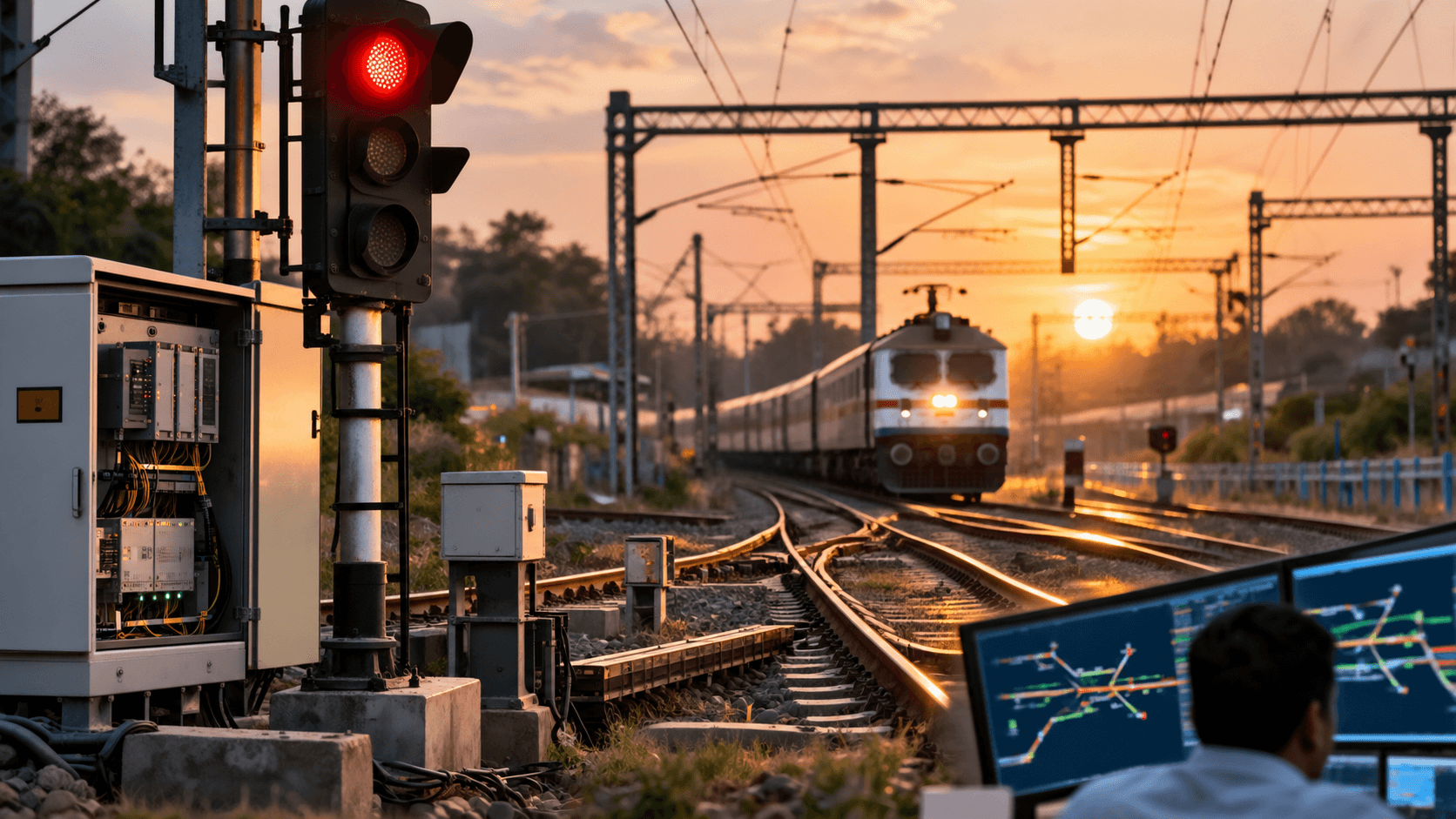
Indian Railways has approved ₹209 crore for Electronic Interlocking (EI) at seven stations in Central Railway’s Solapur Division: Mohol, Mundhewadi, Bale, Solapur, Hotgi Junction-Hotgi A Cabin, Shahabad and Wadi Junction. The stations are located on the High Density Network (HDN) 7 route, where Railways has also sanctioned Automatic Block Signalling (ABS), Kavach and Centralised Traffic Control (CTC) works. At these stations, EI will form part of a wider signalling upgrade. Its implementation will involve station-level installation, testing and commissioning alongside coordination with train operations.
The Signalling Architecture
Electronic Interlocking is the station-level signalling component of the programme. Unlike conventional relay-based interlocking, EI uses computer-based controls to manage routes, points and signals, preventing conflicting movements. Indian Railways describes the system as improving signalling reliability while enabling faster fault detection and restoration and easier maintenance.
The wider signalling programme combines four distinct functions. EI controls movements within station limits, while Automatic Block Signalling divides the route into signalling blocks, allowing more trains to be handled on the line. Kavach provides an automatic train protection layer, monitoring train movement and intervening when conditions such as a danger signal or excessive speed require braking. Centralised Traffic Control enables train movements and signalling operations to be monitored and managed from a centralised control system.
These functions are technically linked, not separate layers. Kavach specifications provide for interfaces with signalling infrastructure, while CTC’s functional requirements include interfaces with interlocking and Kavach. For the Solapur route, this makes the EI installations part of the infrastructure that will support the testing and commissioning of the wider signalling system.
Procurement and Implementation
The signalling work already being procured in Solapur Division provides a picture of the implementation activity around the route. A Central Railway tender valued at ₹80.52 crore covers automatic-signalling work between Madha and Tikekarwadi. Its scope includes survey, design, supply, installation, testing and commissioning, Electronic Interlocking in auto huts, alterations to existing Electronic/Relay Interlocking at adjoining stations, and construction and electrification of an auto-block hut.
A separate Central Railway tender valued at ₹19.31 crore covers alterations to existing Kyosan Electronic Interlocking, modification of point circuits and provision of a “KAVACH Ready interface” across Pune, Nagpur, Bhusawal, Solapur and Mumbai divisions.
The seven-station EI programme sits within this broader signalling activity. At the seven identified stations, the approved works involve the installation of new Electronic Interlocking systems, creating the station-level signalling infrastructure required as the HDN-7 modernisation progresses.
Testing and Commissioning
Installation alone does not bring an Electronic Interlocking system into service. Indian Railways’ signalling guidance requires interlocking and functional testing before commissioning. These tests verify the integrity of EI wiring, application logic and the signalling equipment connected to it. Indian Railway’s testing handbook also provides for Factory Acceptance Testing and Site Acceptance Testing for Electronic Interlocking installations.
The Railway Board’s signalling guidelines further require a System Integrity Test after completion of the outdoor signalling and EI works and before commissioning. This establishes the integrity of the completed signalling installation before it is placed in operation.
For the Solapur programme, these procedures form the testing stage between physical installation and operational use. They also become relevant where the EI installations have to be commissioned as part of a route on which ABS, Kavach and CTC works are being introduced.
Traffic Blocks and Operational Coordination
Signalling work is carried out within an operating railway, so alterations to interlocking and associated equipment have to be coordinated with train movements. Indian Railways’ Signal Engineering Manual requires traffic notices to be issued in consultation with other divisional officers before signalling installations are altered or new equipment affecting the safe operation of signals, points or interlocking is introduced. It also provides for temporary traffic-working instructions where necessary.
The Railway Board’s commissioning procedure provides for disconnection or non-interlocking arrangements and traffic blocks where required at the site. Once the work is completed, a reconnection memo is issued, with commissioning subject to the applicable sanction and safety certification. This places the seven-station EI programme within both a technical and operational framework. The work is not limited to installing signalling equipment; the installations have to be tested, brought into service and coordinated with the railway’s continuing operations.
The significance of the programme lies in the role signalling plays beneath everyday railway operations. It governs how trains are routed, separated and managed across a busy network, even though much of this infrastructure is invisible to passengers. Modernising the signalling system on HDN-7 therefore strengthens an essential part of the railway’s operating infrastructure, with implications for the safety, capacity and efficiency of passenger and freight movement along the route.


