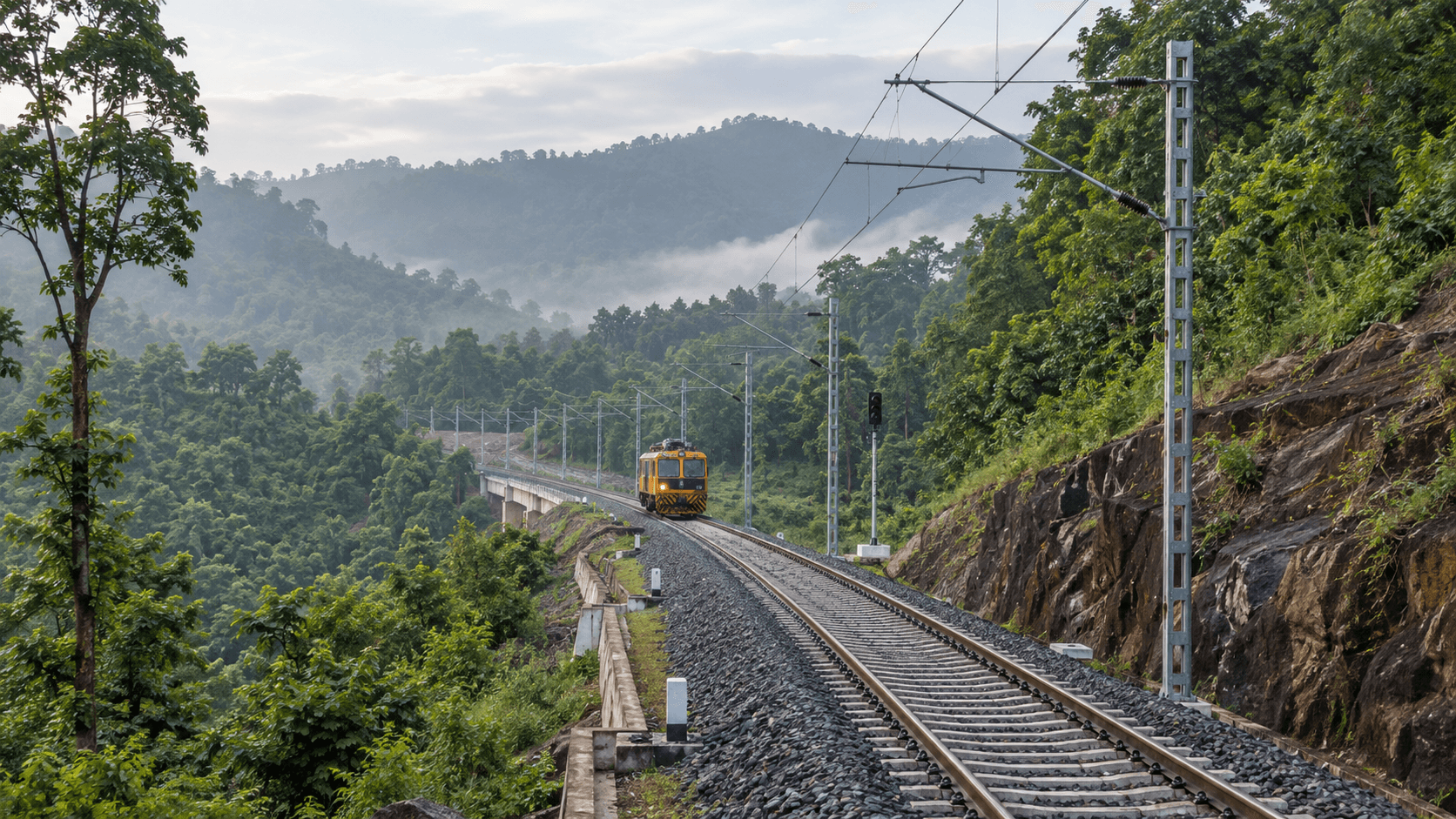
The final rails now reach Rowghat. On 23 September, Indian Railways said the 17.5 km Taroki–Rowghat section of the Dallirajhara–Rowghat new line had been completed. A Commission of Railway Safety inspection and speed trial were carried out a day earlier.
That is a major milestone for a railway built through remote south Chhattisgarh. It is also a useful moment to separate three ideas that infrastructure announcements often compress into one word: physical completion, safety authorisation and operational service.
The track may be built. The systems may have been tested. But the public evidence still needs to show when trains can run, under what conditions and at what level of service.
A 95 km project reaches its final section
The Taroki–Rowghat stretch forms the last 17.5 km of the 95 km Dallirajhara–Rowghat new line under South East Central Railway’s Raipur Division. Passenger services currently reach Taroki. Extending the railway to Rowghat is intended to connect a remote area to the wider network and support freight movement, particularly iron ore for Bhilai Steel Plant.
The official release describes the section as single-line, electrified and broad gauge. It says inspectors examined the railway line, bridges and culverts, electrification, signalling and other safety and technical arrangements. The speed trial tested operational capacity and safety standards.
Those details matter because a railway is not commissioned by track alone. It is a chain of assets and operating decisions. The formation must be stable. Bridges and culverts must carry the design loads. Overhead equipment must supply traction power. Signalling must establish safe movement authority. Communications must work. Stations and operating staff must be ready. Each interface can become the point where a completed civil project waits for service.
What a CRS inspection means
The Commissioner of Railway Safety provides an independent safety gate before a new passenger railway opens. The inspection can examine records, structures, track geometry, signalling, electrification, clearances and operational arrangements. A speed trial adds evidence about how the section behaves under movement.
The inspection is therefore more than a ceremony. It tests whether the railway is ready to move from construction control to operating control. Yet an inspection does not automatically tell the public that unrestricted services have begun. The authorisation may carry conditions. Residual works may remain. Operating speeds may be restricted. Additional documentation or corrective action may be required.
The next decisive document is the safety authorisation and its conditions. That record would show whether the section can open, at what speed and subject to which requirements. A separate operating notification would show when trains will actually run.
Completion and operation are different milestones
Project teams need both milestones because they answer different questions. Physical completion asks whether the promised assets exist. Safety authorisation asks whether those assets can be used under defined conditions. Commercial operation asks whether services are running and producing the intended transport capacity.
The distinctions are particularly important on a remote single-line railway. Capacity depends on crossing arrangements, signalling, timetable design, locomotive and wagon availability, loading infrastructure and the readiness of the connecting network. A line can be open while carrying fewer trains than expected. It can carry freight before regular passenger services expand, or passenger services before the principal freight flow develops.
A stronger project update would therefore publish four dates: physical completion, CRS inspection, safety authorisation and first regular service. It would also state the permitted speed, initial timetable and freight operating plan.
The iron-ore case needs operating data
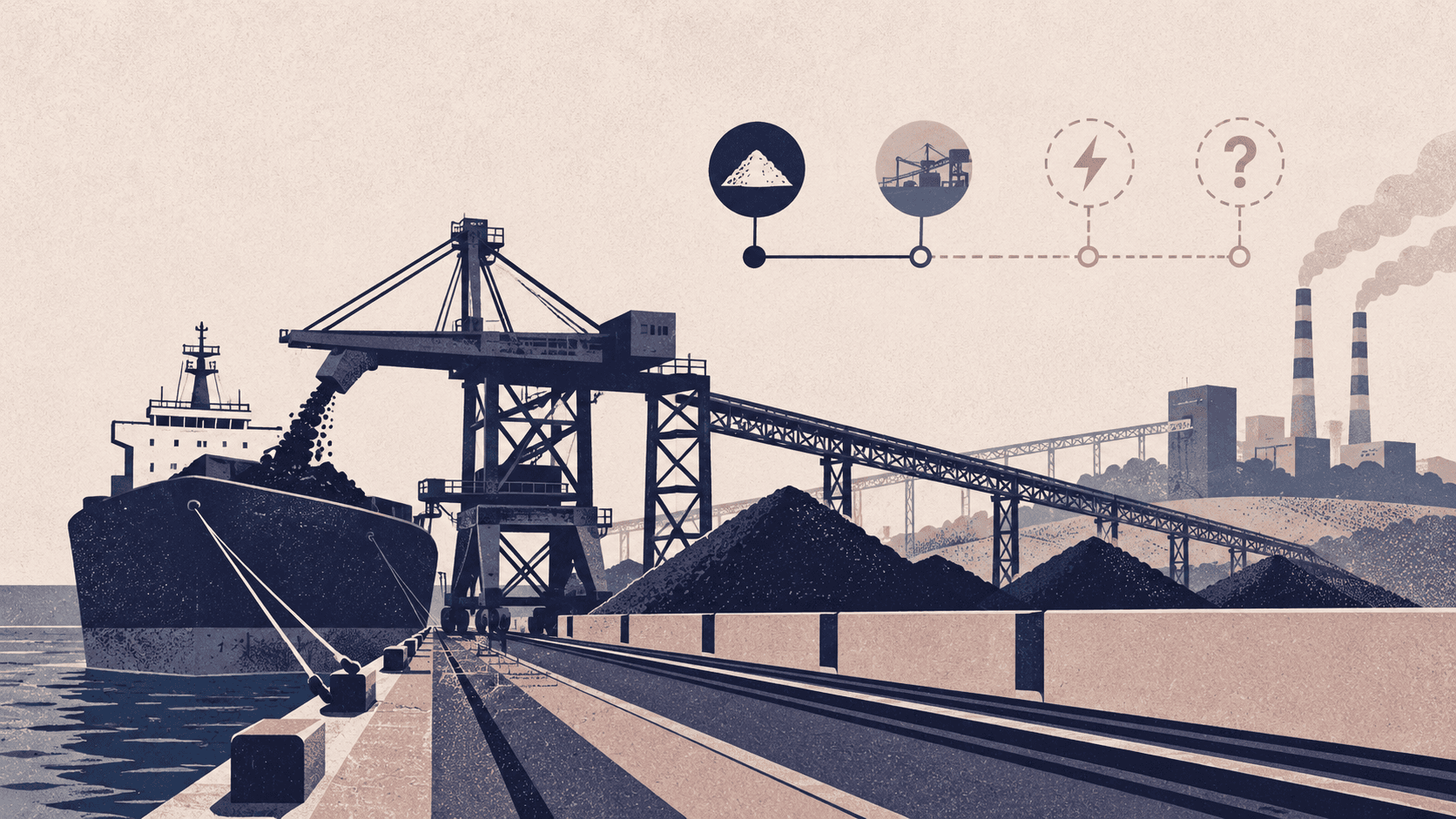
The official case for the line includes iron-ore transportation to Bhilai Steel Plant. That is plausible and strategically important, but the benefit will depend on actual logistics. The railway must connect mines or loading points to the plant through a workable operating chain. Sidings, terminals, wagon supply, loading capacity and network paths all affect how much material moves.
The useful measure is not only that the line reaches Rowghat. It is tonnes moved by rail, train paths used, loading time, delivered logistics cost and the share of plant demand served. Those figures can test whether the new infrastructure changes the industrial supply chain or simply creates potential capacity.
The same discipline applies to passenger benefits. Connectivity to Raipur and Bhilai can improve access to education, healthcare, employment and trade, but only if the timetable, fares and connections match how people travel. Station footfall, passenger counts, service frequency and journey time will show whether the new link is becoming everyday infrastructure.
What remains unanswered
The release provides a clear project-stage update but leaves several operational questions open. Has the CRS issued final authorisation? Were conditions or speed restrictions imposed? When will passenger trains extend beyond Taroki? What is the initial service pattern? What residual works remain? How will freight operations connect to Bhilai Steel Plant?
There is also a maintenance question. A new line through forested and hilly terrain will require attention to drainage, slopes, vegetation, track access and the reliability of power and signalling equipment. The handover from construction to maintenance should identify responsibility, inspection cycles, spares and response arrangements before traffic grows.
The evidence ledger to watch
The next phase can be tracked through a compact set of records: the CRS authorisation, opening notification, sectional appendix, timetable, freight operating plan and monthly traffic data. Together, they would show whether the project has crossed from built asset to working railway.
The Dallirajhara–Rowghat line has reached a meaningful point. The final section is physically complete, and the safety inspection and speed trial have taken place. Those facts deserve recognition without being stretched into claims the documents do not yet support.
The next story is no longer about laying the final track. It is about the conditions attached to opening, the services that begin and the traffic that actually moves. That is where a completed railway starts proving what it was built to do.