Some podcast episodes begin months before the cameras turn on.
This one began with a brief conversation at an event in June.
I met Professor T. G. Sitharam at the ACCE event in Navi Mumbai. At that point, it was just a short interaction. We spoke, exchanged a few words, and I had the opportunity to introduce him to what we were building with The Bridging Room Podcast.
I remember thinking that this was someone I would genuinely want to have a longer conversation with.
Not just because of his academic credentials, but because of the sheer range of his career.
Professor Sitharam has been a professor at IISc, Director of IIT Guwahati and Chairman of AICTE. His work has spanned geotechnical and earthquake engineering, research, infrastructure, education and institution-building. He has been associated with projects and studies that sit at some of the most interesting intersections of engineering and national infrastructure.
So naturally, we followed up about the podcast.
But the only problem was timing.
Sir was going through his superannuation from IISc and had a number of commitments around that period. So while we had discussed the possibility of recording, it was difficult to get a confirmed day for the shoot.
And then, on August 1, the confirmation finally came.
The episode was happening on August 8th.
I had less than a week.
And suddenly, everything I had casually thought, "I should probably ask him about that someday," became, "I need to understand this properly before I sit across from him."
That week turned into one of the most interesting research exercises I have done.
The problem with researching someone like Professor Sitharam, the first problem was simple, where do i even start?
If I wanted to prepare a conventional interview, I could have simply put together questions around his CV.
But that felt like a terrible way to approach someone who had spent decades working across such different parts of engineering.
The more I read, the more I realised that his career wasn't really a list of positions but a series of transitions.
And underneath all of that was a recurring question that became increasingly interesting to me:
How do engineers make decisions when they don't have all the information they would ideally want?
That question eventually took me into geotechnical engineering.
And that was where the research really opened up.
The more I read, the more I understood that geotechnical engineering is fundamentally about working with incomplete information. You can investigate a site, drill boreholes, take samples and conduct tests, but you can never see every part of the ground. There is always some degree of uncertainty.
That uncertainty becomes particularly important on large infrastructure projects. If the subsurface information is weak, it doesn't remain a geotechnical problem. It can affect the design, construction method, cost, schedule and eventually the safety of the structure itself.
That became one of the questions I most wanted to discuss with Sir: how much of the difficulty in Indian infrastructure actually begins before construction, simply because we don't know enough about the ground?
Then I started looking at the projects
The Chenab Rail Bridge became one of the biggest parts of my research.
Most people know the finished structure. It is an extraordinary piece of infrastructure, but I became more interested in the conditions that existed before the bridge was there.
Professor Sitharam first visited the Chenab gorge in 2005, when the site presented an enormous engineering challenge. There was difficult terrain, complex geology, seismic considerations and the basic question of whether such a bridge could actually be built there.
I wanted to understand what an engineer sees when they arrive at a site like that for the first time, before there is a design that tells them what the answer should be.
The project also raised questions about how engineering decisions evolve when the information available during construction is different from what you knew at the beginning. The idea of a design that can evolve as you learn more about the ground sounds perfectly reasonable in engineering theory, but managing that kind of uncertainty on a major project brings an entirely different set of contractual and managerial challenges.
That was where the conversation started becoming much larger than geotechnical engineering for me.
The same questions appeared in different forms across the projects I researched.
At Anji Khad, what changed when the original arch concept eventually became a cable-stayed railway bridge? At the Ram Mandir project, what were the geotechnical unknowns that had to be resolved before the foundation could be designed? Prototype fast breeder reactor at Kalpakkam, how do you approach a project where the consequences of a mistake are almost impossible to accept?
These are technical questions, but they are also questions about judgement.
The part of his career that interested me most
While the infrastructure projects were fascinating, I became increasingly interested in what happened earlier in Professor Sitharam's career.
After studying in India, he went to institutions such as the University of Waterloo and Texas, where earthquake geotechnics was a major area of research. Eventually, he made the decision to return to India and build his work at IISc.
When he joined IISc, some of the research capabilities that later became associated with his work did not simply exist in their finished form. Research groups, laboratories and equipment had to be developed.
That made me think differently about what building engineering capability actually means.
We often talk about research as if researchers simply enter a laboratory and start producing knowledge. But someone has to build that laboratory, develop the equipment, find the funding, train the students and create an environment in which the work can continue.
I was particularly interested in his decision to develop equipment in India rather than simply relying on imported systems. It made me think about the difference between using technology and building the capability to create it.
That distinction matters for a country trying to develop its own engineering ecosystem.
By the time the interview arrived, the questionnaire had become a map
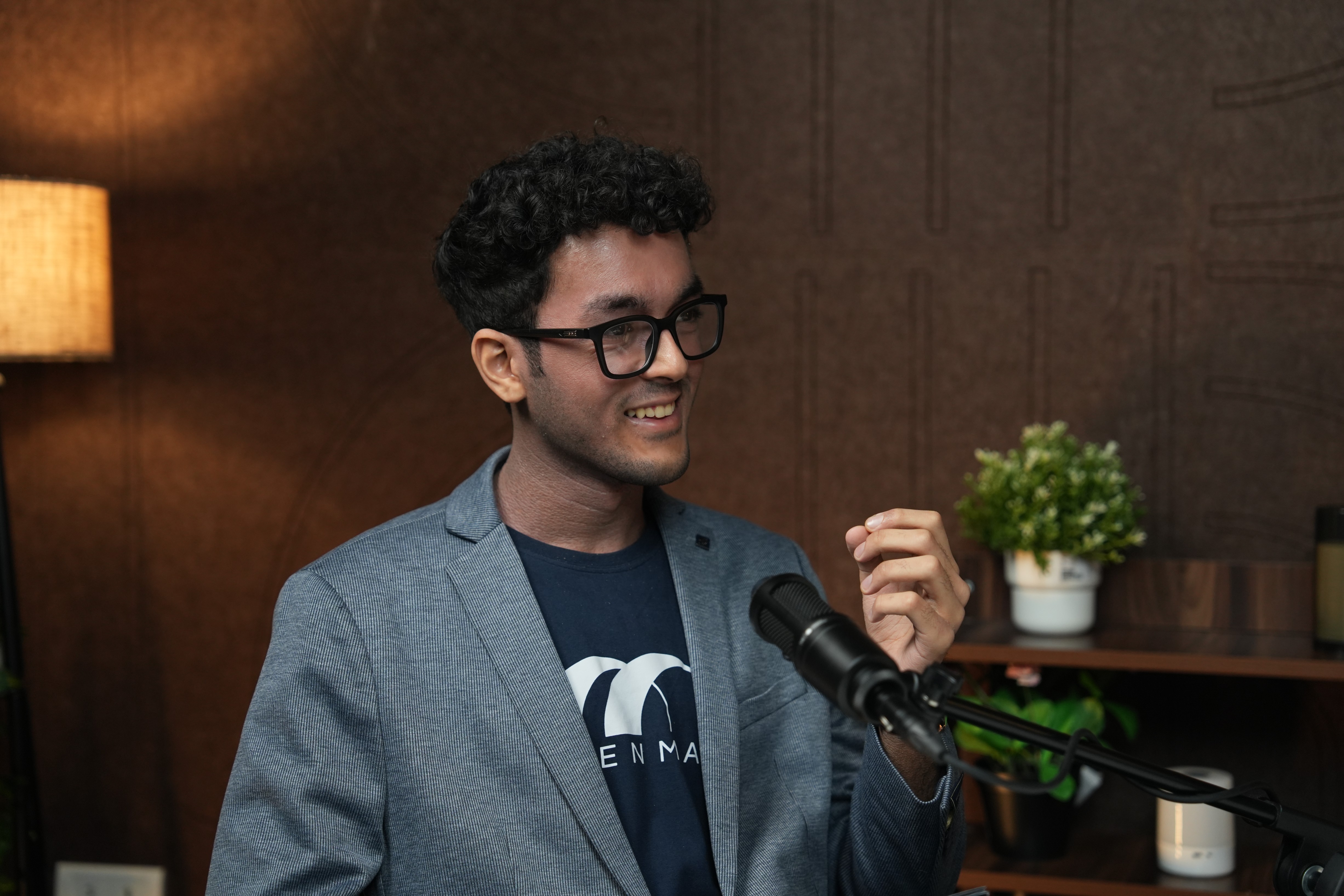
After several days of reading, I had a long list of questions.
But I knew I wasn't going to ask all of them.
The questionnaire eventually became less of a script and more of a map. I wanted to make sure we could move naturally through his education, his return to India, his work at IISc, major infrastructure projects, engineering education, AICTE and his thoughts on the future of engineering.
There was also a more personal question I wanted to understand: how does someone's definition of a "good engineer" change after several decades in the profession?
That question probably mattered to me as much as the technical ones.
Because when you look at a career from the outside, it is easy to focus on the titles and the projects. Once you start speaking to someone who has lived through them, you begin to see the decisions, setbacks, uncertainty and years of work behind those achievements.
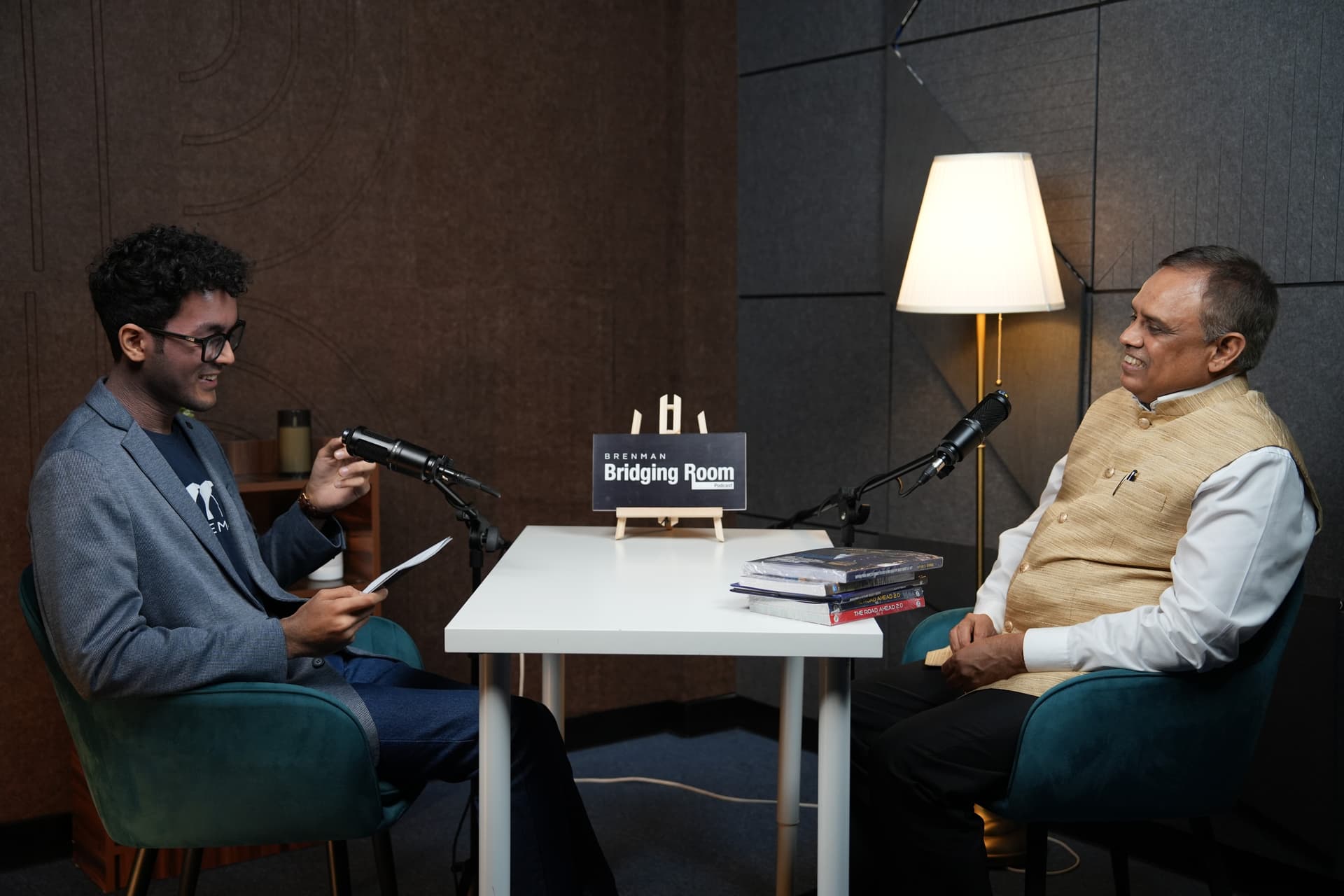
And then we actually had the conversation
This was the part no amount of research could completely prepare me for.
I had spent the previous week reading about the projects, the institutions and the technical problems. I knew the chronology of his career and had tried to understand the engineering behind the work.
But once the conversation started, the research became something different.
A project history becomes a memory when you hear it from someone who was actually there. A technical decision becomes a story about why a particular choice had to be made. A career transition becomes something more personal than what you can understand from a CV.
That was probably the most valuable part of the entire experience for me.
Research can tell you what someone has done, but conversation helps you understand why.
I went into the week thinking I was preparing for a podcast episode. I came out of it with a much deeper appreciation for geotechnical engineering and, more broadly, for the amount of invisible work that sits behind the infrastructure we see every day.
We often judge engineering by what eventually stands above the ground.
But some of the most consequential engineering decisions are made much earlier, when the engineer is still trying to understand what lies beneath it.
And perhaps that is what I found most interesting about researching Professor Sitharam.
His career, in many ways, has been about understanding uncertainty and then building the knowledge, institutions and systems needed to make better decisions despite it.
From the ground beneath a bridge to the institutions that educate the engineers who build them, the scale of the problem kept changing, but the responsibility remained remarkably similar.
The episode is a conversation about that journey, and I am glad that a brief interaction in June eventually turned into a week of research and a conversation I will remember for a long time.
A teaser from the full conversation is now live as well. It offers a small glimpse into what we discussed, but there is much more to the conversation, from geotechnical engineering and major infrastructure projects to education, leadership and the future of engineering.
The latest teaser is live now. Give it a watch, and stay tuned for the full episode of The Bridging Room Podcast.