
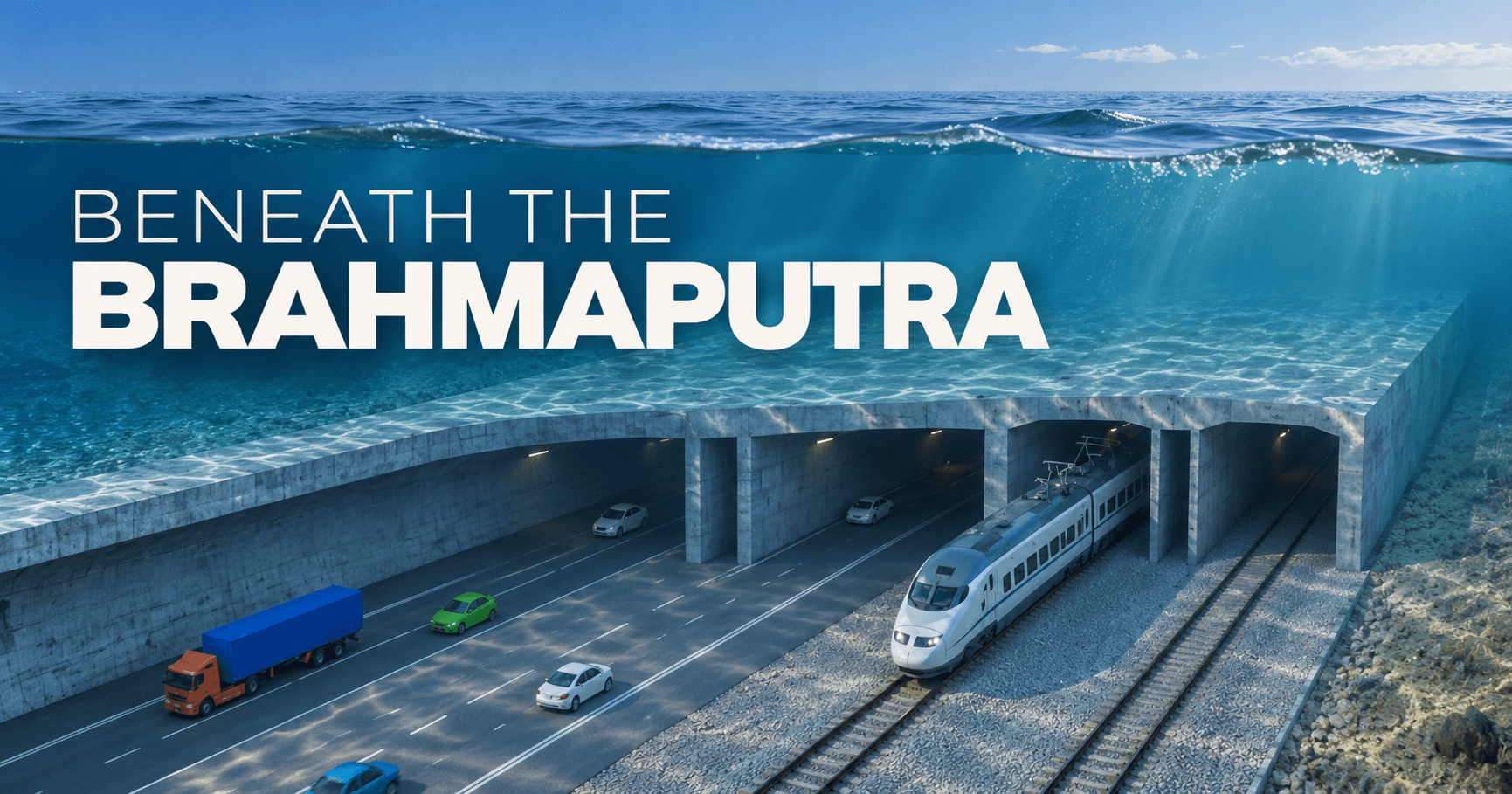
The conventional way to cross a river is to build a bridge over it. India is preparing to take a different route and build beneath the Brahmaputra.
At the centre of this approach is the ₹18,662 crore Gohpur–Numaligarh corridor in Assam, which will span 33.7 km and include a 15.79-km underwater twin-tube tunnel. The tunnel will be constructed using tunnel boring machines (TBMs), with two road lanes in each tube and railway infrastructure provided in one of the tubes.
Taking road and rail beneath the Brahmaputra is not simply a matter of choosing a tunnel over a bridge. The project has to account for the river’s geology and hydrology while creating a tunnel that can safely carry road and railway traffic underground. That means designing for ventilation, fire safety and emergency evacuation, while managing the construction risks associated with large scale TBM tunnelling and the integration of two transport systems. Delivered through an EPC model, the project will also require close coordination across design, construction, cost and schedule making its execution as significant as the tunnel itself.
Why a Tunnel Over Bridge ?
For the Gohpur-Numaligarh corridor, taking road and rail beneath the Brahmaputra offers a more controlled crossing than placing the transport link above the river. An underground alignment can reduce the direct exposure of road and rail operations to seasonal flooding and severe weather, which is particularly relevant in Assam. It also avoids the need for a major bridge structure spanning the river, including the piers and foundations that such a crossing would require. With fewer permanent structures placed across the river itself, the underwater alignment reduces the physical intervention required within the river corridor. Its enclosed structural system also provides a durable transport link, with long term performance governed by the quality of its design, construction and maintenance. Together, these factors make the tunnel a more resilient option for maintaining road and rail connectivity across the Brahmaputra throughout the year. But taking the route below the Brahmaputra does not remove the engineering challenge ,it moves it underground.
The Engineering Challenge
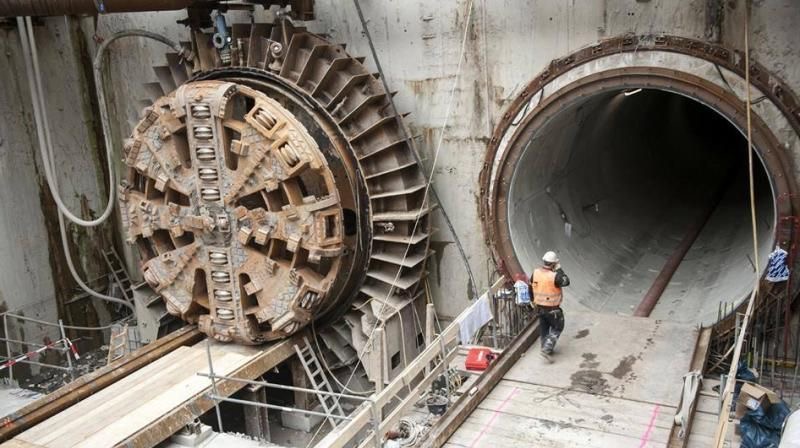
Constructing a 15.79-km tunnel beneath the Brahmaputra requires careful management of the ground and water conditions below the river. The river’s geology and hydrology, along with Assam’s earthquake risk and seasonal flooding, make ground investigation and water management central to the tunnel’s design and construction. The approved design uses twin tube TBMs, with two road lanes in each tube and railway infrastructure provided in one of them.TBMs allow excavation and tunnel lining to progress below the riverbed without an open crossing through the river. However, the technology does not eliminate construction risks. Ground conditions, water pressure and structural stability must be monitored and managed throughout excavation. The twin tube arrangement also requires road and railway infrastructure to be integrated within the same underground corridor while meeting the operational requirements of both systems. The engineering challenge is therefore to control the ground and water conditions while constructing a safe, stable corridor for two modes of transport.
Making the Tunnel Safe to Operate Excavating the tunnel is only one part of making a 15.79-km underground transport corridor functional. Once operational, the enclosed environment creates its own safety requirements. Ventilation will be essential for maintaining air quality within the road section and for managing smoke in the event of a fire. Emergency systems will have to support rapid detection, communication, evacuation and response along a tunnel that extends for kilometres beneath the river. These requirements become more complex because the project combines road and railway infrastructure within the same underwater crossing. The systems supporting both modes must therefore be coordinated as part of a single operational environment. The emphasis is not simply on keeping traffic moving, but on ensuring that the tunnel remains safe and accessible when normal operations are disrupted. For a project intended to provide a dependable year round connection, these operational systems are as important to its performance as the tunnel structure itself.
For a project of this scale, the engineering challenge is only one part of the equation. The larger challenge is coordinating the risks, contractors, interfaces and timelines that determine whether the tunnel is delivered as planned.The systems required to operate the tunnel safely also reveal the larger delivery challenge: each component has to be designed, procured, constructed and integrated within the same project programme. The Gohpur–Numaligarh corridor is being delivered through an Engineering, Procurement and Construction (EPC) model, placing project delivery and risk management at the centre of execution. At this scale, procurement, work sequencing and contractor coordination will directly affect the project’s cost and timeline. Clear responsibility across design, procurement and construction will be important, as will close supervision of quality and progress. The challenge is to keep the tunnel, road and rail works moving as one coordinated project. Effective construction management will therefore be key to delivering the corridor safely, on time and within budget.
Moreover, The project's economic significance also comes from combining road and rail connectivity within the same corridor. The tunnel will connect NH-15 and NH-715 with railway infrastructure on both sides of the Brahmaputra, linking the crossing to wider road, rail, airport and inland-waterway networks. This multimodal integration is designed to improve freight movement, reduce logistics costs and connect economic and logistics nodes across Assam and the wider Northeast. The project is therefore more than a new crossing beneath the Brahmaputra. It brings together TBM tunnelling, road and rail infrastructure, underground safety systems and EPC delivery within one ₹18,662-crore corridor. Its significance will ultimately be measured not only by what is built beneath the river, but by how effectively such complexity is engineered and managed.


