
Twenty years ago, if you'd asked most Indians what “the construction sector” meant, they would have pointed you to the nearest building site, a slab going up, a road being widened, maybe a contractor with a diesel generator and a handful of daily-wage masons. It was activity you could see, but it was not an industry in the way we'd use that word for banking or telecom. There was no common rulebook, no shared data, no institutional memory. Every project reinvented its own wheel.
That has changed, not completely, but substantially. And it is worth pausing on both halves of that sentence, because the construction and infrastructure story of the last two decades is genuinely one of India's biggest economic transformations, and also one of its most unfinished ones.
The scale of what's been built
Start with the numbers, because they tell you something the skyline alone cannot.
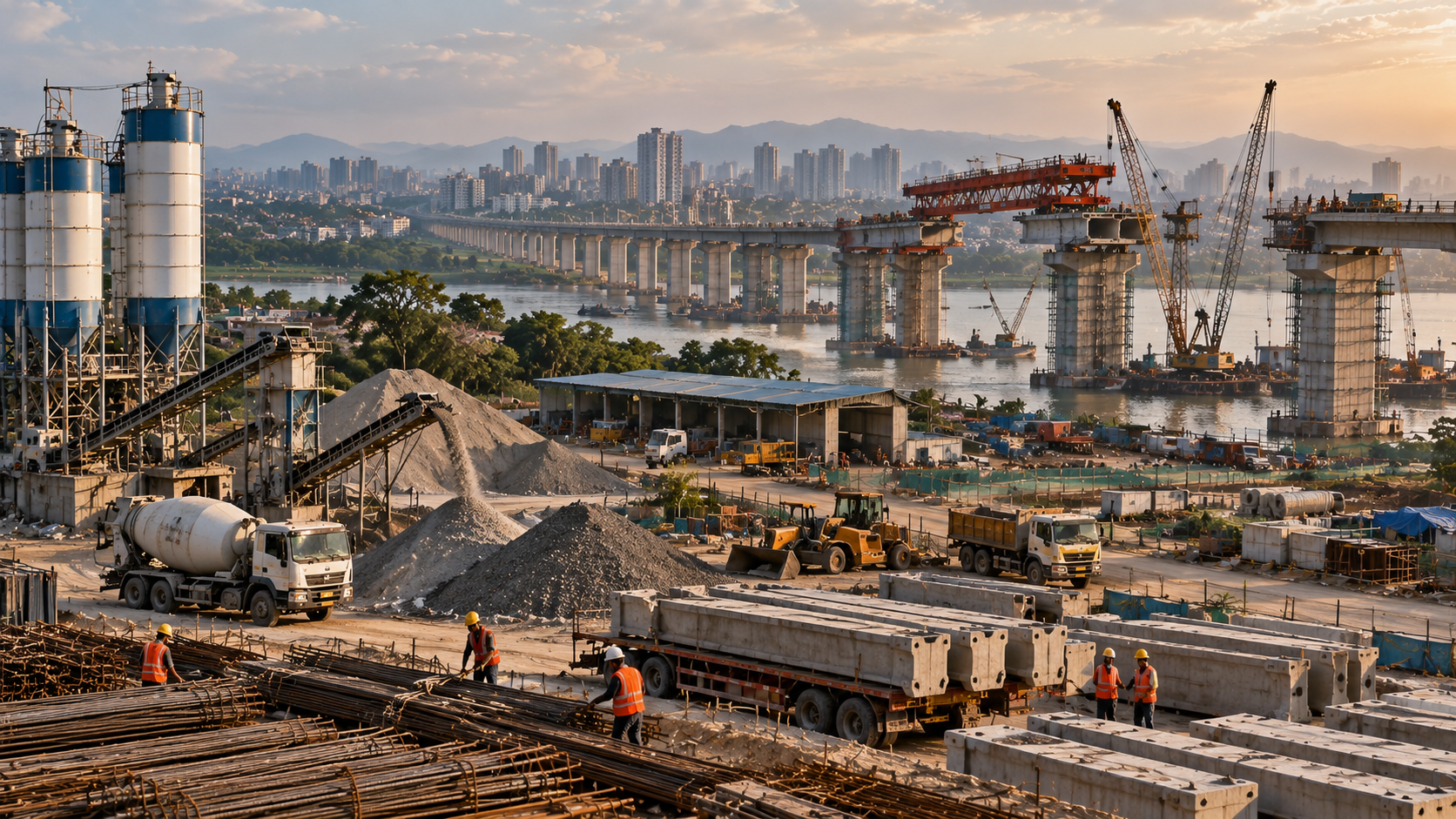
Construction today contributes somewhere between 8 and 9 percent of India's GDP, and when you fold in the closely linked real estate and financial services cluster, that share climbs past 50 percent of the services sector's own output. It is the second-largest employer in the country after agriculture, providing work, formal and informal to somewhere between 40 and 70 million people, depending on how widely we draw the boundary around allied trades. Gross fixed capital formation, the truest measure of a country actually building things rather than just talking about them, has roughly doubled in the last decade, from around ₹30 trillion in FY12 to close to ₹58 trillion by FY24.
None of this happened evenly. The sector's real inflection point was the post-liberalisation period, and especially the 2002–2007 window, when annual growth in construction activity touched double digits on the back of the National Highways Development Project, telecom rollout, and the first wave of organised real estate. The 2008 global financial crisis punctured that momentum for a few years. What followed after 2014 was a different kind of push, less speculative real estate, more state-led infrastructure: metro rail in city after city, dedicated freight corridors, a national highway network that has more than doubled, airports built in tier-2 and tier-3 towns, and a housing programme that put roofs over an unprecedented number of families in a single decade.
Building the rulebook: reform as the quiet hero
The physical output gets the photographs. The regulatory work behind it gets almost none of the credit, and it deserves more.
For most of independent India's history, construction and real estate operated with strikingly little institutional discipline. There was no dedicated regulator for real estate transactions, no standard definition of what a builder was actually selling you (carpet area, built-up area or super built-up area), no escrow requirement to stop a developer from using Tower A's booking money to break ground on Tower B, and no time-bound forum to resolve a dispute that wasn't going to survive a decade in civil court.
The Real Estate (Regulation and Development) Act, 2016 changed that architecture in one stroke. RERA mandated project registration, standardised disclosures, forced 70 percent of buyer collections into escrow accounts ring-fenced for that specific project, and created state-level authorities with the power to fine and de-register errant promoters. Nearly a decade in, more than 50,000 projects have been registered under it. It hasn't eliminated delays or disputes,implementation is uneven across states, and enforcement capacity varies, but it converted a sector that ran substantially on trust and word-of-mouth into one that runs, however imperfectly, on disclosure and record.
Around the same period, a cluster of other reforms did similar institutionalising work in adjacent corners: GST replaced a maze of state-level indirect taxes with a single input-credit chain, cutting down on cascading taxation in materials and cement; the Insolvency and Bankruptcy Code gave stalled and stressed real estate projects and their lenders, a resolution path that didn't previously exist; the National Infrastructure Pipeline gave the public sector a multi-year, cross-ministry line of sight into ₹100+ trillion worth planned capital expenditure instead of budget-by-budget improvisation; and programmes like RAMP( Raising and Accelerating MSME Performance) pushed formalisation and performance standards down into the micro and small enterprise layer that feeds materials, fabrication, and allied trades into the larger construction value chain.
Individually, none of these reforms was about construction. Collectively, they did something construction badly needed: they gave the sector rules that were written down, published, and increasingly enforced.
Construction and real estate: related, but not the same animal
It's worth untangling a confusion that even seasoned observers slip into. Construction is an activity the physical process of building: earthwork, structural work, MEP (mechanical, electrical, plumbing), finishing, commissioning. Real estate is an asset class, the ownership, development, and trading of land and built space as a store of value and a stream of returns.
A metro corridor, a highway, a defence cantonment, and a captive factory shed are all construction. None of them are real estate in the market sense, there's no unit to be sold to a retail buyer, no price discovery through a broker. Conversely, a piece of undeveloped land sitting on a developer's balance sheet, appreciating in value, is real estate with no construction happening on it at all.
The two markets are deeply interdependent even so. Construction firms are real estate's principal contractors and, in India's still-common integrated-developer model, often its financiers and marketers too. Real estate cycles, a housing boom, an office-leasing slump, an unsold-inventory pile-up, directly set the pace of construction demand, which is why the two get talked about in the same breath so often that people forget they're not synonyms. Understanding which conversation you're actually in, is this about how something gets built, or about who owns and profits from what gets built, clarifies a surprising amount of policy debate that otherwise talks past itself.
The public authority maze
Here is where the “unfinished” half of the story becomes unavoidable.
No other sector in India answers to as many masters as construction does. A single mid-sized project can require sign-off from a municipal corporation for building plan approval, a state pollution control board for environmental clearance, a fire department for safety compliance, an airports authority if it's anywhere near a flight path, a state RERA authority for registration, an urban development authority for zoning, a state electricity board, a water and sewerage board, a labour department for worker registration, and for anything touching a highway, railway line, or forest land, one or more central agencies (NHAI, Indian Railways, the Ministry of Environment, Forest and Climate Change) on top of all the state-level ones.
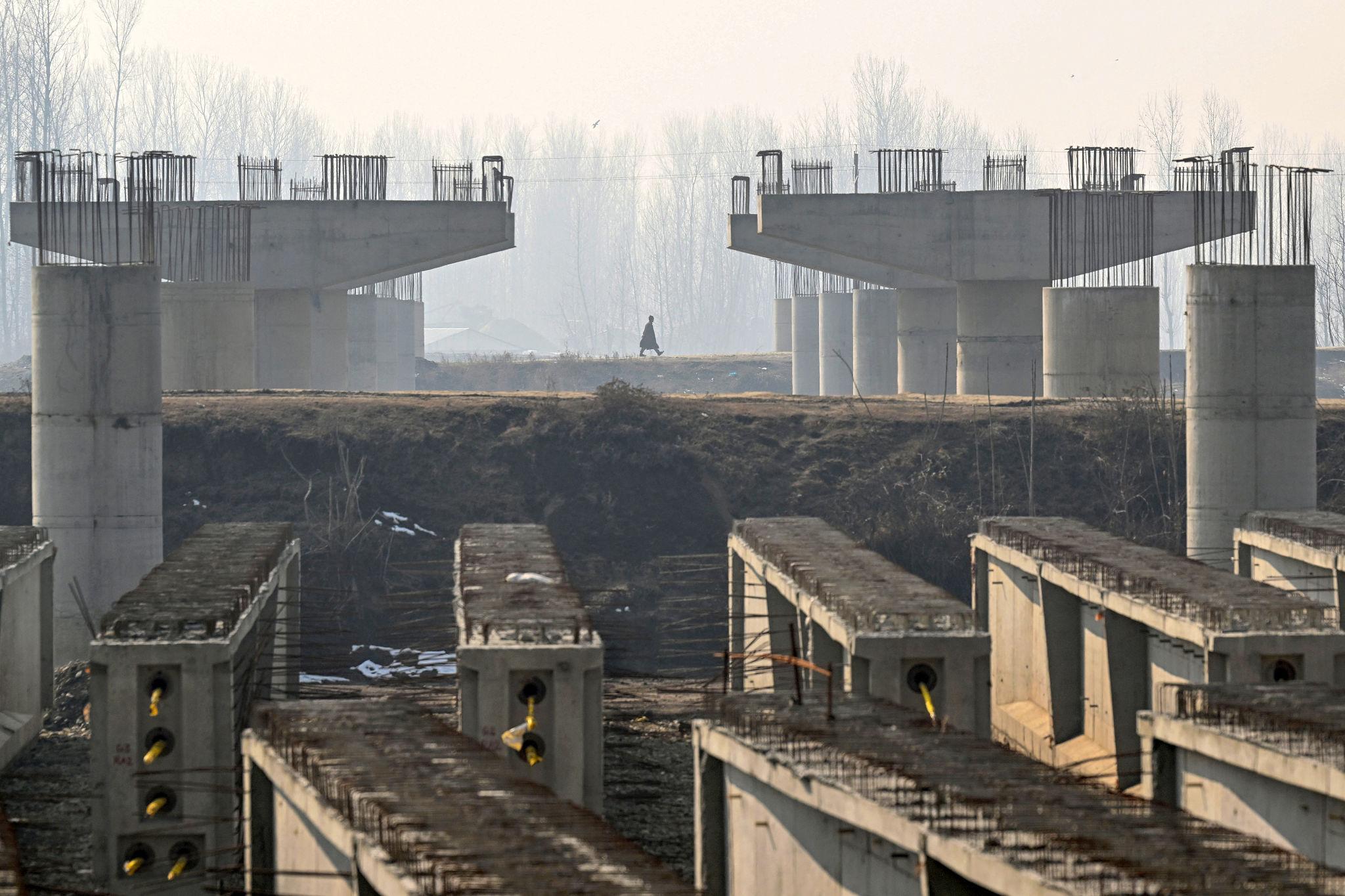
Each of these bodies has its own timeline, its own documentation standard, and often its own portal. Single-window clearance systems exist in most states on paper; in practice, “single window” frequently means one more window in addition to the others, rather than instead of them. The multiplicity is not accidental, it reflects a genuinely federal structure where land, urban development, and public works are largely state and municipal subjects while several enabling frameworks (environment, forests, labour, taxation) sit with the Centre. But the interplay between these authorities, rather than any one of them individually, is what most often turns a technically feasible eighteen-month project into a five-year one.
Where AI actually fits and where it doesn't yet
Artificial intelligence has arrived in Indian construction the way it arrives in most physical-world industries: unevenly, and mostly at the edges before the centre.
The genuinely useful applications today are in project controls, AI-assisted scheduling that flags slippage risk before it compounds, computer-vision tools that track site progress against BIM models from drone or CCTV footage, and predictive maintenance on construction equipment fleets. Design and structural engineering are seeing generative tools speed up early-stage iteration. Estimation and quantity take-off, historically a painstaking manual exercise, is being meaningfully accelerated by tools that read drawings and specifications directly.
What AI has not done, and is unlikely to do soon, is replace the judgment that sits at the centre of the industry: a site engineer reading soil conditions that don't match the geotechnical report, a project manager negotiating a genuine trade-off between cost, time, and quality with a client who wants all three, a safety officer sensing that a crew is fatigued before an accident happens. Construction remains a fundamentally physical, site-specific, and relationship-driven business. AI is becoming a serious tool inside that business. It is not, yet, restructuring the business itself, the way it has begun to in software or finance.
The pains that haven't gone away
Set against that growth and that reform effort, four problems remain stubbornly unresolved.
Pace. Despite faster clearances on paper, actual project timelines in India routinely run 1.5 to 2 times their sanctioned schedule once you account for land acquisition delays, utility shifting, contractor cash-flow stress, and the multi-agency approval chain described above. Time overruns compound into cost overruns, and cost overruns are the single most common reason large public infrastructure projects in India get renegotiated, litigated, or quietly written down.
Skill. The workforce feeding this sector remains overwhelmingly informal and largely untrained in any certified sense. India has built genuine institutional capacity in engineering education at the top of the pyramid, but the skilled-trade layer: masons, electricians, welders, crane operators, formwork specialists, has nowhere near enough formal certification infrastructure to match the volume of construction actually happening. Migrant labour dependency, seasonal attrition, and low wage floors compound the problem; skill, once acquired informally on one site, rarely transfers with any documented credential to the next.
Sustainable construction. Cement and steel, construction's two workhorse materials, are both carbon-intensive to produce, and India is simultaneously the world's second-largest cement producer and a country whose built environment needs to roughly double over the next twenty-five years to house and employ its urban population. Green building certification exists and is growing, but it remains a premium-segment choice rather than a baseline expectation. Water use in curing, construction and demolition waste management, and energy performance of buildings after handover are all areas where codes exist on paper more than they're enforced on site.
Regulation and formal training, together. These last two are really one problem wearing two faces. Regulatory frameworks like RERA, the building byelaws, and labour codes have been written with a formal, organised-sector construction firm in mind. But a very large share of actual construction activity, particularly at the smaller-project, tier-2 and tier-3 city, and rural infrastructure end, is executed by unregistered contractors and untrained crews who sit largely outside the reach of both the regulation and the training ecosystem meant to professionalise them. Until formal training pipelines (ITIs, sector skill councils, apprenticeship programmes) scale to match the informal workforce's actual size, regulation will keep governing the visible, organised top third of the industry while the rest continues much as it always has.
A roadmap, not a wish list
None of the above is a reason for pessimism, it's a fairly normal profile for an industry that has grown faster than its institutions could keep pace with. A workable path forward probably has five components, and none of them is exotic:
1. Genuine single-window clearance, built as one integrated digital platform across municipal, state, and central approvals for a given project, not a portal that aggregates links to other portals.
2. A national skilling push tied to certification that travels with the worker, a portable, verifiable credential that a mason or electrician can carry from one state and one contractor to the next, recognised by employers and linked to wage bands.
3. Enforcement, not just codes, on sustainability, making green building and construction-waste norms a baseline compliance requirement rather than a marketing differentiator, with the same escrow-style teeth RERA gave homebuyer protection.
4. Contractor formalisation incentives at the small and micro end, tax, credit, and procurement preferences that make it worthwhile for informal contractors to register, rather than only regulatory obligations that make it costly.
India's construction sector has, in two decades, gone from an unruly, largely undocumented activity to a real industry with real institutions, real regulators, and real data. That is not a small achievement. But an industry contributing this much to GDP, employing this many people, and shaping how tens of millions of Indians will live and work for the next fifty years deserves and needs the second half of that institutionalisation to happen at least as fast as the first half did.


