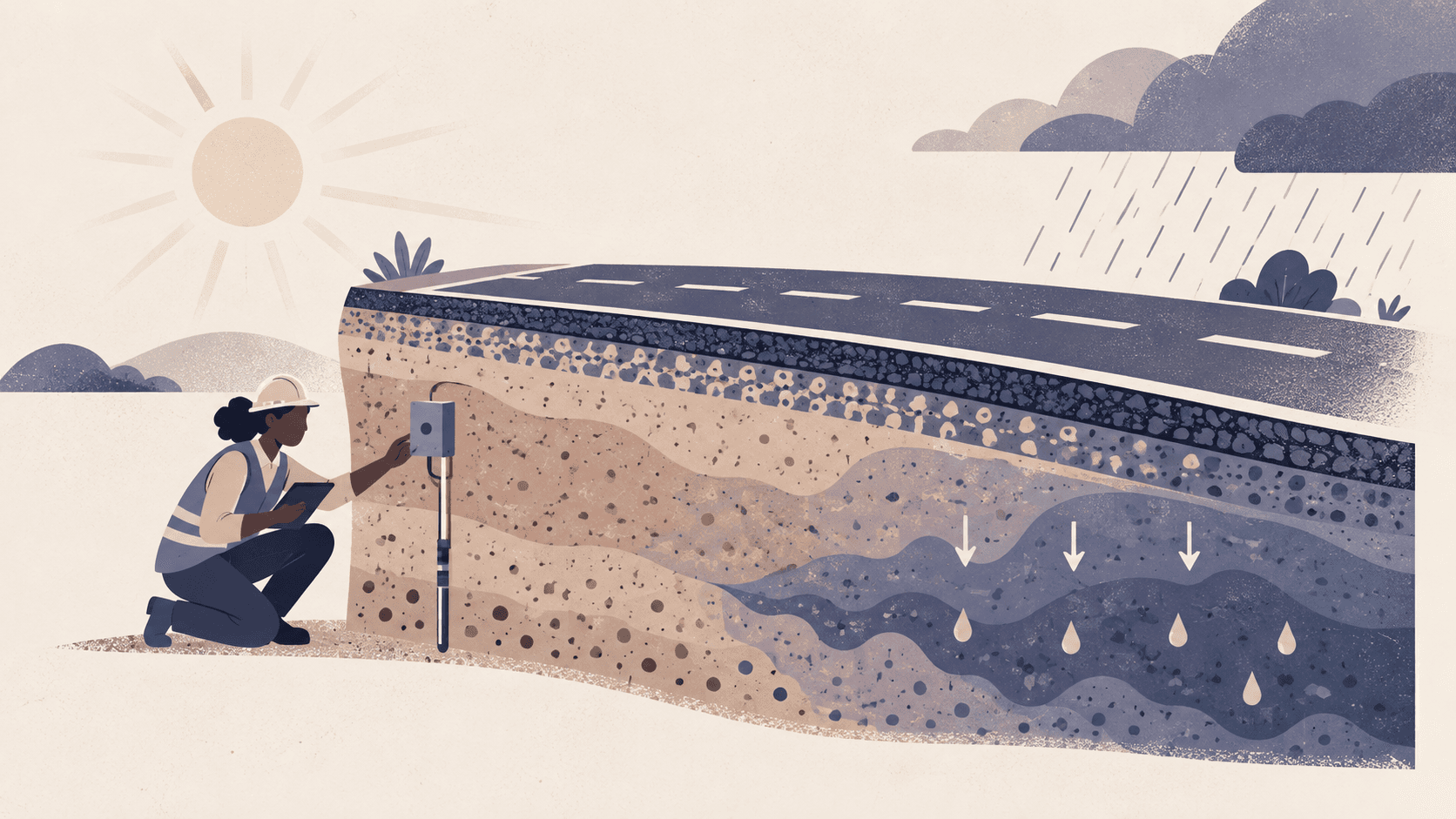
The Ministry of Road Transport and Highways (MoRTH), India has budgeted a record ₹3.1 lakh crore in 2026–27 and has mapped a 50,000 km high-speed corridor network for its 2047 vision¹,². For India, roads are part of the country’s economic and social infrastructure, connecting people to schools, hospitals and markets while fuelling local and national economies. Therefore, a central question is how this network can remain operational and resilient to future climate and weather scenarios.
A road is an engineered system constructed by cutting or filling the ground to carry repeated wheel loads and safely transfer them into the ground below. In a typical flexible pavement system, the bituminous layers are supported by the underlying base and sub-base courses, which collectively distribute loads to the prepared subgrade. The subgrade, in turn, provides the foundation for the pavement structure throughout its service life. That sounds straightforward, until we ask a simple question: How do we design a road that has to last for decades when the ground beneath is moisture sensitive?
Pavement design
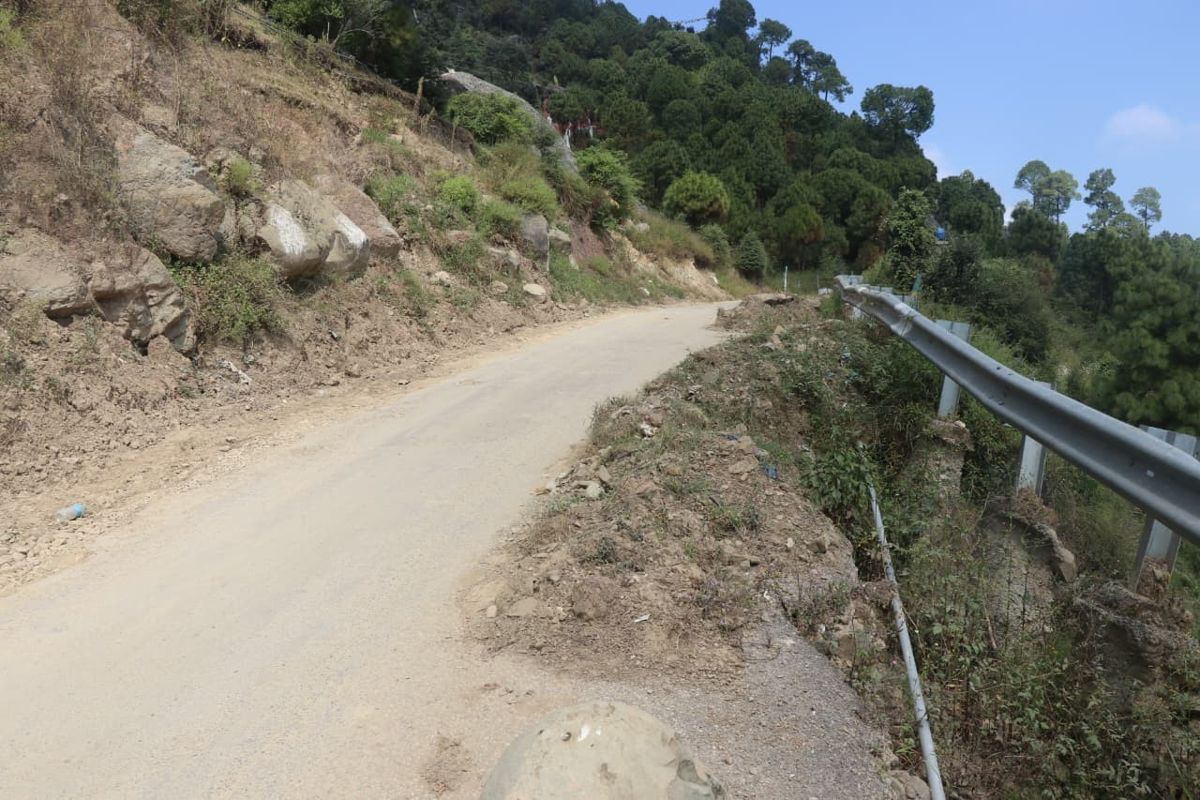
Pavement design in India has evolved considerably. Earlier approaches relied heavily on empirical relationships between traffic, pavement thickness and the California Bearing Ratio, or CBR, of the subgrade. Modern practice has moved towards mechanistic empirical design, where stresses and strains are calculated and linked to pavement performance in terms of resilient modulus³. This is an important improvement. But even a sophisticated model must represent the compacted layers with reasonable accuracy. A soil sample is collected from the field and transported to the laboratory for testing based on which the design values are selected. The pavement is designed for the expected traffic and a specified design period, often around 20 years for major roads. It experiences repeated cycles of drying and wetting due to seasonal variations along with changing groundwater and drainage conditions, and millions of wheel loads. In effect, there are three different representations of subgrade in pavements: the one described in the design report, the one actually constructed on site, and the one the road experiences throughout its service life.
There is another important challenge when the ground is moisture sensitive: we need reliable ways of measuring how soils shrink as they dry. A recent Indo-Australian round-robin study established a common procedure for measuring the soil shrinkage curve⁴. Better standardisation of such measurements can provide a stronger basis for understanding and predicting moisture-driven ground movement beneath infrastructure.
The pavement we construct
Construction quality control quite reasonably focuses on things that can be specified and checked: material quality, moisture, layer thickness and compaction. Compaction is essential and a well-compacted subgrade provides the strength and stiffness needed to support the pavement and maintain its performance. But density does not tell us everything. Two soils can achieve a similar density and still develop different internal structures depending on how and at what moisture condition they were compacted. More importantly, the compacted soil does not stop changing when the roller leaves. This becomes especially important when we think about the materials available for road construction.
Granular materials are often preferred over fine-grained soils because their behaviour and drainage characteristics are relatively predictable. But India is building roads at an enormous scale. Suitable materials are not equally available everywhere, and transporting ideal borrow materials over long distances has economic and environmental costs. So, a central question arises: Should we therefore reject every soil that contains fines? Not necessarily.
In an unsaturated soil that usually comprises pavements, water held between soil particles can create negative pore-water pressure, or soil suction, acting somewhat like a natural glue and increasing the apparent strength and stiffness of the soil much higher than granular materials. A soil containing fines can therefore perform well while it remains in a favourable moisture state. The problem is what happens when water enters. As the soil becomes wetter, suction reduces. The soil can lose stiffness and strength and become more susceptible to deformation. So, the presence of fines is not, by itself, the whole problem. The real question is what happens to the soil when water interacts with it. This is where research over the last several years has changed the way we look at pavement foundations.
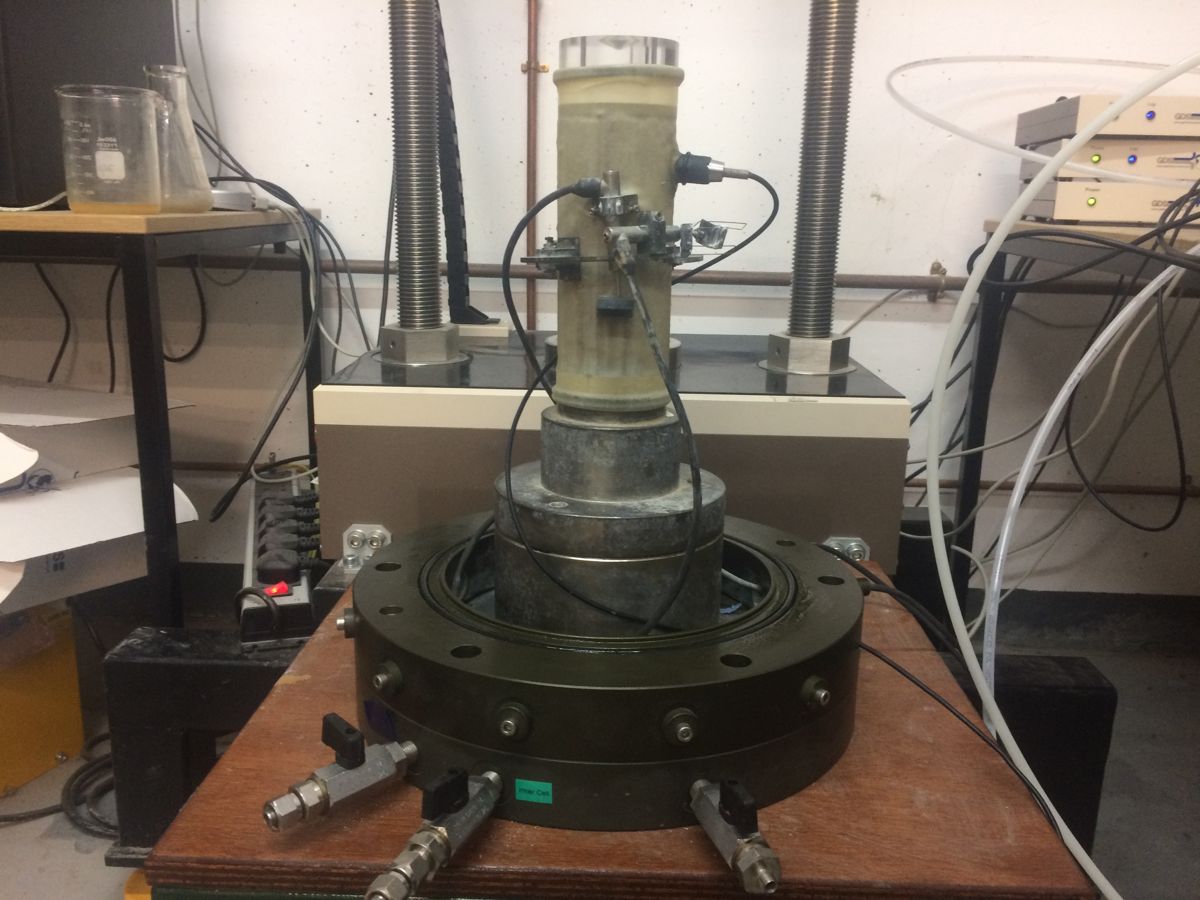
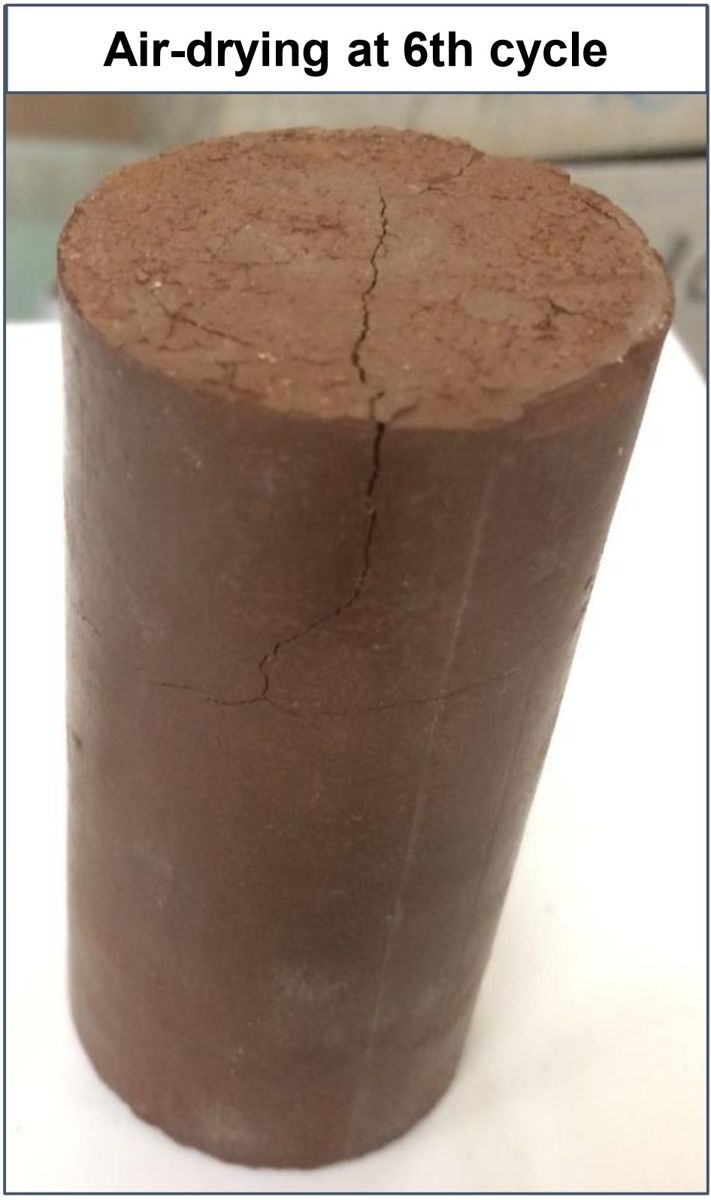
In work with colleagues at Durham University, including David Toll and Arash Azizi from the University of Glasgow, we monitored the hydraulic state of compacted soil while subjecting it to repeated mechanical loading and controlled drying and wetting⁵. The results showed that hydraulic changes and mechanical behaviour are closely linked. As the soil wets and dries, its suction and response to repeated loading change together. In another study, using clayey soil taken from a road subgrade in Tanzania, repeated drying and wetting reduced the soil's water-retention capacity, strength and stiffness. Desiccation cracking contributed to this deterioration. Drying was therefore not simply a temporary change in moisture; it altered the compacted soil structure and influenced how it subsequently responded to water and traffic⁶. This leads to an important observation: Traffic loads a subgrade whose condition has already been changing with weather, which makes drainage critical. A material with fines may perform well when it remains in an appropriate unsaturated state. Poor drainage, however, can allow water to enter, reduce suction and change the behaviour of the same material. This is why material selection and drainage should not be treated as separate decisions.
So how do we design for tomorrow's climate?
A pavement may be designed today for a future service life of 20 years or more. But the weather experienced during those years may not follow the historical conditions used to characterise the site. The question is therefore not simply whether there will be more rainfall or higher temperatures. It is what repeated extreme rainfall, prolonged drying, changing groundwater and wetting–drying cycles will do to the ground. This is where I believe pavement engineering needs another step forward. We need to start observing the ground during service, not only before construction. Sensors can tell us things that a one-time investigation cannot: moisture content, suction, pore-water pressure, temperature and deformation at different depths. Long-term research programmes such as ACHILLES have demonstrated how monitoring can be combined with laboratory testing, field observations and numerical models to understand deterioration and improve predictions⁷. The aim is not to put sensors everywhere. It is to create a much better feedback loop: monitor, analyse, model, predict, intervene.
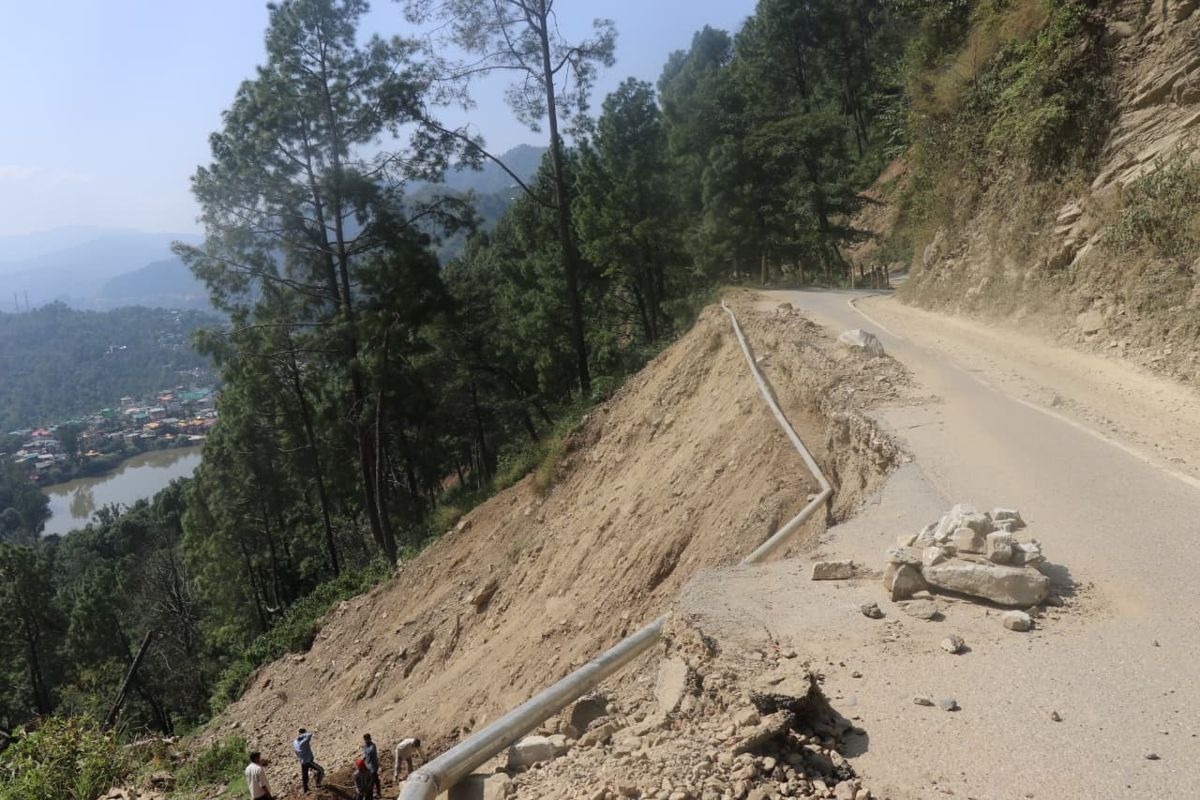
Imagine a road owner knowing that a particular section is progressively becoming wetter after successive monsoons, losing suction and beginning to deform, even though the road surface still looks acceptable. That information could trigger drainage maintenance or targeted intervention before a pothole, rut or major failure appears. That would change road maintenance from reacting to visible damage to managing the condition of the ground that causes it.
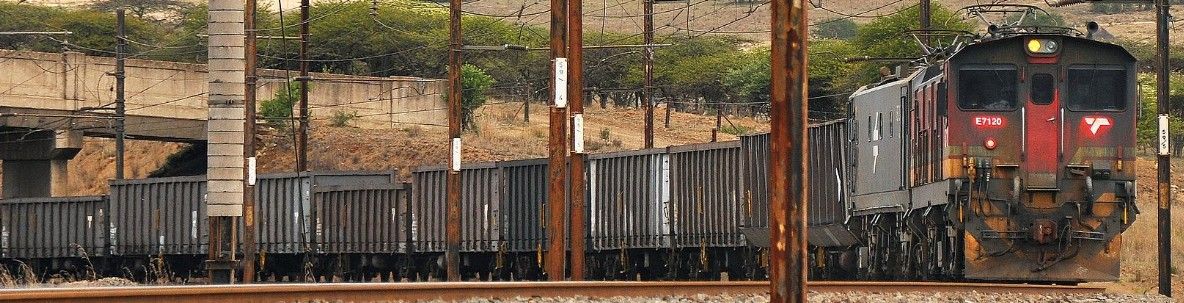
Can we engineer the pavement for extreme weather?
Sometimes, rather than replacing a material, we may be able to change the way water interacts with it. One example is the use of a climate-adaptive barrier layer: an engineered near-surface layer designed to temporarily retain water during intense rainfall, limit rapid infiltration into the underlying ground, and then release that water during a later drying period. Our experimental work has explored this concept through element testing and long-term physical modelling⁸. The broader principle is important. Instead of asking only, “How can we make the soil stronger?”, we should also ask: “How can we keep the soil in a condition in which it remains strong?”
Building roads for a changing future
None of this means abandoning CBR, compaction requirements, drainage standards or existing pavement design methods. They remain important engineering tools. The opportunity is to connect them better. Site investigation tells us what is there. Construction records tell us what was built. Laboratory testing tells us how the material behaves. Sensors tell us how the ground is changing. Numerical models help us understand why and explore what may happen next
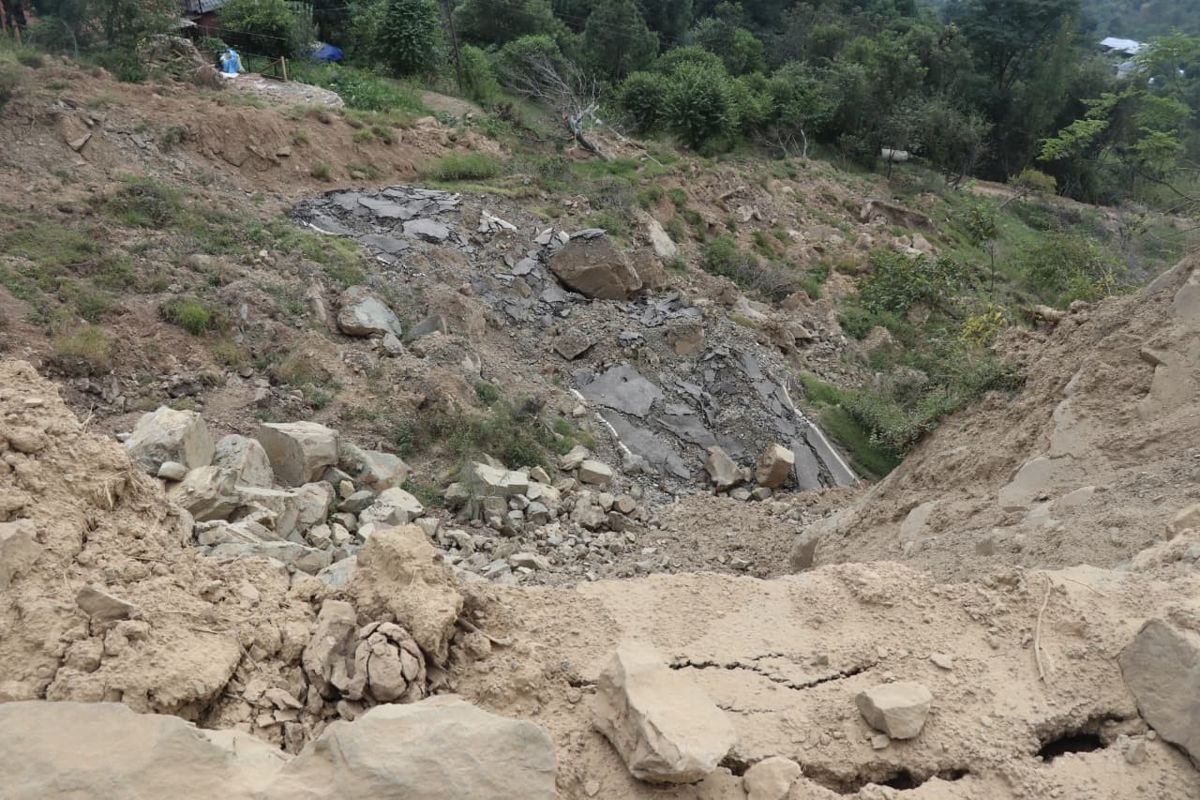
The next step is to use these sources of information together so that pavement engineers can move beyond assessing the ground only at the time of design and begin understanding how it evolves throughout the service life of pavement. The pavement is the part of the road we see, but the ground beneath it supports its performance. Perhaps the next generation of pavement engineering will design for changing ground conditions by monitoring, understanding and predicting how the pavement evolves.