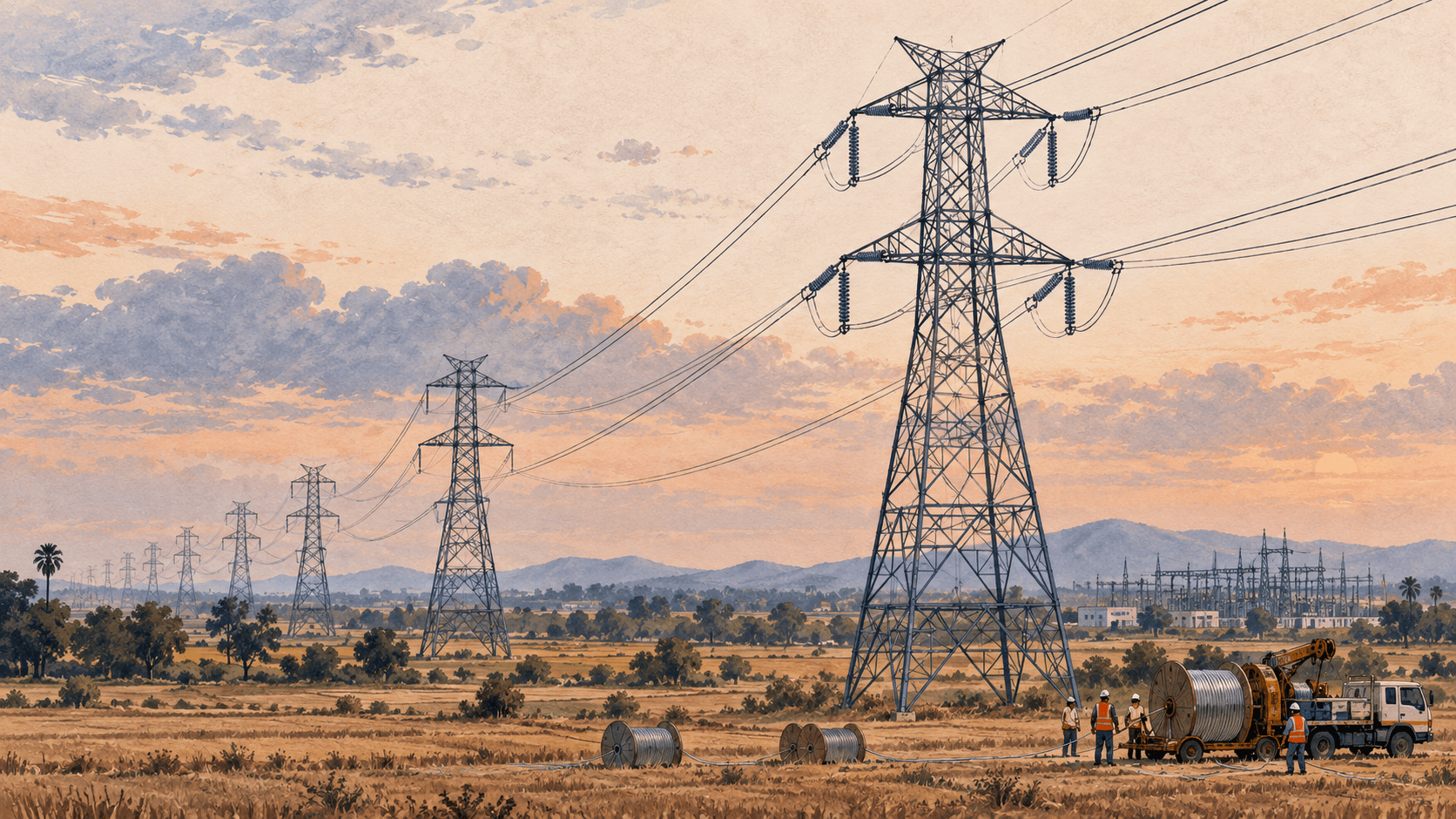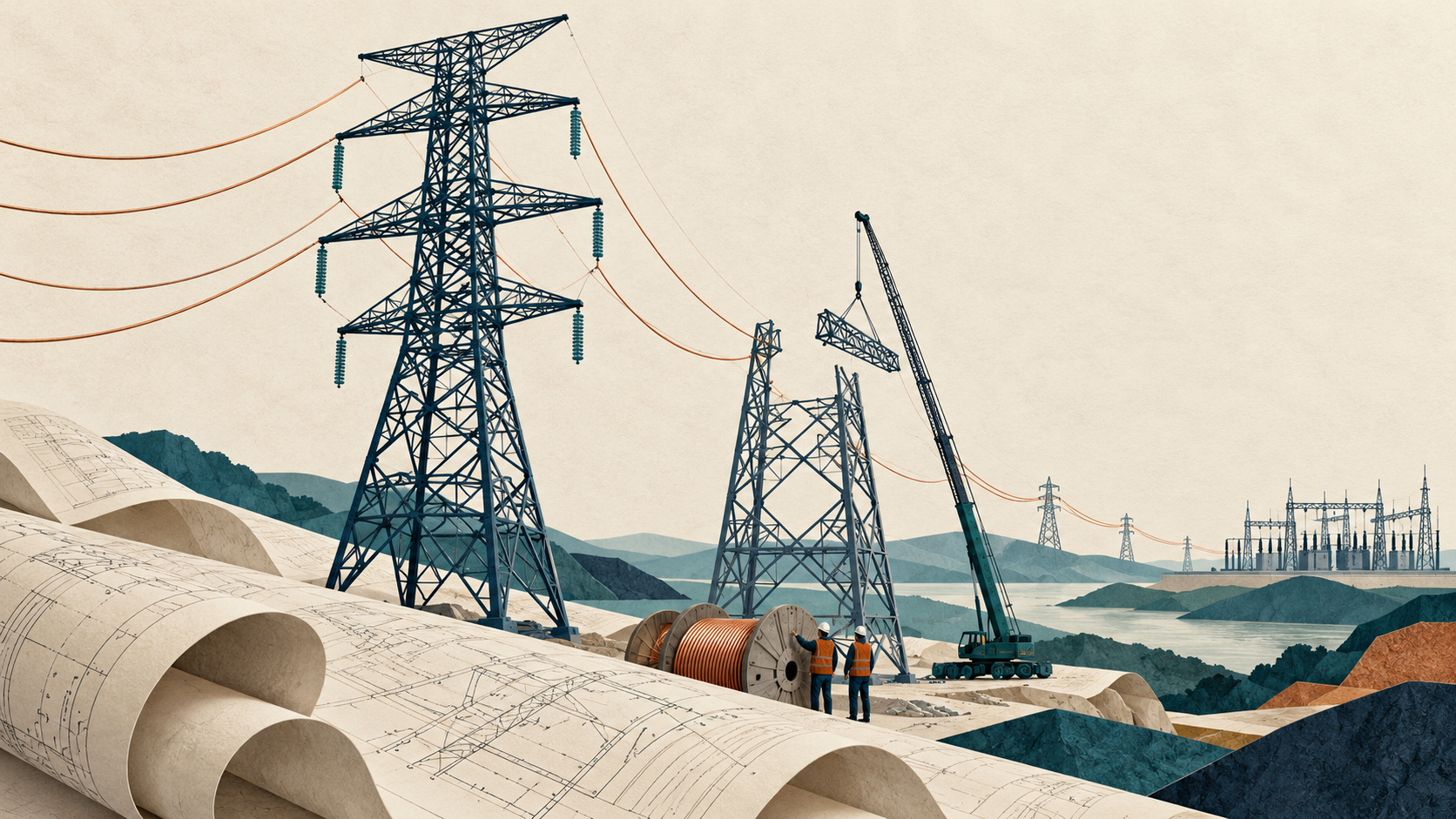
Adani Energy Solutions’ latest operating update gives the construction industry a clearer view of one large transmission workload. In its 22 October results announcement, the company reported 15 transmission projects worth about ₹87,000 crore to be executed. It said it secured Vizag Power Transmission Limited and Satara Power Transmission Limited during the quarter ended 30 September.
The disclosure describes a construction pipeline. It does not establish that the assets have been energised or that the stated value has already been spent.
Pipeline and spending need separate columns
AESL also reported transmission capital expenditure of ₹5,542 crore for the first half of FY2026–27, compared with ₹3,343 crore in the corresponding previous-year period. These are company-reported figures. The announcement supplies neither a project-by-project expenditure reconciliation nor a common completion percentage for the portfolio.
Dividing the half-year capital expenditure by the pipeline value would not produce a construction-progress rate. One measure covers spending during a defined period; the other describes the value of projects still to be executed. The reporting does not establish identical project cohorts, cost bases or timing for that calculation.
For contractors and suppliers, our reading is that the next useful information is the package schedule behind the aggregate: what has been contracted, which equipment is required, and when individual work fronts become available. The headline amount cannot answer those procurement questions.
Where the delivery ledger should go next
A project-level follow-up should record the contractual baseline, current forecast, physical milestones and energisation status separately. It should also identify the record supporting each date. A scheduled milestone remains a target until the corresponding acceptance or commissioning evidence is available.
We would ask the company to break the portfolio into projects and packages, with dated information on construction access, approvals, equipment orders and interface readiness. These are reporting questions, not findings that any named project has encountered a delay.
The distinction also protects the story from a misleading inference in the other direction. An unfinished portfolio does not itself establish poor performance. Projects may be progressing within their agreed construction periods. To assess delivery, readers need the original obligations and subsequent changes alongside the current position.
What the company update cannot yet show
The public announcement provides a dated corporate snapshot rather than a complete construction audit. It cannot tell a supplier which individual package is open for business, or tell a power consumer when a particular new connection will become available. Those claims require project-specific records.
The next useful milestone for this coverage is a reconciled list of the 15 projects, their package awards and their commissioning baselines. With that list, future updates could measure the movement from contracted work to operating assets without treating order value, expenditure and completed infrastructure as interchangeable.
Dated record
30 September 2026: quarter-end covered by the operating update.
22 October 2026: AESL published the results announcement.
23 October 2026: Bridging Room reviewed the announcement; project-level delivery records remain a follow-up.