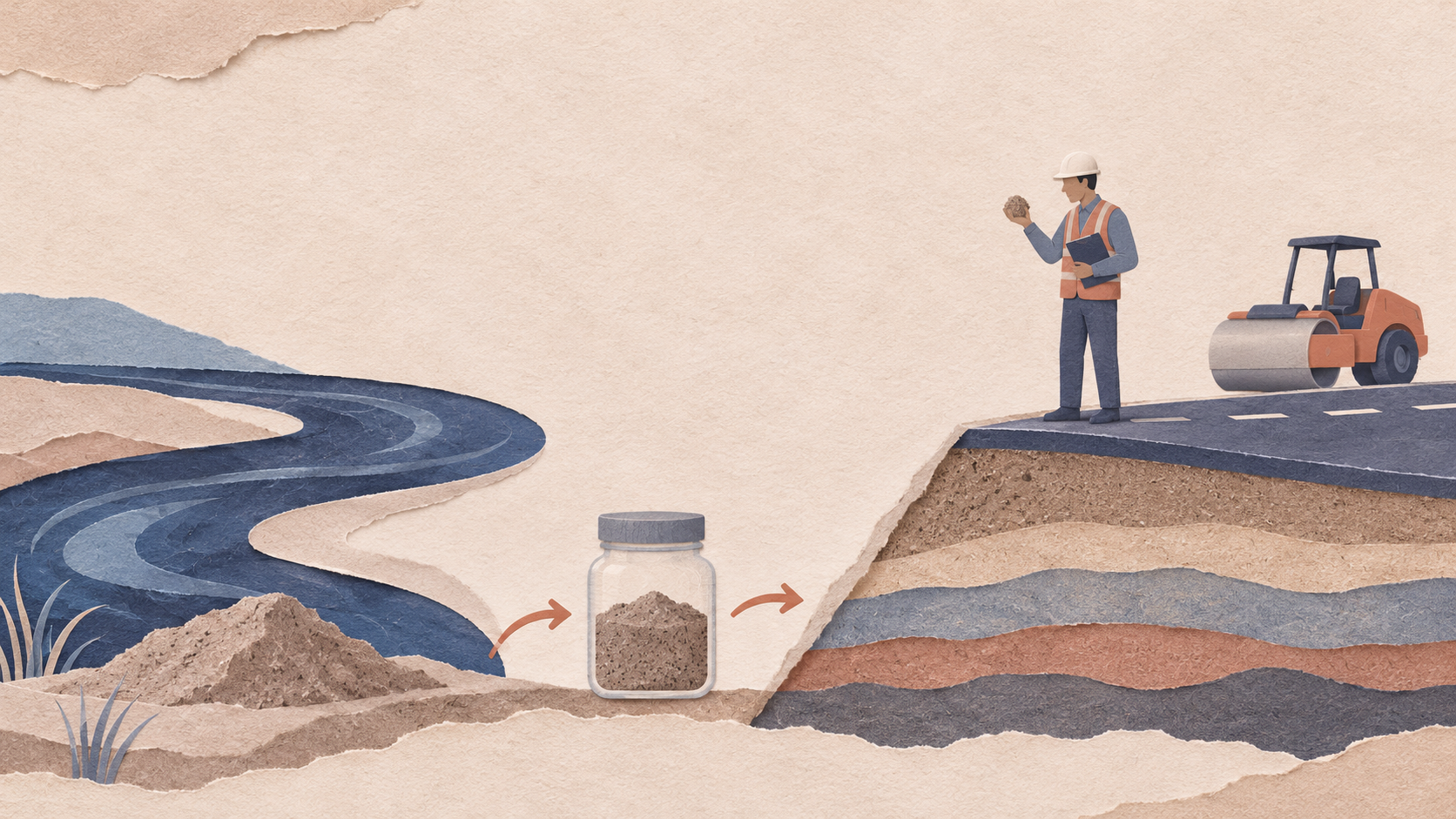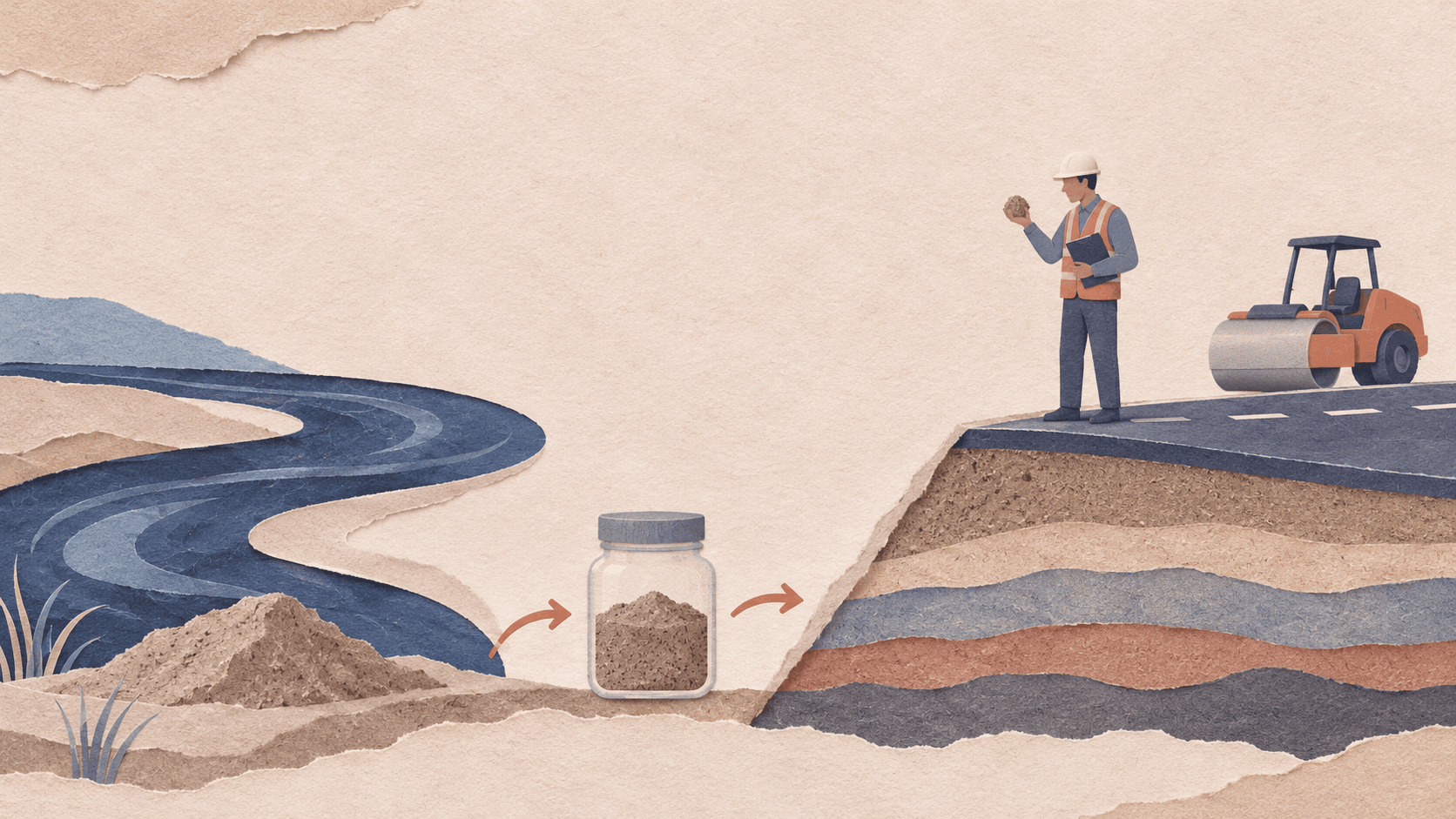
Bihar’s new highway-material agreement puts two engineering decisions in the same programme: where sediment can safely be removed, and where the excavated material can be accepted in a road. A credible delivery record will need to connect those decisions at project level.
MoRTH’s 3 November announcement identifies 243 lakh cubic metres for 16 ongoing highway projects and proposes 835 lakh cubic metres for 27 future projects, subject to technical suitability and approvals. These figures describe intended use. The release supplies no accepted-fill measurements or demonstrated savings.
The agreement establishes a process
The ministry says Bihar’s Road Construction Department will be the nodal agency, supported by a state coordination committee. Extraction is to follow water-body assessments, approved locations and technical limits. Material suitability requires testing under applicable MoRTH specifications and IRC codes. Joint measurement, digital records and reconciliation are intended to track extracted, transported and used quantities.
That process creates a practical reporting route. Select one approved source and one receiving highway package, then follow the material between them. A statewide volume cannot answer whether a particular sample meets the requirements of a particular embankment layer.
Two approvals need to meet
On the water side, the questions are spatial. What reach is approved? How are the permitted depth and boundary recorded? What evidence establishes the protection of nearby banks, bridges and embankments? The answers should be traceable to drawings and technical approvals, rather than a generic reference to restoration.
On the road side, the questions concern acceptance. Which specification applies to the proposed use? What testing was performed, by whom, and against what criteria? If material is rejected, where does it go and who records that decision? These are reporting questions; this article has not reviewed a project’s laboratory results or prescribed a material mix.
Quantity records should follow the material
An extraction measurement, a transport record and an accepted quantity describe different stages. A useful project ledger would keep each stage visible, identify its measurement basis and explain any conversion or discrepancy. An unexplained difference would warrant investigation; it would not alone prove loss or misconduct.
The same discipline applies to a proposed cost saving. A comparison would need the alternative material source, haul distance, treatment and handling requirements, testing, and accepted quantity. The agreement’s headline volumes provide no basis for calculating a saving per kilometre.
The release presents improved drainage, reduced flood risk and reduced use of agricultural soil as expected benefits. None has been independently measured for this initiative in the evidence reviewed here. Water-management outcomes would require their own baseline and monitoring, alongside construction records.
The next record to watch
The ministry’s announcement does not include the signed agreement, the full state policy, a source-to-project allocation schedule or test results. It therefore supports a report on the announced framework, with delivery still to be established.
A useful first milestone would be one publicly documented chain from an approved extraction area through testing and transport to accepted highway fill. That would allow the programme’s proposed material volumes to be compared with work actually recorded.
3 November 2026: MoRTH and Bihar announce the signed MoU.
Next: project-specific extraction approvals, material tests and source allocation, with no dates disclosed in the release.
Delivery check: reconciled quantities and accepted placement, followed by separately measured water-management outcomes.