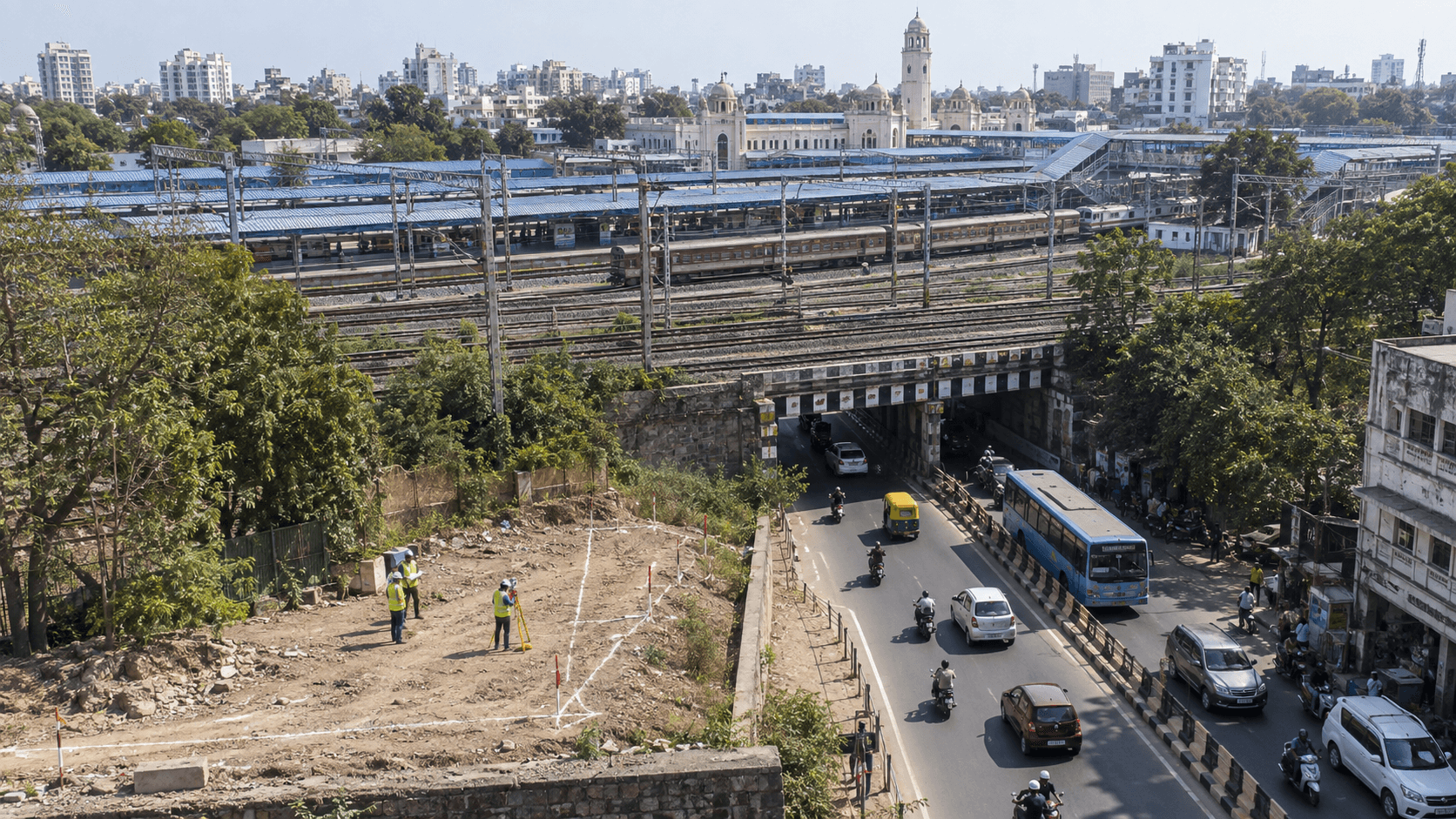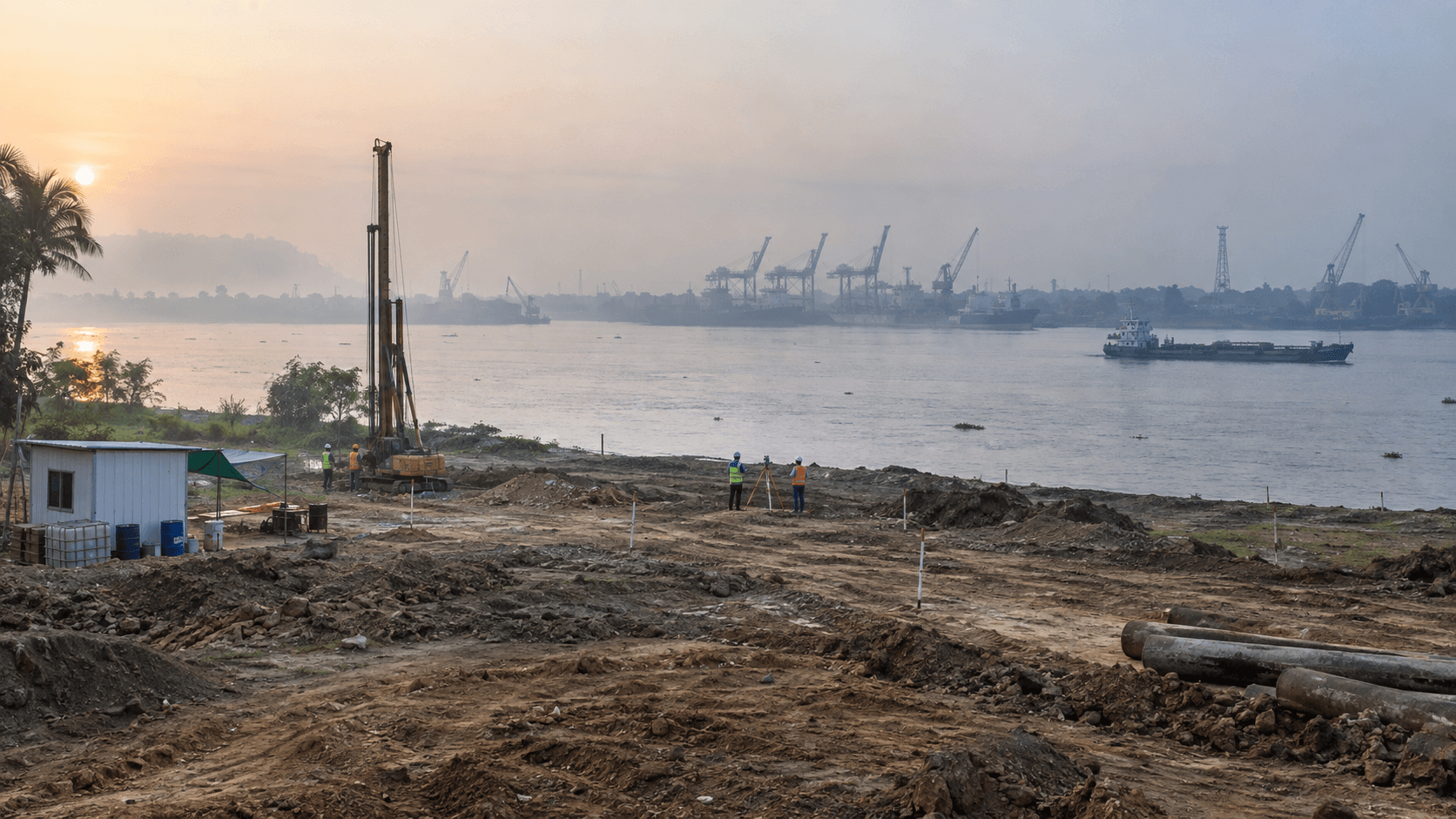
Delhi Sadan exists today as a procurement decision. It is not yet a construction result.
On 24 September 2026, the Delhi Tourism and Transportation Development Corporation listed an open tender for construction of Delhi Sadan at Plot No. 5, Sector 19, Dwarka, including all services on EPC Mode I. The official Delhi e-tender listing records bids closing on 15 October. A tender mirror reports an estimated value of ₹119.70 crore, a two-cover process and a 75-day bid-validity period. The official listing can be checked here: https://govtprocurement.delhi.gov.in/nicgep/app?component=%24DirectLink&page=FrontEndTendersByOrganisation&service=direct&sp=SdLt4JFvssNy2rEMNH997Rw%3D%3D
Those facts establish a live tender. They do not establish an award, a site start, a completion date or the final amount the public client will pay.
The more interesting question is what EPC responsibility means when one building still depends on many decision-makers.
One contract does not create one interface
EPC is often described as single-point responsibility. The contractor is expected to engineer, procure and construct the facility under one contract. For a client, that can reduce the number of separate design and works packages that must be coordinated. It can also make the line of contractual responsibility easier to see.
But a public building remains a system of approvals and specialist decisions. Architecture, structure, mechanical systems, electrical systems, plumbing, fire safety, vertical transport, external works, utility connections and commissioning must converge. Local authorities, utility providers, fire officials and the client can each hold decisions that affect the programme.
The contract can assign responsibility for pursuing those decisions. It cannot make the external dependencies disappear.
That distinction should shape the baseline. A schedule that begins with design and ends with handover is too simple. It needs approval activities, review durations, utility dates, long-lead equipment, testing sequences and client decisions. Each must have an owner and an agreed evidence requirement.
The employer’s requirements are the real project brief
An EPC tender is only as clear as the outcomes the employer defines. If the brief leaves important requirements unresolved, bidders must either price uncertainty or make assumptions. Those assumptions can later become design disputes, variations or quality gaps.
The Delhi Sadan notice says the contract includes all services. That phrase carries much of the project risk. The detailed tender documents need to show what “all” includes, where connections terminate, who secures approvals and what performance must be demonstrated at handover.
For building services, capacity matters more than equipment counts. Electrical supply must match the expected load. Cooling and ventilation must work across occupied areas and operating conditions. Water, drainage and fire systems must connect to functioning external networks. Lifts and other systems must be tested as part of the building, not as isolated purchases.
A guest house also has an operating model. Room turnover, kitchens, public areas, security, housekeeping routes, accessibility and maintenance access influence the design. If these needs enter after structural and services decisions are fixed, the project may technically comply while operating poorly.
The strongest employer’s requirements would therefore connect space, service performance, maintainability and commissioning. They would also state which criteria are mandatory and which remain open to contractor design.
The estimate is a tender baseline, not expenditure
The reported ₹119.70 crore figure is useful, but it should be described carefully. It is an estimated tender value reported by a tender mirror, pending confirmation against the official NIT and schedule. It is not an awarded contract value. It is not money spent. It is not the final cost.
The commercial result will depend on bids, qualifications, the selected contractor, taxes, escalation rules, change control and risks retained by the client. The initial estimate also says little about whether the project has adequate contingency for ground conditions, utility interfaces or approval changes.
Cost control should begin with a scope map. The team needs to know which works are inside the EPC package, which are delivered by others and which rely on existing infrastructure. A cost report that records only the headline contract value can miss liabilities forming at the boundary.
Design control is also cost control. Every client instruction after the design basis is fixed can affect procurement and sequence. A disciplined process should record the decision, reason, drawing impact, time effect and commercial treatment before work proceeds.
The two-cover process creates another reporting milestone
A two-cover tender usually separates technical and financial submissions. That makes technical responsiveness an important gate before price comparison. The public evidence available today does not show how many bidders will participate, which bids will qualify or whether the tender conditions will change through clarification or corrigendum.
Those are the next records worth watching. Pre-bid questions can reveal unclear interfaces. Corrigenda can change dates or terms. The technical evaluation can show whether the market accepted the allocation of risk. The financial result can then be compared with the estimate without treating the lowest bid as proof of buildability.
A low price may reflect efficient delivery. It may also reflect different assumptions about scope. The contract review must test exclusions, qualifications and compliance with the employer’s requirements.
What should be visible after award
If the tender progresses to award, five controls should become visible.
First, a design-responsibility matrix linking every discipline and approval to an accountable party. Second, a master information schedule showing when drawings, calculations and client decisions are required. Third, an interface register covering utilities, authorities, external works and operator inputs. Fourth, a procurement schedule for long-lead building systems. Fifth, an integrated testing and commissioning plan tied to occupancy and handover.
These records would make the project reportable beyond the tender headline. They would show whether single-point responsibility is supported by a system for decisions.
There is a counterpoint. EPC can transfer substantial coordination responsibility to the contractor, but excessive prescription by the client can weaken that advantage. If the employer dictates solutions while keeping approval control, responsibility becomes blurred. The contract must match authority with accountability.
The unanswered question is therefore not whether Delhi Sadan will have one EPC contractor. It is whether that contractor will receive a stable brief, timely decisions and clear control of the interfaces it is expected to manage.
The dated sequence is short for now. The tender was published on 24 September. Submission is scheduled to close on 15 October. Technical evaluation, financial opening, award and mobilisation remain future milestones.
Until those records appear, the project should be described precisely: a ₹119.70 crore estimated EPC tender for a public building, with delivery still to be proven.