Construction teams in Delhi-NCR have a new dated enforcement trigger. On 21 October, the Commission for Air Quality Management invoked all 25 actions under Stage-I of the Graded Response Action Plan across the NCR with immediate effect. The official release records Delhi’s AQI at 244 at 2 pm and 245 at 4 pm, in the Poor category.
For a project team, the useful reading starts with the construction provisions in that order. A headline about GRAP cannot establish the operating position of an individual site.
The registration condition is explicit
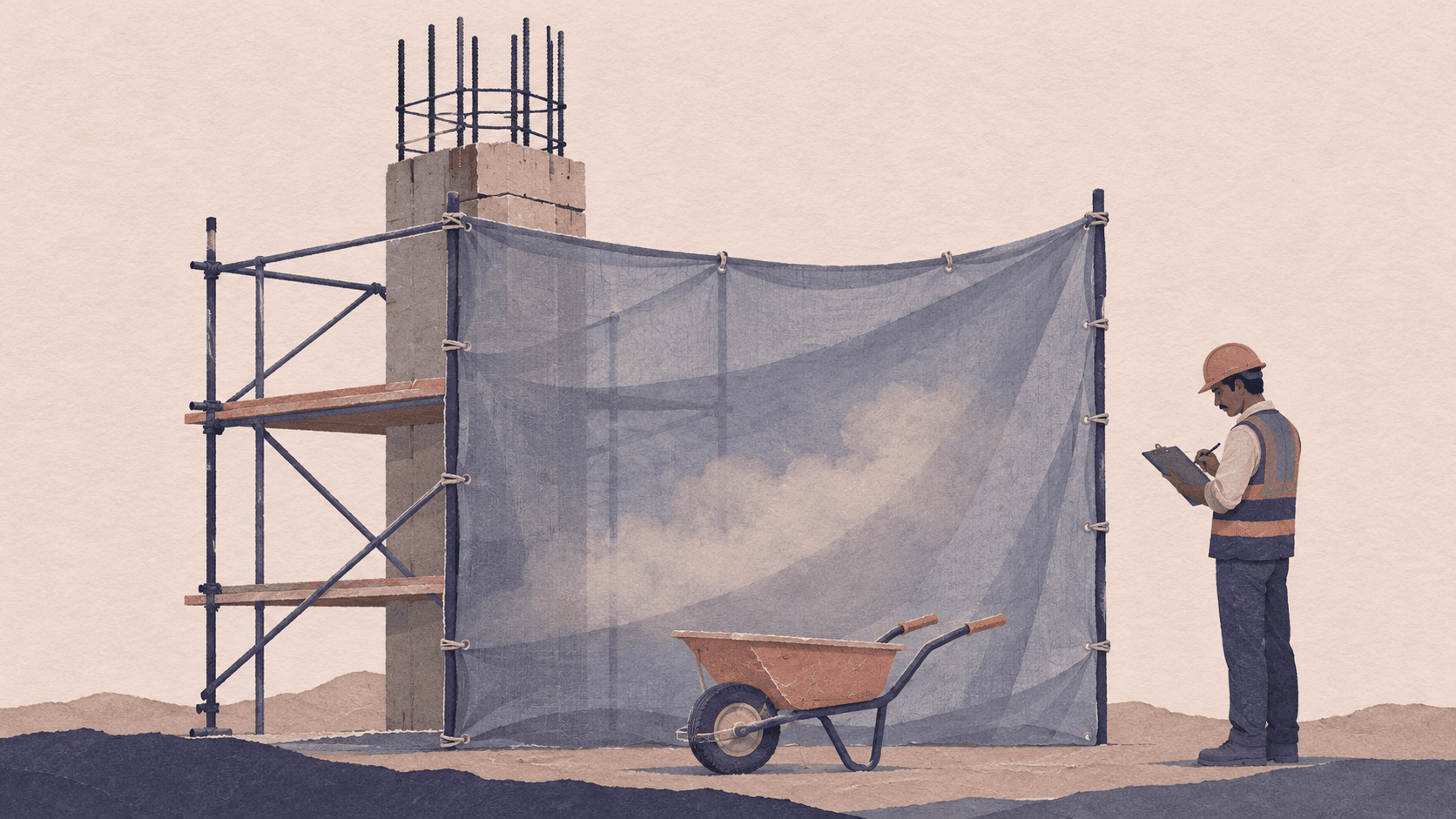
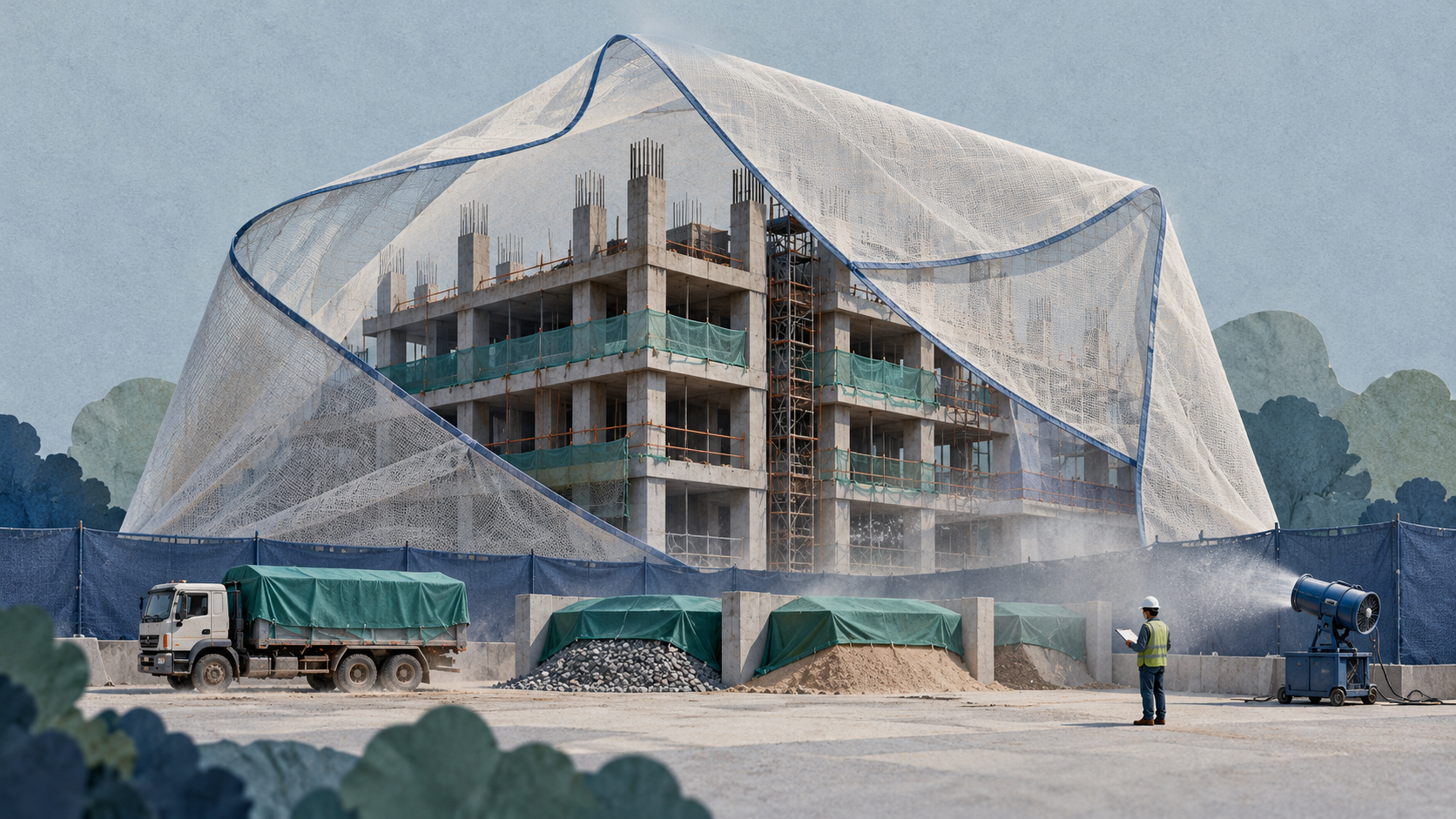
The release calls for enforcement of dust mitigation, covered storage and transport of construction materials and waste, water sprinkling and anti-smog-gun requirements. It also says construction and demolition activity must not be permitted at projects with plots of at least 500 square metres that lack registration on the respective state or Delhi web portal, or fail the other cited remote-monitoring requirements.
The same schedule calls for intensified dust suppression on road construction, widening, repair and maintenance works. These provisions give contractors specific records to check. They should not be paraphrased as an undifferentiated announcement that all construction has stopped.
Check the site record against the work happening today
Our project-controls recommendation is to reconcile the registration record with the current project and work area, then inspect the controls during actual material handling. A registration entry and a photograph of idle equipment answer different questions from a record showing how a dusty operation was controlled.
A practical inspection log would identify the activity, location, time, responsible contractor and corrective action. Delivery and waste-dispatch records can then be matched to covered loads and the receiving destination. Where a control is defective, the log should identify who must correct it and when that correction was verified.
This is a proposed management approach, not a claim that the new order prescribes a particular internal form. Teams must read the applicable directions and any site-specific notices for their actual obligations.
What has changed since our earlier report
Our September coverage examined the pre-winter agenda for road paving, sweepers and construction-waste collection. The fresh development is the October invocation order and its immediate construction-site implications. It does not demonstrate that the earlier municipal works have been completed or that dust exposure has fallen.
A follow-up on enforcement should obtain dated inspection results, notices, corrective-action records and any closure or reopening orders. Equipment counts alone cannot establish whether controls worked throughout an operating shift. Likewise, an area-wide AQI change cannot, on its own, quantify the effect of one site’s actions.
The unanswered question is how consistently agencies and contractors turn these requirements into verified daily practice. Before the next work shift, the project team should check the latest CAQM order, the relevant state portal and any directions served on the site. This article records the 21 October decision; later stage changes require a fresh check.
Dated record
21 October 2026: CAQM invoked Stage-I across NCR.
23 October 2026: Bridging Room reviewed the official release and CAQM’s current notice listing, which displayed the 21 October invocation.
Next reporting milestone: site-level inspection and compliance evidence, and any subsequent GRAP order.