Mumbai’s response to construction pollution now depends on a chain of decisions: measuring particulate pollution, identifying the activity producing it, ordering corrective work and checking whether conditions improved. A public display can make a reading visible. Assessing a contractor’s performance requires the underlying measurements and inspection records.
Recent statements from BMC and the Maharashtra government describe how authorities intend to control dust across construction sites, roads and debris transport. They also raise a reporting question: what evidence will residents be able to see when a site repeatedly causes pollution?
What BMC is saying
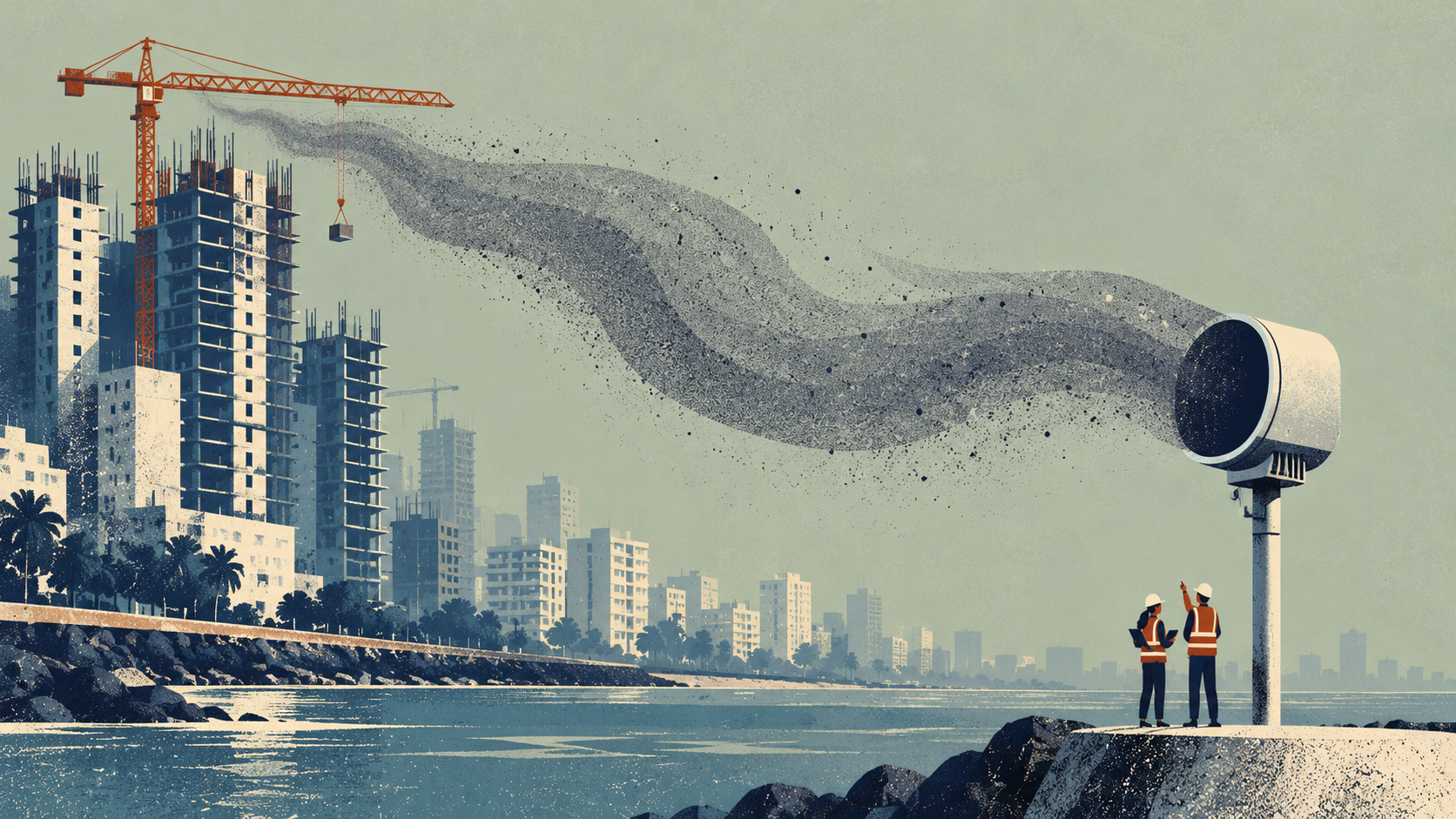
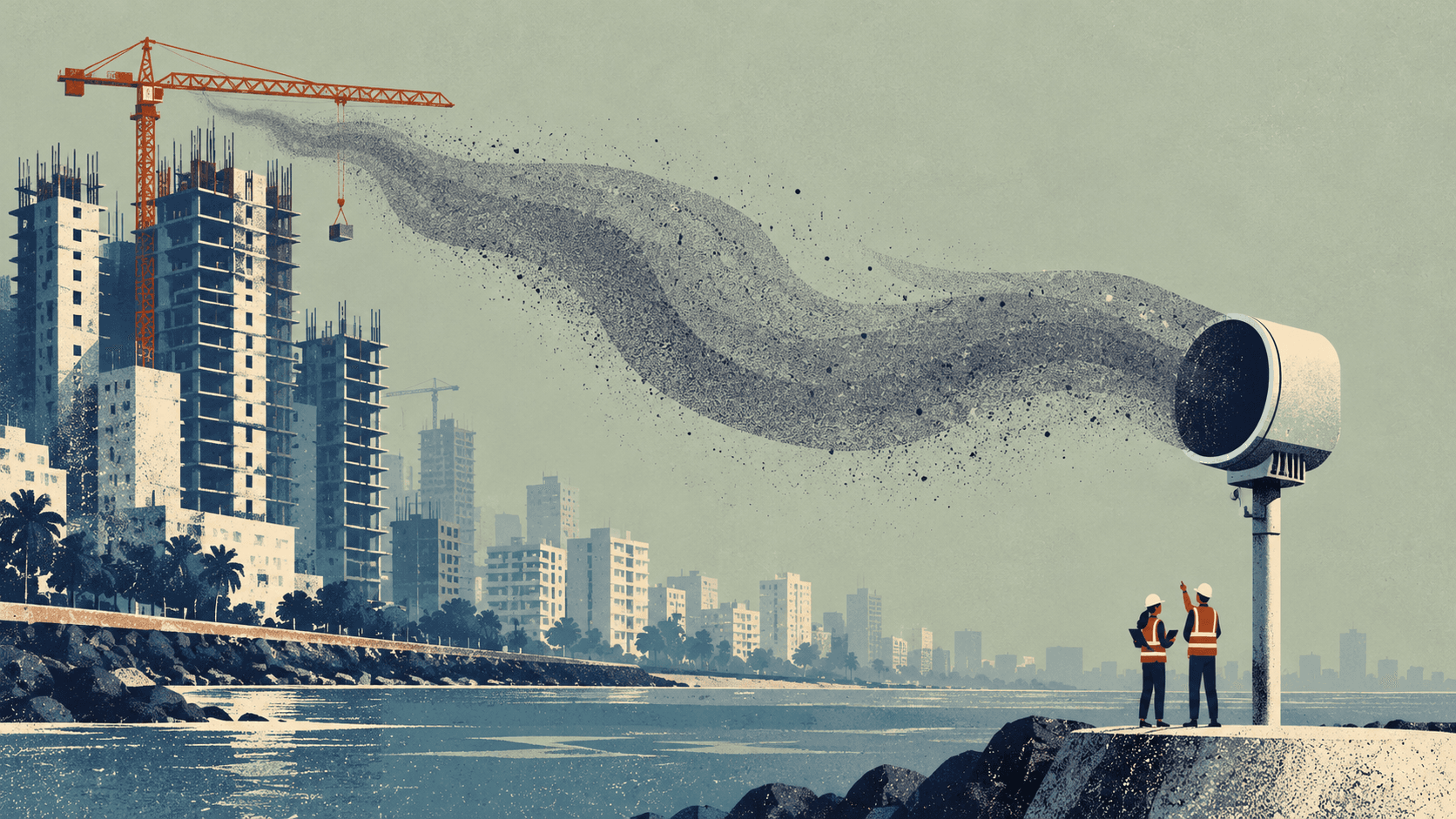
According to a BMC press release reported by mid-day on 22 October, 3,166 construction sites had installed sensor-based monitors connected to a central dashboard. BMC also said 76 ward-level mitigation squads conduct inspections, with each squad undertaking at least two construction-site inspections daily. These are the civic body’s reported deployment figures; they do not establish how consistently every device works or how many violations have been resolved.
BMC describes enforcement that can include show-cause notices, stop-work notices and sealing, supported by inspection reports, photographs and video. Its measures cover dust suppression, covered material transport, tyre washing and construction-debris tracking.
The corporation also reported 231 days in the “Good” and “Satisfactory” AQI categories up to 22 October 2026. That aggregate offers a different perspective from a pollution episode at one location. Evaluating the comparison requires the station coverage, missing-data treatment and equivalent reporting periods.
The state government is looking beyond individual sites
On 23 October, Maharashtra Environment Minister Pankaja Munde announced a coordinated clean-air programme for the Mumbai Metropolitan Region, according to PTI. She called for vacuum road cleaning, dust suppression, covered debris vehicles and coordinated collection, processing and reuse of construction waste.
The minister directed traffic police to prevent non-compliant construction-material vehicles from proceeding until requirements were met. She also asked MPCB to pursue repeat industrial violations and verify compliance through follow-up inspections.
PTI reported that the government would attempt to prepare debris-management guidelines within 15–20 days. As of 26 October, that remains an announced next step. Publication of the guidelines, responsibilities and implementation schedule would provide the next record to examine.
What a construction-site AQI number can establish
BMC’s published monitoring circular requires sensor-based particulate monitoring and public displays at construction sites, with specifications and equipment provisions set out in its annexures. This places measurement within the construction compliance process. Installing equipment, maintaining it and acting on its readings require separate checks.
CPCB’s National AQI methodology converts pollutant concentrations into sub-indices and uses the highest valid sub-index for the location. Its technical report also specifies data requirements. A particulate-only site display therefore needs a clear explanation of its calculation and available pollutants before comparison with a regulatory station’s AQI.
For a meaningful comparison, readers need the same timestamp, averaging period, AQI scale and pollutant units, alongside sensor location and maintenance history. Differences between two monitors warrant investigation; they do not, by themselves, prove manipulation or identify the source of pollution.
Where construction enters the pollution chain
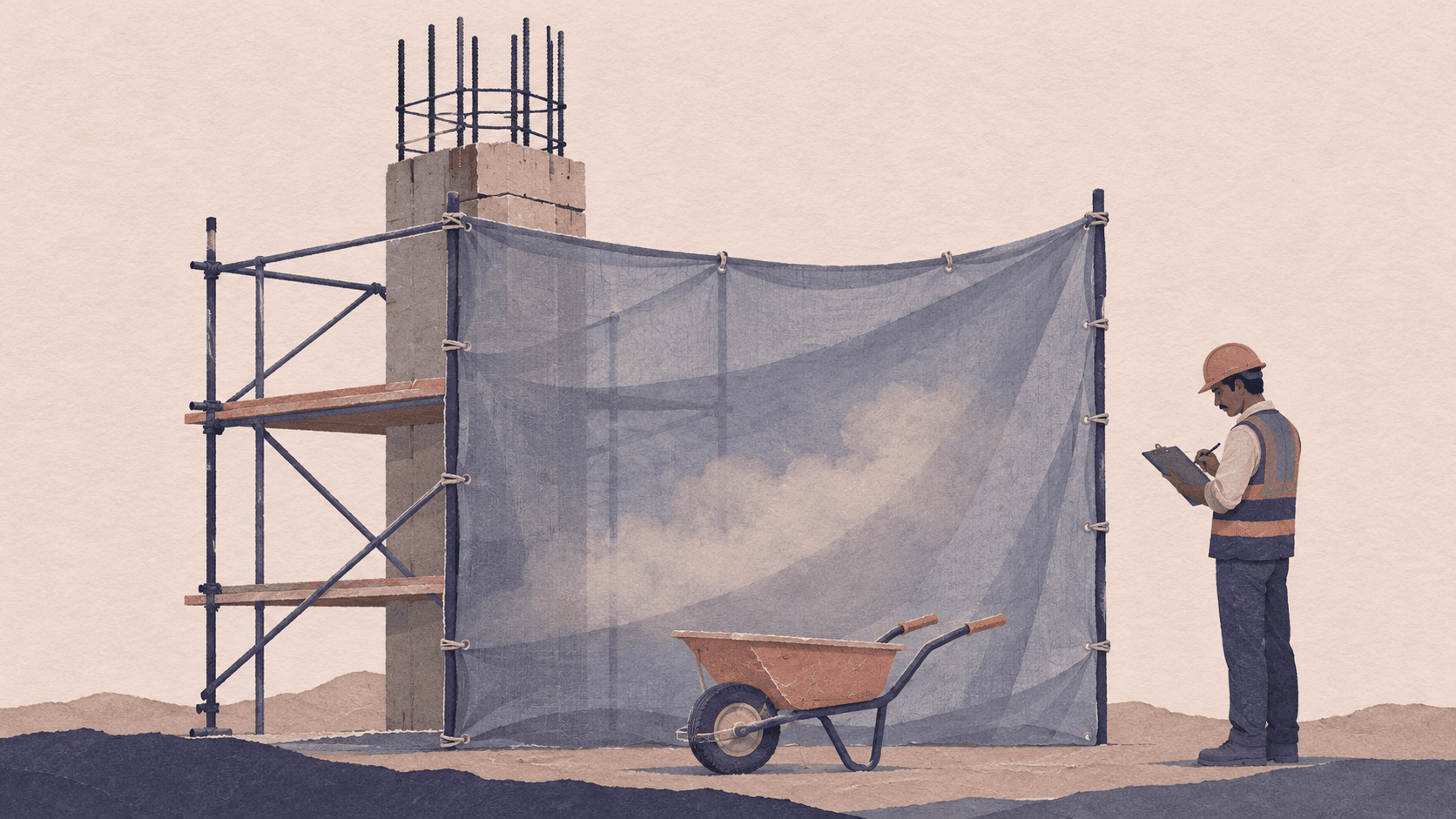
Dust control extends from excavation and demolition to loading, truck exits, haul roads and final disposal. A project can contain dust within its boundary while vehicles carry loose material onto neighbouring streets. Reporting should follow that movement.
Construction also operates within a wider pollution environment. The Union government identifies transport, industry, construction and burning among particulate-pollution sources. A city AQI reading cannot assign a precise share to a particular construction project. That requires source-specific evidence.
For Mumbai’s next enforcement update, the useful records would connect a named site’s readings with the activity underway, the inspection finding, the corrective instruction and a dated reinspection. Publishing repeat violations and verified closures would allow residents to assess what followed the dashboard alert.
Dated record
22 October 2026: BMC’s reported update described connected monitors and inspection squads.
23 October 2026: the environment minister announced regional coordination and proposed further debris-management guidelines.
26 October 2026: Bridging Room reviewed these accounts and the published monitoring framework. The deployment counts remain attributed claims. No current citywide AQI value or independently verified reduction in construction emissions is asserted here.