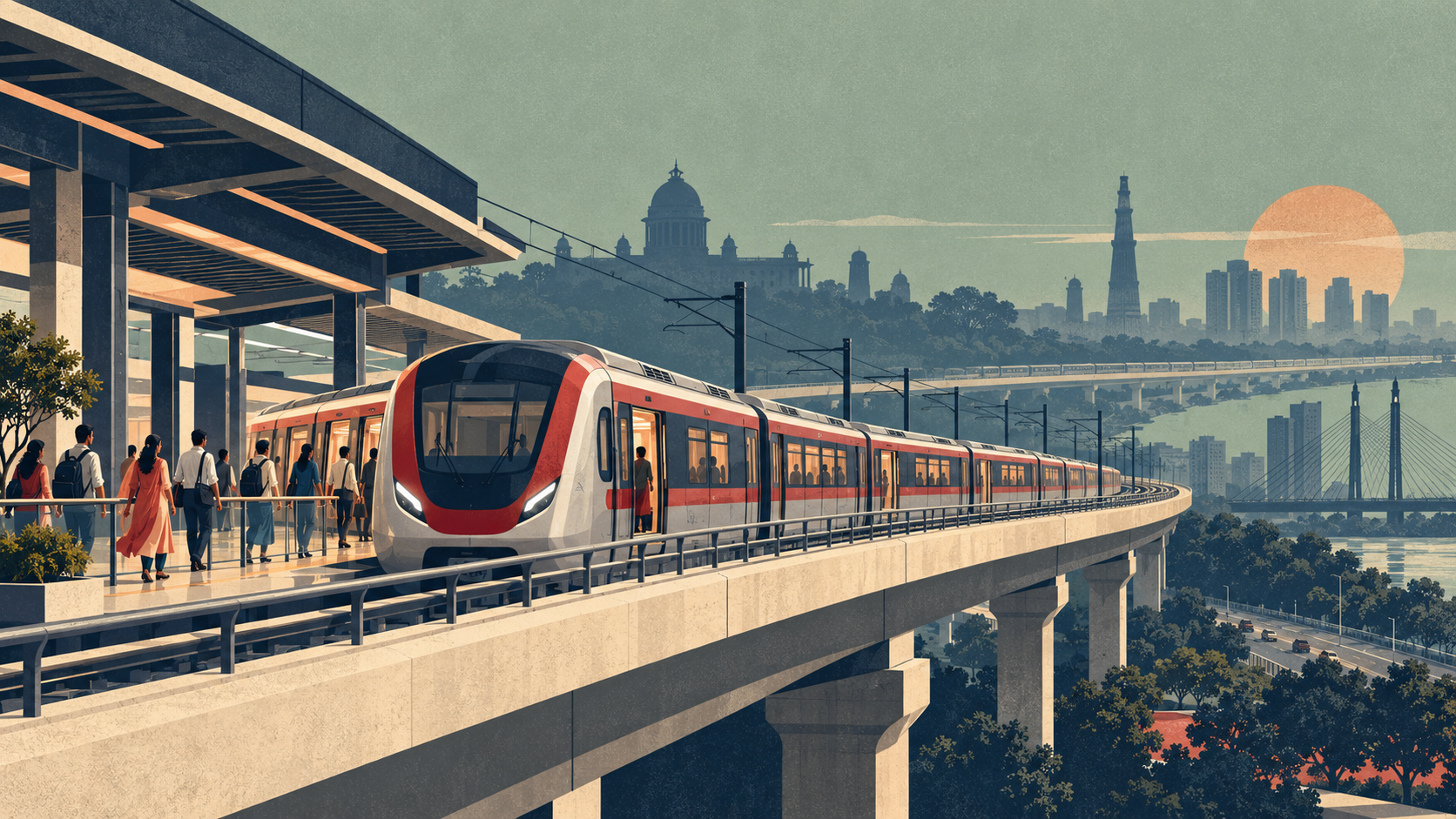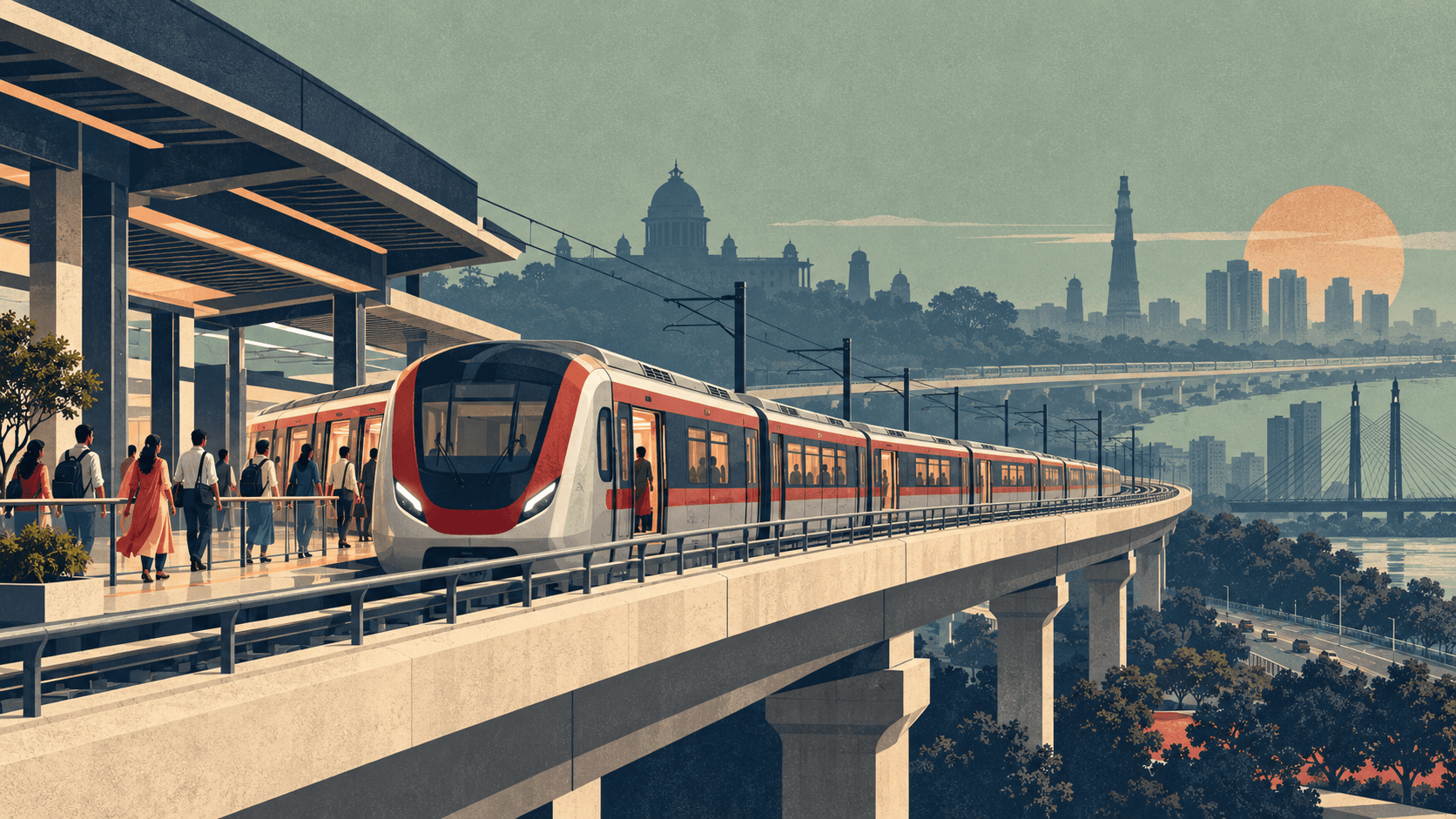
Namo Bharat now serves more than 1.1 lakh commuters a day, according to the Ministry of Housing and Urban Affairs. Its 18 October update also reports a recent single-day high of about 1.68 lakh and more than 4.5 crore passenger journeys since services began in October 2023.
For the Delhi–Ghaziabad–Meerut corridor, the useful comparison now is how passengers use the complete line. The railway began with a 17-km section between Sahibabad and Duhai Depot. The full 82-km corridor was dedicated on 22 February 2026, alongside Meerut Metro. Three years of accumulated journeys therefore span several different versions of the network.
What the new numbers tell us
The October release gives a current daily-use figure, a record day and a cumulative total. Each describes a different period. It does not specify the averaging window behind “daily”, identify the record date, or publish a monthly series. It also uses “commuters” for the daily figure and “passenger journeys” for the cumulative total without explaining whether the first counts unique people or trips.
These limits prevent a reliable growth-rate calculation from the release alone. Dividing the cumulative total across three years would mix the early short service with the complete corridor. Comparing that result with today's daily figure would obscure the effect of adding stations and extending the route.
A monthly series, accompanied by the length in operation and service frequency, would show when use increased. Station entries and trip lengths would then help distinguish short local trips from longer regional journeys. The published figures establish reported use; they do not, by themselves, measure how many car or bus trips passengers replaced.
One corridor, two kinds of service
In its 20 February pre-opening announcement, the Prime Minister's Office described Namo Bharat and Meerut Metro sharing infrastructure. That document identified the final sections as 5 km between Sarai Kale Khan and New Ashok Nagar and 21 km between Meerut South and Modipuram. The October update subsequently confirms the full-corridor dedication.
For operators, a shared system raises practical questions about allocating train paths, arranging maintenance and accommodating different journey patterns. Those are reporting questions here, not evidence of a current operating fault. A useful performance account would show service frequency, punctuality, crowding by section and how disruptions affect each service.
The February announcement also positioned Sarai Kale Khan as an interchange with Hazrat Nizamuddin railway station, the Pink Line, the bus terminal and Ring Road. To judge that interchange in use requires transfer-time and access observations. A connection on a network diagram cannot quantify the time a passenger spends walking, waiting or changing modes.
The next evidence to watch
The anniversary release mentions a 110 MW captive solar development and first- and last-mile initiatives. It provides no commissioning record, generation data or operating-cost comparison for the solar project. Nor does it establish farebox recovery, a reduction in congestion or measured emissions savings.
The same release says the Delhi–Panipat–Karnal and Delhi–Gurugram–Behror corridors are likely to receive approval soon; it places Ghaziabad–Jewar and Noida–Faridabad–Gurgaon at the detailed-project-report stage. Those descriptions should remain separate from sanctioned construction or an opening timetable.
Timeline
October 2023: Services began on the 17-km priority section.
20 February 2026: PMO announced the final sections and shared-infrastructure arrangement ahead of opening.
22 February 2026: The complete 82-km corridor was dedicated, as confirmed in the October update.
17–18 October 2026: NCRTC held its anniversary event; MoHUA published the latest ridership figures the following day.
The next useful disclosure is a monthly operating account for the completed corridor, with passenger journeys, service kilometres, fare revenue and costs reported over the same period.