A guideline can change a project before a machine reaches the site. It can also disappear into a tender as one more paragraph that nobody measures.
That is the choice facing the National Highways Authority of India after the Ministry of Road Transport and Highways announced new guidelines on 24 September for upcoming four-lane and six-lane greenfield and brownfield high-speed access-controlled national highways. Expressways are excluded.
The brief touches the full project chain. It asks planners to improve traffic forecasting, engineers to use artificial intelligence and machine control in embankment and pavement works, and project teams to provide for multi-lane free-flow tolling. It also links the corridor to drainage, greener planning and other operating considerations.
The announcement is significant because it shifts digital tools from isolated pilots towards the standard project brief. But the announcement does not establish that any highway has already delivered better time, cost or quality outcomes under the new approach. That evidence must come from the first projects that use it.
The forecast enters the contract
Traffic forecasts are often treated as a planning appendix. In reality, they influence almost every important decision that follows. They affect the number of lanes, pavement design, interchange capacity, toll expectations, land requirements and the financial case for the project.
The ministry says forecasts should account for existing and diverted traffic, freight growth, economic activity and reliable toll or other sources. That is a better brief than relying on a single traffic count and an assumed annual growth rate. It also creates a larger audit problem.
Each input needs a date, source and method. Diverted traffic depends on route choice and the performance of competing roads. Freight growth depends on industrial and logistics activity that may not arrive on schedule. Toll records can be valuable, but they may describe a different network condition from the one the proposed corridor will create.
A strong DPR should therefore show a base case and alternative scenarios. It should state which assumptions change the lane requirement or economic result. When the forecast is revised, the model version and approval trail should be retained. Without that record, an apparently advanced model can make accountability harder rather than easier.
AI and machine control need defined outputs
The phrase “AI and machine control” attracts attention. On a highway site, the useful question is much narrower: what decision or construction activity will the technology improve, and what record will prove it?
Machine control can support more consistent earthwork and paving when the digital design, equipment calibration, field survey and quality records agree. AI tools can assist teams in finding patterns or deviations. Neither replaces the need for an approved design, competent supervision and acceptance criteria.
If the tender merely instructs a contractor to “use AI”, bidders may price different things and the client may receive little comparable evidence. The specification must name the output. That could be a verified surface model, a documented inspection workflow, a machine-generated production record or another measurable deliverable suited to the project. The guideline itself does not settle those contract details.
Ownership matters too. Who controls the model? Who approves changes? What happens when the model, survey and physical work disagree? Who retains the records after completion? These questions belong in the information requirements and quality plan, not in a marketing presentation.
Barrier-free tolling is a systems project
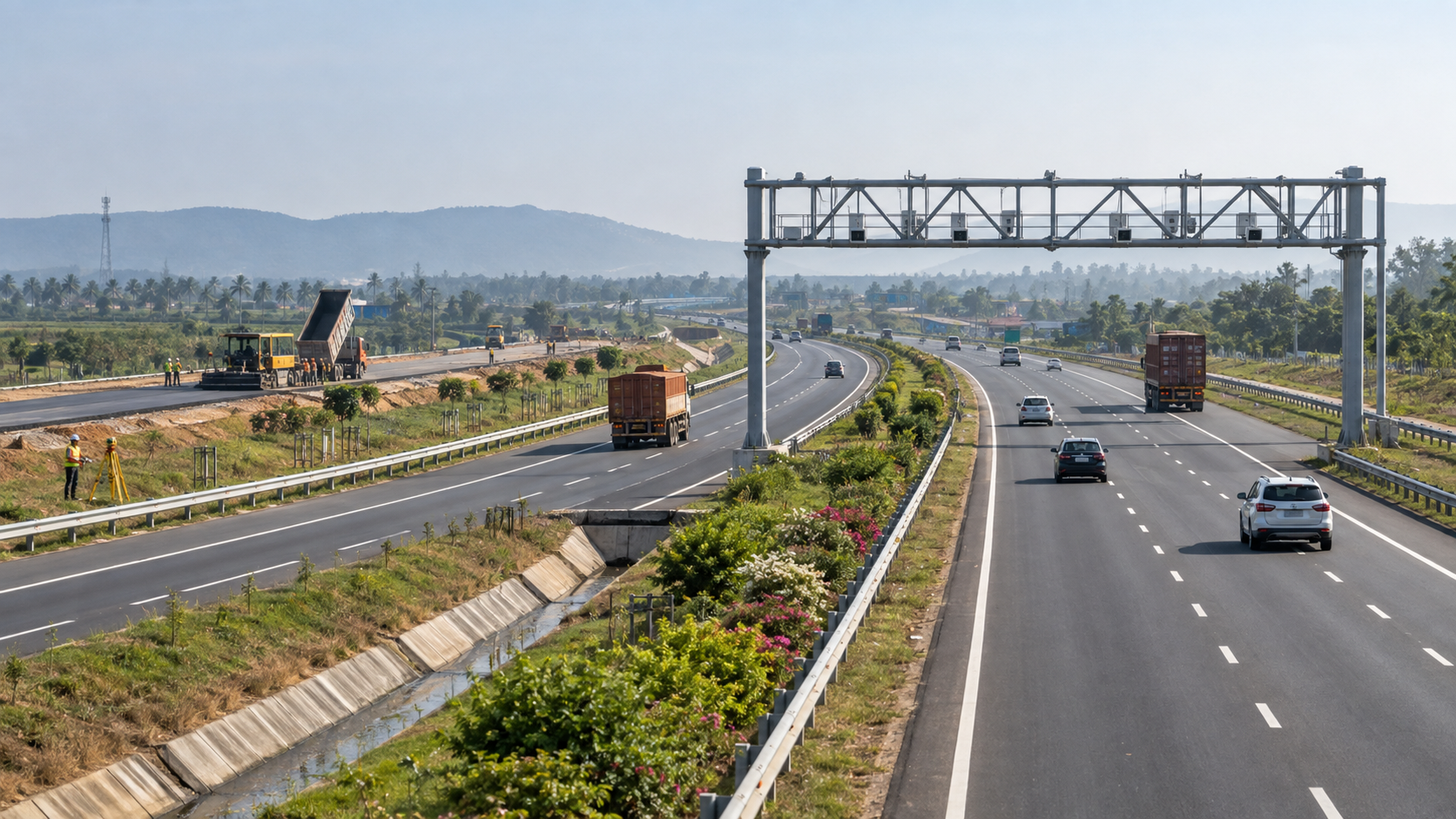
Multi-lane free-flow tolling removes the conventional stop at a toll plaza. For users, the promise is a smoother trip. For the project team, the work moves into system design, roadside equipment, reliable data links, vehicle identification, back-office processing and enforcement.
The highway and the toll system cannot be commissioned independently if the operating model depends on both. Gantry locations, power, communications, maintenance access and data interfaces need space in the civil design. Tests must show how the complete chain works under actual traffic conditions, including exceptions.
That makes the acceptance plan as important as the equipment list. A project can install every component and still fail to produce a dependable transaction. The first tenders under the guidelines should show whether NHAI defines performance at the system level.
Greenfield and brownfield projects carry different risks
A greenfield corridor can reserve space for drainage, gantries, utilities and future maintenance from the beginning. It also carries major land, environmental and access risks. A brownfield project works within an operating road where construction staging, traffic safety and existing assets constrain every change.
Using one technology label for both conditions would miss the delivery problem. The contract needs requirements that reflect the corridor. A machine-control plan for new embankment works is different from a digital workflow for widening beside live traffic. Free-flow tolling on a new alignment is different from converting an existing toll operation.
The same distinction applies to drainage and greener corridor measures. A drawing can show a drain or plantation. The operating question is whether water has a continuous outlet and whether maintenance responsibility survives after construction. Asset handover should include locations, condition records and accountable owners.
The first tenders will tell the real story
Guidelines become delivery tools only when they appear in the documents that allocate money, risk and acceptance. The next evidence should be visible in DPR terms of reference, bid schedules, technical specifications, quality plans and commissioning tests.
Four checks will be useful. Are traffic assumptions traceable? Are digital outputs defined? Are system interfaces assigned to named parties? Are acceptance criteria linked to payment and handover?
There is also a counterpoint. More requirements can increase preparation cost and produce compliance paperwork without improving the road. NHAI will need to distinguish information that changes a decision from information collected because technology makes collection possible.
The 24 September release is therefore a policy milestone, not a delivery result. The report worth writing next will not ask whether the guidelines sound modern. It will examine the first contract issued under them and measure whether the brief has changed the work.