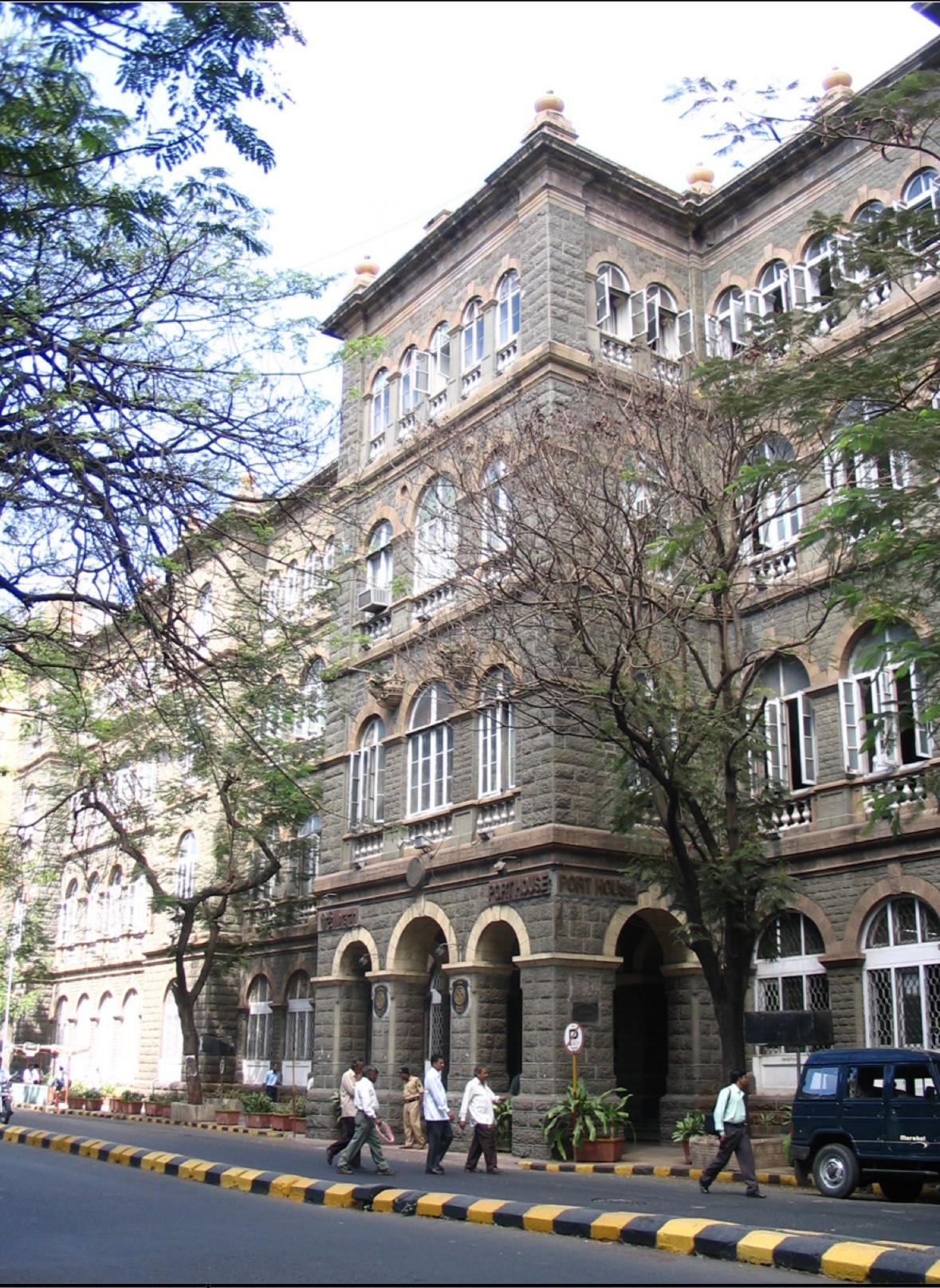
Refurbishing an existing building is not simply a matter of repairing what is old and installing what is new. The work must account for the structure’s existing condition, its continued use and, in the case of a heritage asset, the need to preserve its architectural fabric. At Port Bhavan, the former Bombay Port Trust building in Mumbai’s Ballard Estate, these requirements sit across separate procurement packages for heritage conservation and interior refurbishment with building services.
The distinction matters because the contracts may have different scopes, but the work takes place within the same building. The conservation tender specifies precautions to protect historic masonry during the removal of existing electrical services, while the separate mechanical, electrical and plumbing (MEP) package covers building-service and interior works. How these interventions are sequenced and who is responsible for coordinating their interfaces is the central question.
Two packages, distinct scopes
The National Buildings Construction Corporation Limited (NBCC) published a tender for Port Bhavan’s repair, retrofitting and heritage conservation on 19 September 2026. It carries an estimated value of ₹26.34 crore and a stated execution period of 180 days.
A second NBCC tender, published on 23 September, covers interior refurbishment and MEP works, with an estimated value of ₹33.43 crore and the same stated execution period. A corrigendum published on 14 October revised its submission deadline to 26 October 2026.
Together, the two tenders represent approximately ₹59.77 crore in estimated procurement value. This is the sum of separate tender estimates, not a confirmed contract value or expenditure. Although the packages have distinct stated scopes, the available records do not establish their precise contractual boundaries or whether they are formally linked.
What the conservation scope reveals
The conservation bill of quantities provides a more specific picture of the work than the tender title alone. Alongside electrical-service removal, it includes stone cleaning, limewash removal, plaster and flooring work, lime-mortar repairs and interventions to damaged architectural elements. Certain items require supervision by a trained conservator.
The specifications also include temporary safety platforms for work at height, with a requirement that the operational ground-floor area not be disturbed. This establishes a constraint in the tender, although the available records do not establish the building’s full occupancy arrangements or whether all works will be undertaken in occupied premises.
Port Bhavan’s heritage status is documented separately. The Municipal Corporation of Greater Mumbai’s heritage-list records identify the building as Grade II-A. A historical survey prepared by the Urban Design Research Institute and Mumbai Metropolitan Region Heritage Conservation Society records its construction between 1889 and 1891 and describes its architectural features. The survey also records building-condition observations from 2005, which should not be treated as a current assessment.
These details establish why the conservation work requires particular care: interventions must account for the existing fabric while accommodating the requirements of refurbishment.
Where conservation and MEP works intersect
The MEP package includes electrical, plumbing and fire-fighting works alongside interior finishes. Its detailed bill of quantities includes provisions for accommodating electrical conduits and wiring. These activities may intersect with conservation where service routes pass through, alongside or behind walls, floors and ceilings that require repair.
The sequence of work is therefore important. Existing services may need to be removed before repairs can proceed, while new installations must be coordinated with the reinstatement of finishes and other building elements. Poor sequencing could require completed areas to be reopened or expose historic fabric to avoidable damage. These are potential execution risks, not evidence that such problems have occurred at Port Bhavan.
The records reviewed do not identify a single interface manager or establish a joint sequencing plan between the conservation and MEP packages. The complete contract conditions, technical drawings and project-management provisions would need to be examined to determine who is responsible for coordinating the work. That responsibility could sit with the employer’s project-management structure, an appointed consultant, the contractors or a combination of parties.
A heritage asset with a proposed future role
Port Bhavan’s significance also extends beyond its present use. Mumbai Port Authority’s Integrated Mumbai Port Masterplan 2047 proposes an experience centre at Port House, the historic building, intended to showcase Mumbai’s maritime history and future.
The masterplan establishes a proposed future-facing use, but the available evidence does not show that the current refurbishment tenders are directly delivering this facility. The proposal nevertheless highlights the longer-term challenge of adapting an existing heritage asset while retaining its architectural character and accommodating modern building requirements.
Implications for infrastructure delivery
For infrastructure companies, Port Bhavan’s refurbishment highlights a wider challenge in upgrading existing assets: integrating conservation, structural repairs and modern building services within a single project. Unlike new construction, refurbishment must accommodate existing architectural features and building conditions while ensuring that new installations function effectively alongside retained elements.
This makes coordination between civil works, electrical systems, plumbing, fire safety and interior finishes an important part of project execution. Work sequencing, protection of existing fabric, quality control and clear allocation of responsibilities all influence how efficiently separate activities come together. When these elements are planned as part of an integrated delivery approach, refurbishment can improve an asset’s functionality while preserving the features that give it historical and architectural value.
As infrastructure owners increasingly adapt existing buildings for contemporary requirements, Port Bhavan offers a relevant example of why refurbishment must be approached as a coordinated exercise in asset management, not simply a collection of individual repair and installation works.