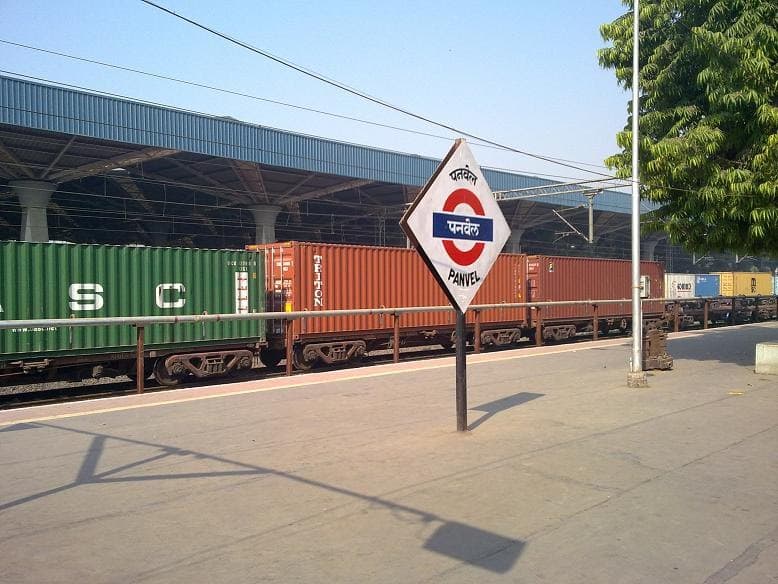
Indian Railways has approved ₹209 crore for electronic interlocking at seven stations in the Solapur Division. The stations are Mohol, Mundhewadi, Bale, Solapur, Hotgi Junction and Hotgi A Cabin, Shahabad, and Wadi Junction.
The approval looks like a signalling replacement. It is better understood as the base layer for a much larger digital railway programme.
The same High Density Network 7 route already has sanctioned works for Kavach, automatic block signalling and centralised traffic control. Each system has a separate job. They also depend on one another. A train protection system cannot act on movement authority it cannot trust. A control centre cannot regulate traffic well if the station logic beneath it is inconsistent. Automatic block signalling cannot deliver capacity reliably if the station interfaces become the weak link.
The ₹209 crore sanction therefore starts a systems integration job across seven live stations. The engineering challenge lies less in buying equipment than in changing the railway while trains continue to run.
What electronic interlocking changes
Interlocking prevents a signal from clearing unless points, routes and track conditions are set safely. Older installations can use relay logic. Electronic interlocking moves that logic into a computer-based system, with controlled inputs and outputs, diagnostics, event records and interfaces to other signalling systems.
The safety principle remains the same. Conflicting routes must not be permitted. Points must be detected in the correct position. Occupied track must block an unsafe movement. A failure must drive the system to a safe state.
The digital form changes how the railway designs, tests, modifies and maintains that logic. Every route, point, signal, track circuit and operational condition must be represented correctly in the application data. The system then has to match the physical yard on site.
That match is where commissioning risk concentrates.
Indian Railways told Parliament in August 2025 that electrical or electronic interlocking had been provided at 6,635 stations by 30 June 2025. The same answer referred to mandatory correspondence checks, alteration protocols and completion drawings for signalling work. Those controls matter because a correct software table connected to an incorrectly identified field cable is still an unsafe installation.
Why Kavach needs the station layer
Kavach is Indian Railways' automatic train protection system. Its job includes supervising train movement and intervening when defined unsafe conditions arise. The RDSO system requirements for Kavach Version 4.0 include a specific interface between stationary Kavach and electronic interlocking. The specification also covers control tables, RFID tag layouts and integration with centralised traffic control.
That architecture makes the dependency visible. The station interlocking holds the live state of routes, points and signals. Stationary Kavach needs defined, verified information from that layer. The onboard system then uses railway and train data to supervise movement.
RDSO's configurable-parameter document goes further. It places stationary Kavach, the electronic interlocking and other vital entities on redundant Ethernet rings. This is not a plug-and-play office network. The interface has to preserve safety behaviour, message integrity, configuration control and availability under railway operating conditions.
The Solapur approval does not say which electronic interlocking products will be installed, whether one vendor or several will cover the seven locations, or how existing Kavach, automatic signalling and traffic-control contracts will divide interface responsibility. Those omissions are normal at approval stage. They are also the questions that will decide whether the programme commissions cleanly.
Seven stations will not mean seven identical jobs
Dividing ₹209 crore by seven gives a crude average of about ₹29.9 crore per station. That figure should not be treated as a unit rate.
Solapur and Wadi Junction are not the same delivery problem as a smaller station. Yard size, number of routes, point machines, track-detection sections, level-crossing interfaces, relay-room condition, cable routes, power supply, building work and operational traffic all affect scope. Hotgi Junction and Hotgi A Cabin may also require a coordinated cutover rather than two isolated changes.
A useful cost breakdown would separate at least five parts: core electronic interlocking equipment, field signalling alterations, cable and power work, buildings or equipment rooms, and testing and commissioning. The published approval provides none of these details yet.
The route also crosses state boundaries within the division. Shahabad and Wadi Junction are in Karnataka, while the other named locations are in Maharashtra. That does not create a technical difference in the signalling standard, but it can affect access, local works and coordination around station areas.
The possession plan is the project plan
Brownfield railway signalling cannot be commissioned like a new building system. Existing equipment must keep the station operating until the new installation is ready. At cutover, teams need a protected window to disconnect old circuits, connect new equipment, test every affected function and restore traffic safely.
Railway teams call such windows traffic blocks or non-interlocking periods, depending on the work. The programme must decide what can be installed and tested offline, what needs trains to stop or move under restricted procedures, and what the rollback plan will be if a test fails.
For seven stations on a high-density route, the sequence matters. Commissioning them independently may reduce the size of each block but prolong the period of mixed systems. A corridor sequence may simplify integration testing but demand larger possessions and more resources at once.
The public approval gives no station order, block strategy or target dates. Until those appear, a completion forecast would be guesswork.
What a credible delivery record should show
The next useful documents will be the tender packages and station-specific scopes. They should show whether the railway is buying one integrated package or splitting electronic interlocking, field work, telecoms, power and civil work.
After award, the programme should be tracked through six evidence gates.
First comes the design baseline: approved signalling plans, route control tables, interface control documents and equipment-room layouts.
Second comes factory acceptance testing. The application logic should be tested against the approved station data before equipment reaches site.
Third comes field readiness. Cable routes, power supplies, earthing, buildings, point machines and train-detection equipment must be ready for the new interlocking.
Fourth comes interface testing with Kavach, automatic block signalling and centralised traffic control. Passing an isolated electronic interlocking test will not prove the full stack works.
Fifth comes the cutover and site acceptance process, including correspondence checks between the control system and every connected field asset.
Sixth comes operational evidence after commissioning: signalling failures, mean time to restore, route-setting delays, temporary speed restrictions and the availability of connected systems.
These gates also create a cleaner way to report progress. Spending tells only part of the story. Equipment delivered to a station is not the same as approved logic. Approved logic is not the same as a tested field installation. A commissioned station is not the same as a stable corridor.
The real programme is at the interfaces
The Solapur approval is report-worthy because it names the enabling layer beneath three larger railway systems. Electronic interlocking will sit between physical points and signals, Kavach, automatic block signalling and centralised traffic control.
The sanction confirms the locations and the total approved cost. It does not confirm a contractor, tender date, station-level cost, commissioning sequence or completion deadline.
The next milestone to watch is the package structure. It will show who owns the interfaces, how the seven stations will be sequenced, and whether the railway is procuring a collection of assets or managing one operational system.