We usually think of engineering design as something that happens before construction.
The drawings are prepared. The calculations are completed. The foundations are designed. The dimensions are fixed. And then, construction begins.
But what happens when you are building in a place where some of the most important information cannot be fully known until you start excavating?
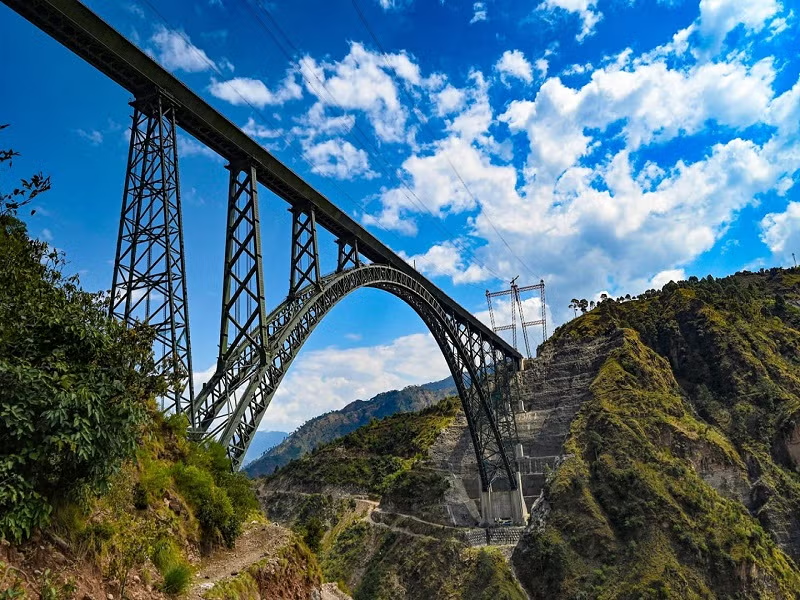
That was one of the fundamental challenges behind the Chenab Railway Bridge.
Standing 359 metres above the Chenab River in Jammu and Kashmir, the bridge is the world's highest railway bridge. It is 1,315 metres long, with a 467-metre steel arch spanning the gorge.
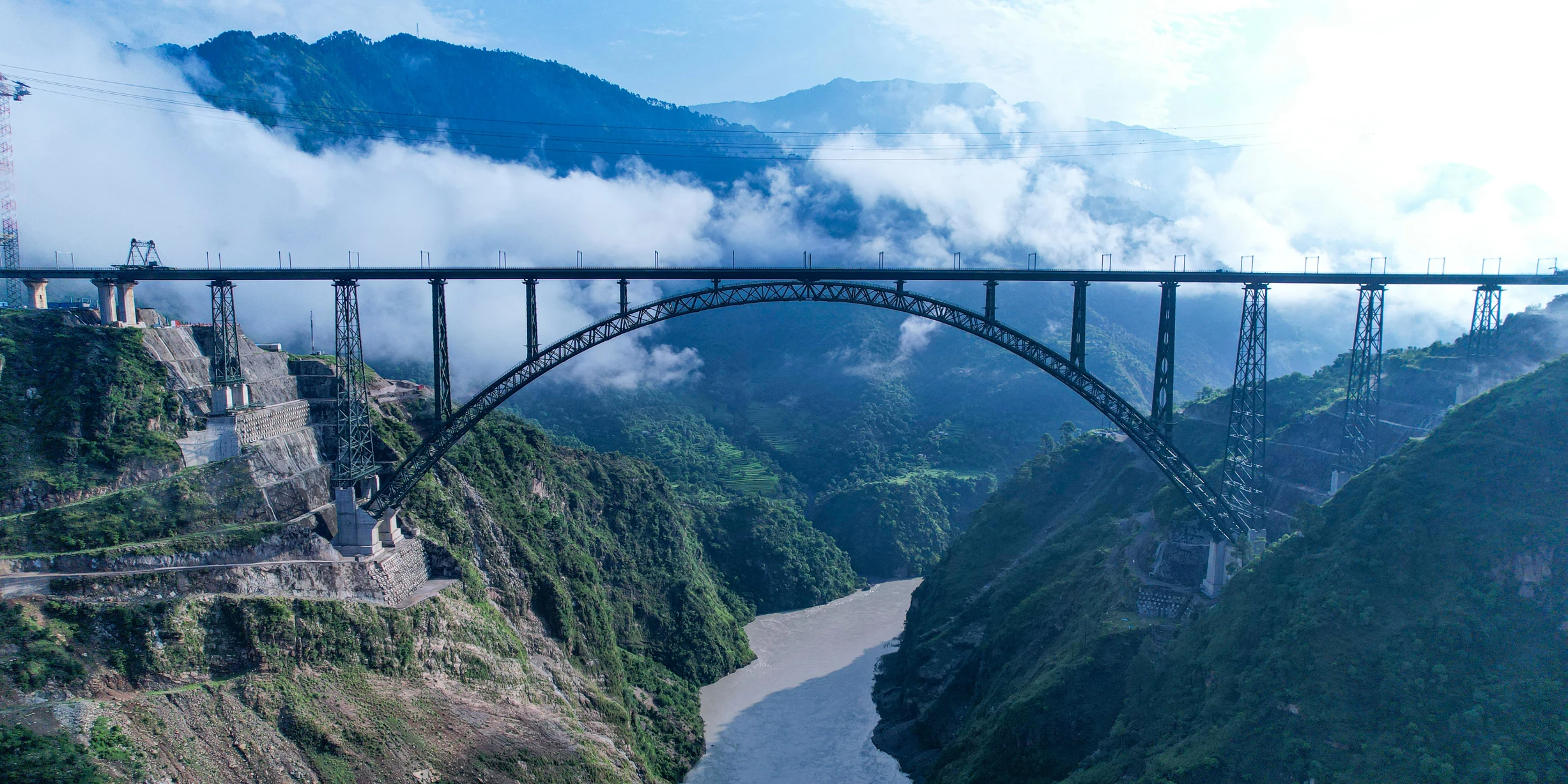
But the numbers alone don't explain what made the project so difficult.
The bridge sits in steep Himalayan terrain, where the rock mass is highly jointed and heterogeneous. The site also presented seismic, wind, climatic and construction challenges. The river runs deep below the bridge, while the slopes on either side had to support some of the most critical elements of the structure.
In a project like this, the challenge is not simply designing a structure strong enough to stand.
It is designing a structure when the conditions supporting that structure are not completely visible at the beginning.
And that was something I wanted to understand better.
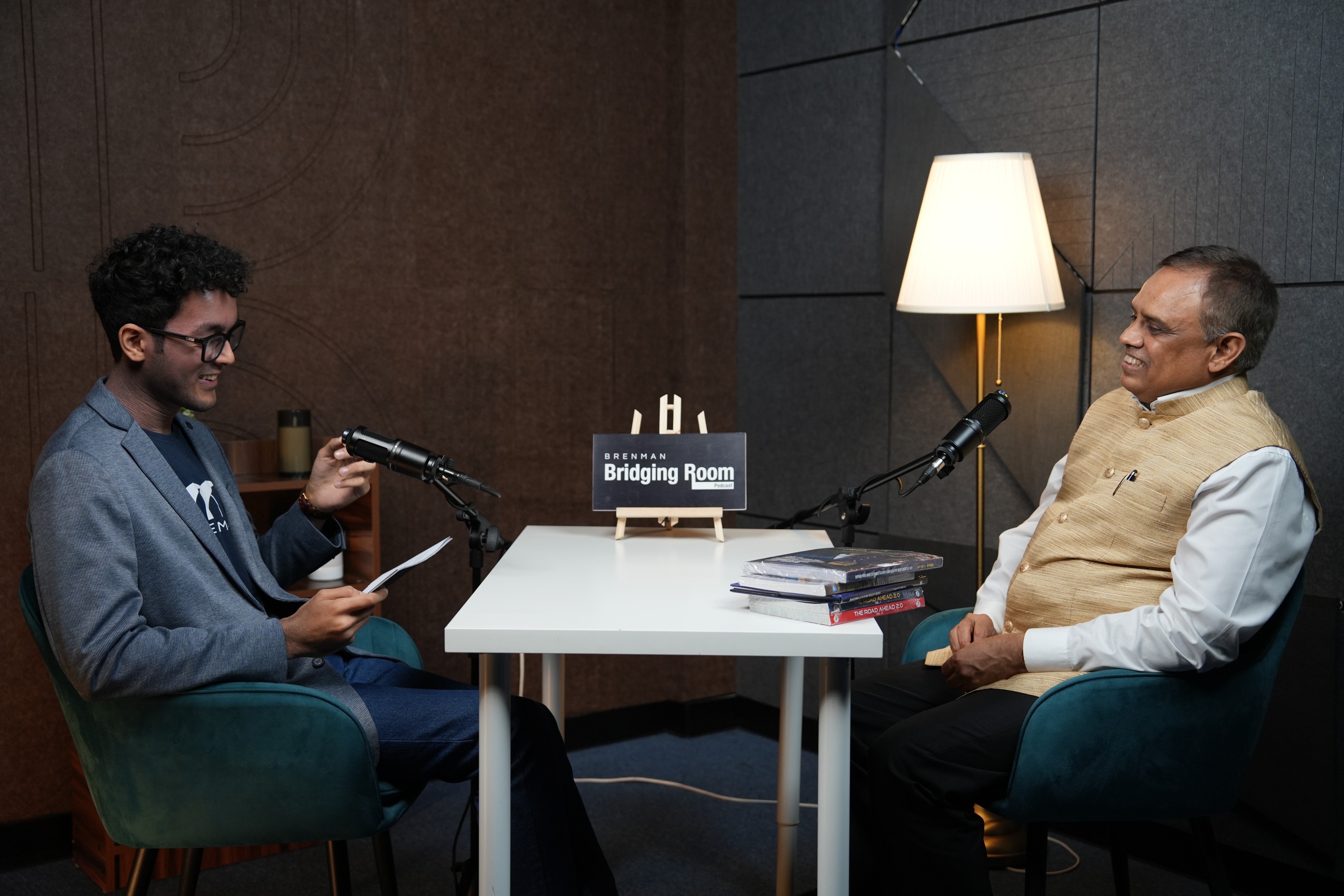
So while speaking with Prof. T. G. Sitharam for The Bridging Room Podcast episode, I brought up a question that had been sitting with me:
Why was a “design-as-you-go” approach necessary for a project as critical and complex as the Chenab Railway Bridge?
After all, this isn't the sort of bridge where you would expect the design to change as construction progresses.
For a project of this scale, shouldn't everything be known and designed beforehand?
Prof. Sitharam's answer was interesting because it wasn't about a lack of planning.
It was about the limits of what could be known in advance.
The scale of the project was enormous. The construction period stretched across many years. The terrain and geological conditions were highly variable. And as excavation progressed, the engineers were able to discover information about the ground that could not have been completely captured through the initial investigations.
So the design had to respond to what was actually being encountered.
So the plan had to evolve as the project revealed more about itself.
That was the idea behind “design-as-you-go.”
"Designing with the information you discover"
can sound counterintuitive because after all, shouldn't a major bridge be completely designed before construction starts?
The answer is yes, to the extent that the available information allows.
But there is a difference between designing with the information you have and assuming that you already know everything you will encounter.
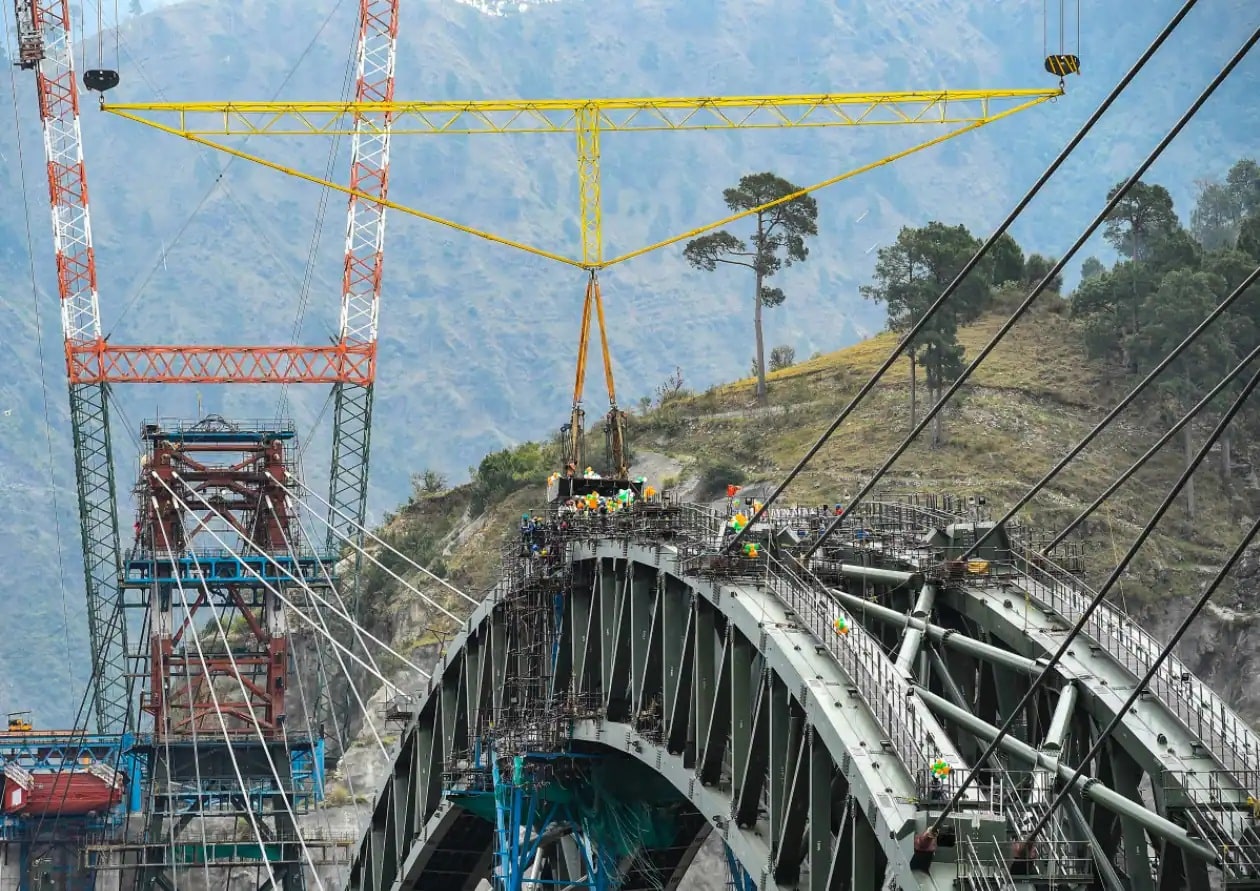
For the Chenab Bridge, the design evolved as excavation exposed the actual geological and geotechnical conditions of the site.
A 2025 case study published in the Indian Geotechnical Journal describes this process in detail. The paper notes that while the overall structure and location remained broadly constant, elements such as pier locations, foundation types and dimensions were kept flexible so that they could respond to the conditions encountered during construction. The study draws on 17 years of involvement in the planning, design and construction of the bridge.
This is not the absence of a plan.
It is a different kind of planning.
there was also the question of time
The Chenab Bridge was not built in a few months or even a couple of years.
The project evolved over a period of nearly two decades, with the geotechnical team involved for around 17 years.
As construction moves deeper into a site, the team learns more about the site and as more information becomes available, the engineering model can become better. So instead of treating construction as the final step after design, the Chenab approach created a feedback loop between the two.
That was the real idea behind design-as-you-go.
The real innovation wasn't changing the design, It was knowing when to change it.
That distinction is quite important because if a design changes every time something unexpected happens, that isn't necessarily good engineering.
The strength of a design-as-you-go approach comes from having the systems, expertise and monitoring needed to determine whether new information actually requires a change.
That means the construction site isn't merely where the design is executed, It also becomes a source of information and that changes the role of the engineer because the engineer is no longer simply producing a drawing and handing it over to the construction team, the engineer becomes part of a continuous process of observation, interpretation and decision-making.
One of the most interesting lessons from the project is that uncertainty is not always something engineering can eliminate before construction. Sometimes, it is something engineering has to manage throughout construction.
And that is a lesson that extends well beyond one bridge.
Tunnels, underground structures, deep excavations, foundations, dams and infrastructure in mountainous terrain all involve some degree of uncertainty that cannot be completely removed during the investigation stage.
The answer isn't necessarily to spend forever trying to predict every possible condition.
Sometimes, it is to create a process that can respond intelligently when reality differs from the prediction.
The question of design-as-you-go was just one part of a much broader conversation I had with Prof. T. G. Sitharam.
We spoke about the engineering behind the Chenab Railway Bridge, the challenges of working with complex ground conditions, his journey through geotechnical and earthquake engineering, his work across major infrastructure projects, and his transition from researcher to institution builder and national technical education leader.
What made the conversation particularly interesting was hearing him explain these experiences from the perspective of someone who has seen engineering evolve across projects, institutions and decades.
The full episode of The Bridging Room Podcast with Prof. T. G. Sitharam is now live.
If you've ever wondered what happens behind the drawings, calculations and final structure of a project like Chenab, this is a conversation worth watching.
Watch the full episode of The Bridging Room Podcast with Prof. T. G. Sitharam now.