A highway is usually designed around one thing: keeping vehicles moving.
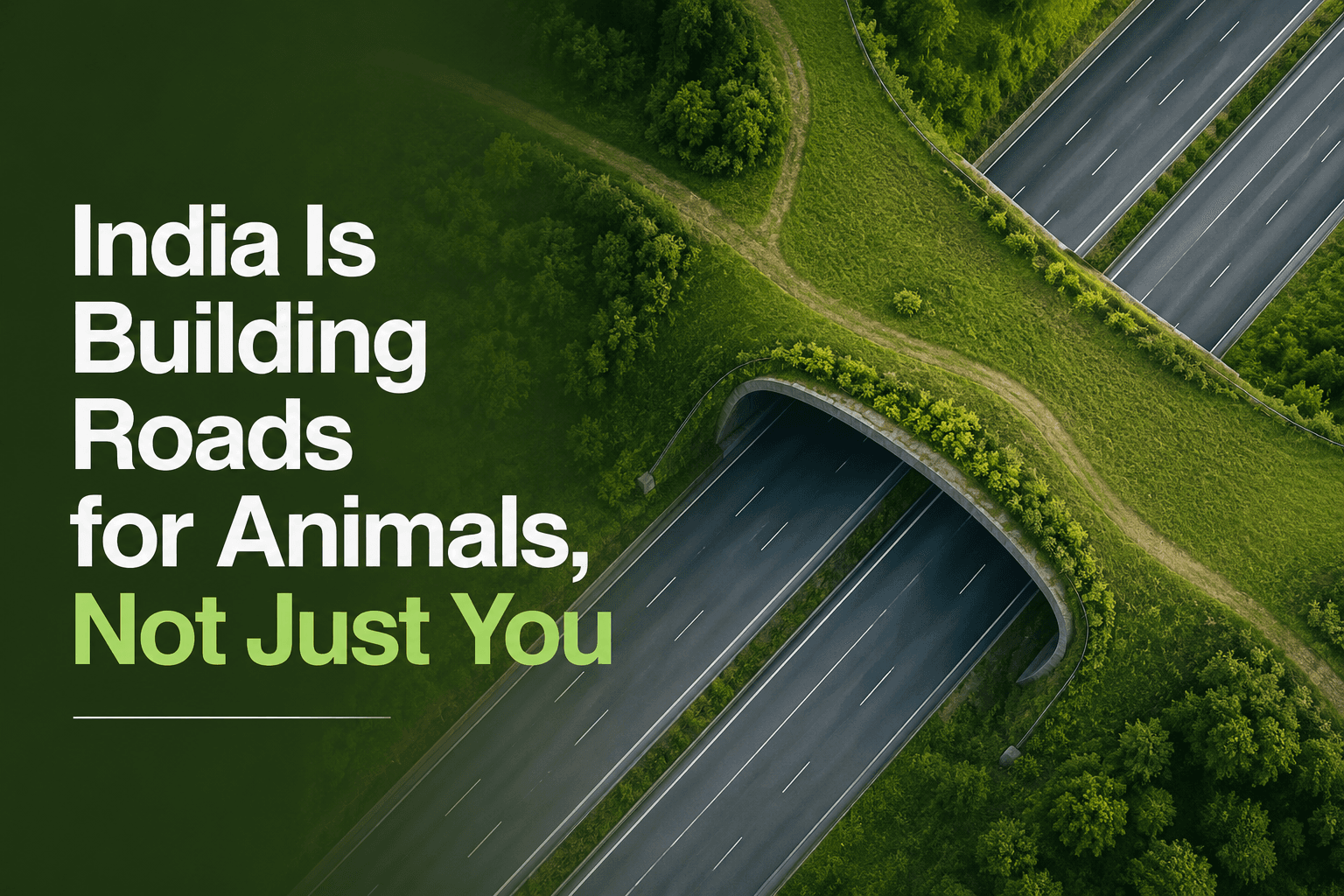
But somewhere in the Shivaliks, the traffic can be moving above you while an elephant walks underneath.
The Delhi-Dehradun Economic Corridor now has a stretch where wildlife movement has been built into the road itself. Along the 20 km section between Ganeshpur and Asharodi, around 10.97 km of animal underpasses and an elevated wildlife corridor allow animals to move through the landscape without crossing six lanes of traffic. A 40-day study by the Wildlife Institute of India and NHAI recorded 40,444 images of 18 wild species using the underpasses. Elephants were recorded using them 60 times.
And the interesting part is that the engineers did not stop at pouring concrete and opening the road. They monitored how animals behaved after construction.
Elephants and spotted deer were more likely to use quieter sections. Golden jackals and wild boar were less bothered by traffic noise. The study used 150 camera traps and 29 acoustic recorders to work this out.
That changes how you think about a wildlife crossing. It is no longer only a civil structure. It is a piece of infrastructure whose users cannot read a signboard, follow a diversion or tell you why they refuse to use the facility you built.
India has been learning this lesson across its highway network.
In a 2023 parliamentary reply, the Ministry of Road Transport and Highways listed 67 highway projects with measures for animal or wildlife movement. The list included underpasses, elevated sections, ecoducts, tunnels, enlarged culverts, fencing, light and sound barriers, and even monkey ladders.
Here are ten examples that show how different the engineering problem can become.
1. Delhi-Dehradun Economic Corridor
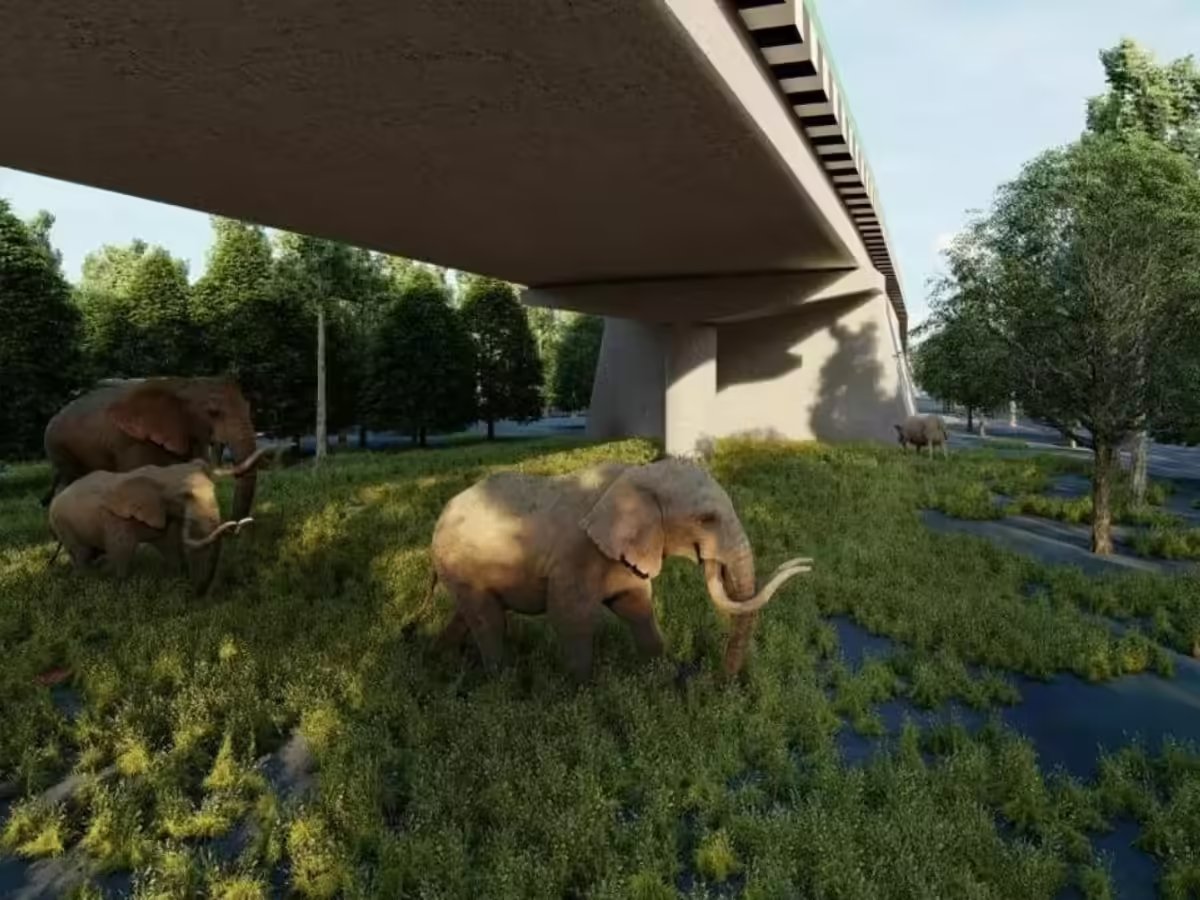
This is the closest thing India has to a live laboratory for wildlife-friendly highway design.
The 20 km Ganeshpur-Asharodi section includes a 10.97 km animal underpass system and an elevated corridor averaging 6 to 7 metres in height. WII's monitoring recorded 18 species using the structures, from golden jackals and nilgai to sambar, spotted deer and elephants.
The useful bit is what happened after opening. Researchers found that animals respond to conditions within the crossing, including noise levels. The road therefore became something that could be measured, tested and modified, rather than a structure considered finished on inauguration day.
2. Samruddhi Mahamarg
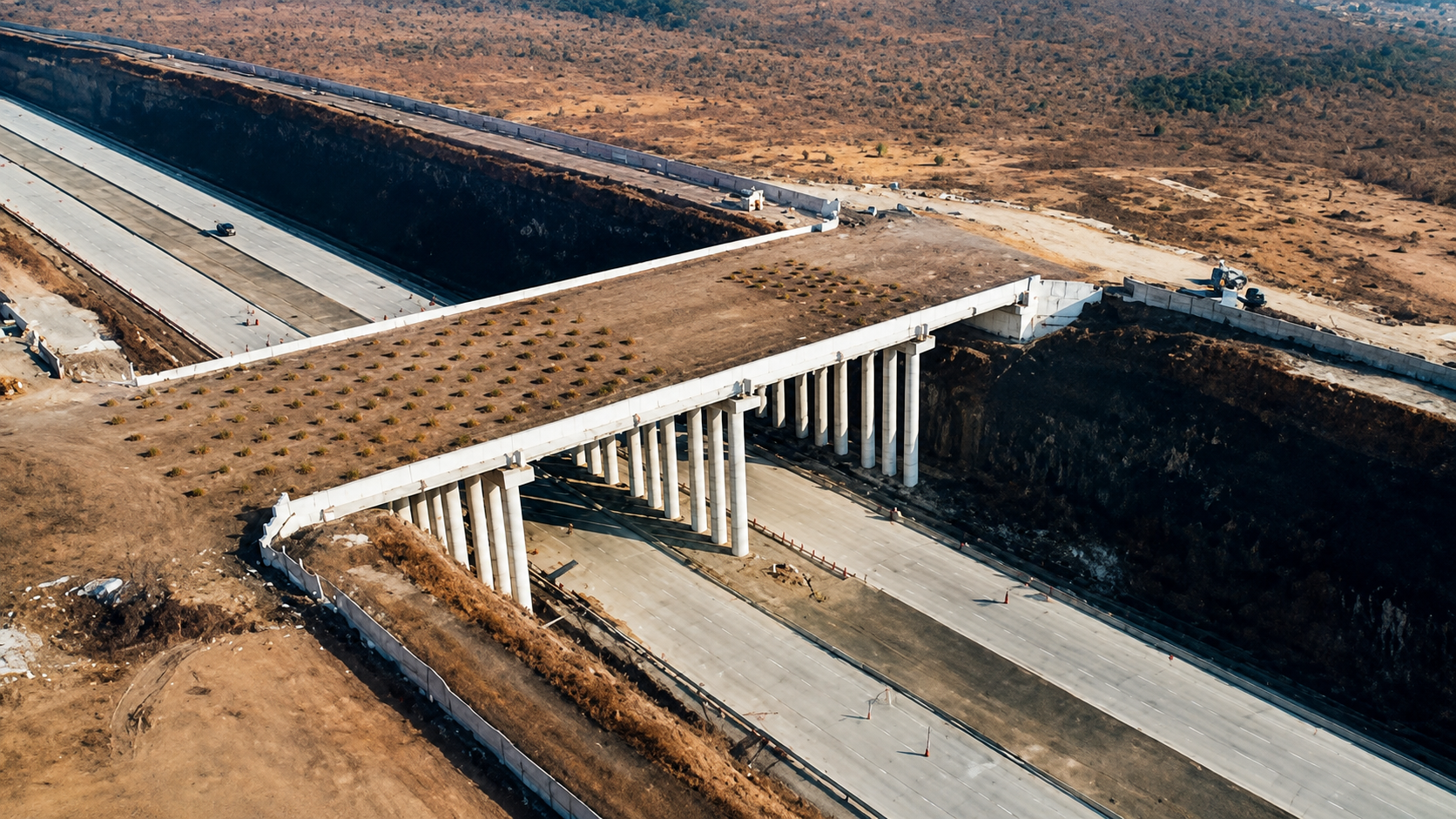
The 701 km Samruddhi Expressway has become one of India's biggest experiments in wildlife crossings.
WII monitored seven wildlife overpasses and 17 underpasses using 62 camera traps. Between December 2023 and April 2024, the cameras recorded 40,548 wildlife captures. Twelve species were recorded using the monitored underpasses. Four-horned antelope, jackal, wolf, fox, wild dog and hyena were recorded exclusively on the monitored overpasses during that study period.
That is a useful reminder that there is no universal "animal crossing" design. Some animals seem comfortable going underneath a road. Others prefer going over it.
The research is still ongoing through 2028, because a crossing that works for a chital on day one may tell you very little about what happens with another species six months later.
3. Kaziranga, NH-715
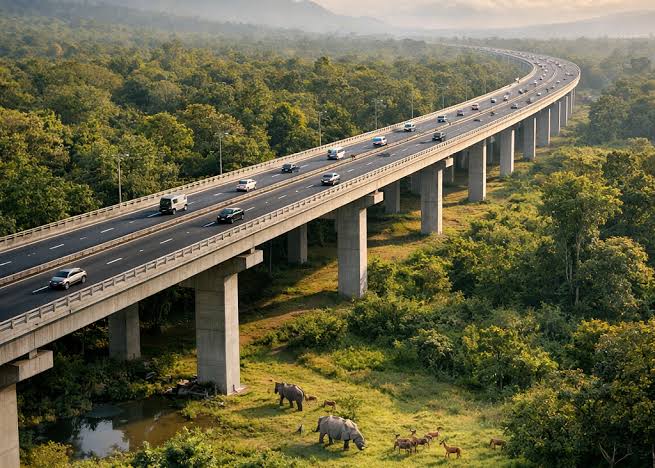
Kaziranga presents a different problem.
During floods, animals move from Kaziranga towards the higher Karbi Anglong hills. A road through that landscape can become a wall exactly when animals need to move.
The planned upgrade of NH-715 therefore includes a 34.45 km elevated corridor through the Kaziranga stretch. The 85.675 km project also includes bypasses, bridges, culverts and other structures designed around wildlife movement. The alignment is intended to maintain movement between Kaziranga and the Karbi Anglong hills.
Here the road is being designed around an existing animal route.
That is a very different mindset from asking animals to find a crossing after the highway has already been built.
4. Delhi-Mumbai Expressway, Ranthambore
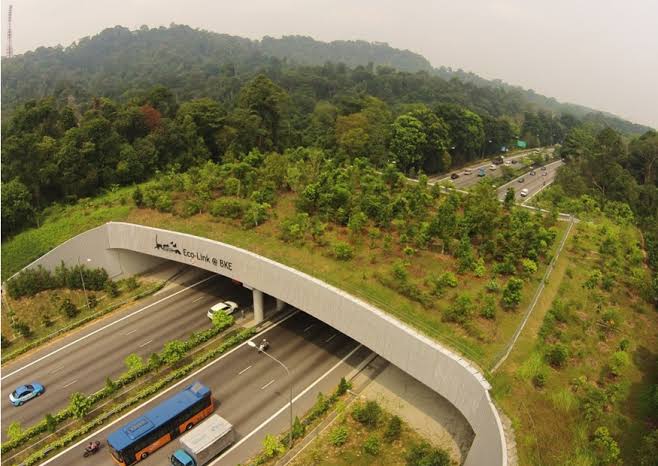
On a roughly 12 km section of the Delhi-Mumbai Expressway in the Ranthambore Tiger Reserve buffer zone, five mound-like structures stretch for about 500 metres each.
They are overpasses for wildlife.
The structures were introduced after the original project design was revised following recommendations from the Wildlife Institute of India. They are being shaped and planted so they function more like part of the surrounding landscape than a conventional bridge. The same stretch also includes a 1.2 km animal underpass.
It is a strange thing to look at from a highway: a giant road structure apparently growing out of the landscape.
That is the point.
5. Haridwar-Dehradun
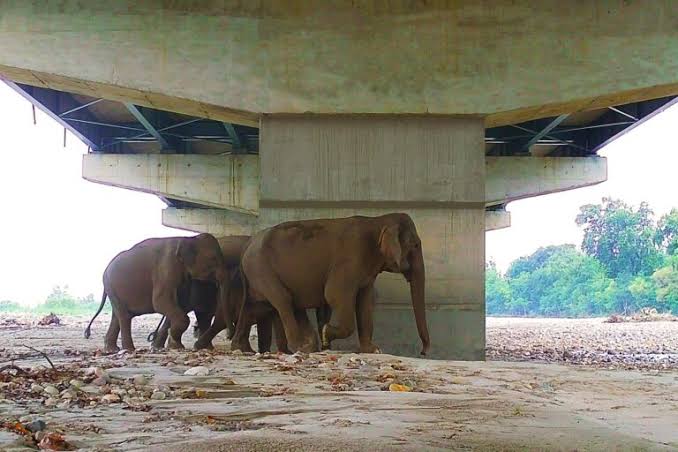
Some wildlife infrastructure is much less dramatic.
The government has listed elephant underpasses on the Haridwar-Dehradun corridor, including structures at Lal Tappar, Teen Pani and Motichur.
These projects are useful because they show that wildlife-friendly highways did not suddenly appear with the newest expressways. Elephant movement and road conflict have been engineering concerns for years.
What has changed is the scale, monitoring and ambition of some newer projects.
6. Seoni, NH-7
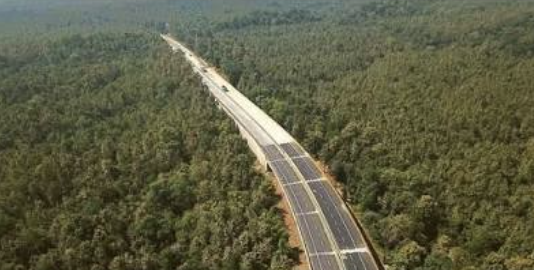
Around Seoni, the highway design uses elevated sections and multiple structures to keep road traffic from cutting across wildlife movement.
The 2023 government list records a 1,400 metre elevated corridor, along with several other long structures and measures including noise barriers and anti-light-glare systems.
That matters because an underpass works only where an underpass makes sense.
Sometimes the terrain, habitat and movement pattern make a much longer elevated section the better engineering answer.
7. Dandeli Wildlife Sanctuary, NH-4A
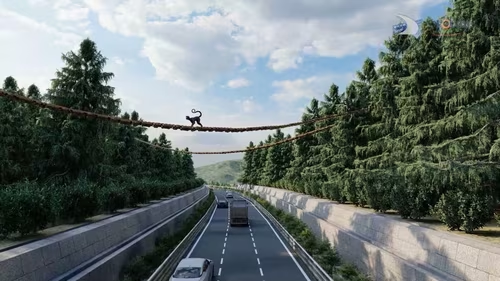
Dandeli shows another side of the problem.
The Belgaum-Khanpur section of NH-4A includes five underpasses, but the mitigation does not end there. The project also used enlarged culverts and bridges, fencing, and noise and light barriers.
An ordinary drainage structure can become wildlife infrastructure when its dimensions are changed and animals are guided towards it.
That is less glamorous than a giant ecoduct, but probably much closer to what wildlife-friendly road design will look like across thousands of kilometres of existing highways.
8. Raipur-Visakhapatnam Economic Corridor
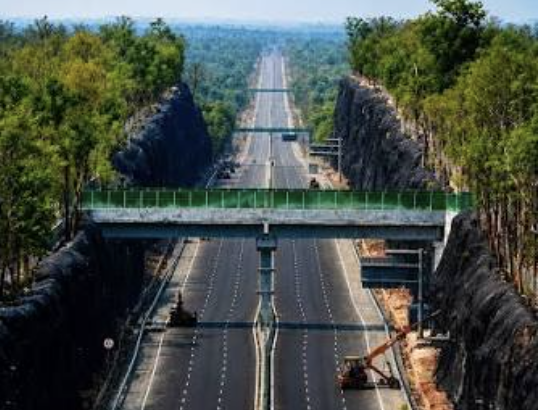
This may be the best example of how ridiculous the phrase "wildlife crossing" sounds when you see the actual list of structures.
In Chhattisgarh, the project includes a 2.79 km tunnel, 27 underpasses and 17 monkey ladders. In Odisha, there are two tunnels totalling 6.29 km, 14 underpasses and another 17 monkey ladders. In Andhra Pradesh, the list includes three viaduct-cum-elephant underpasses.
Same corridor.
Completely different users.
The elephant needs a large passage. A monkey needs a route across the road without ever touching the carriageway.
The engineering has to account for both.
9. NH-552, Ranthambore
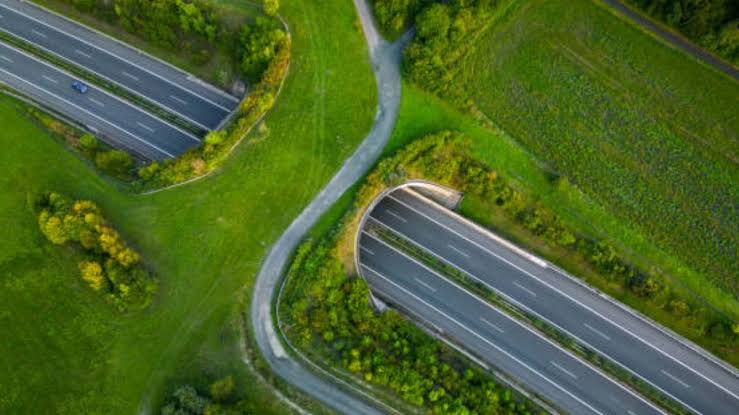
The government separately lists eight animal underpasses on NH-552 through the Ranthambore Wildlife Sanctuary.
That makes Ranthambore especially interesting because the broader landscape now shows two generations of thinking.
Older road infrastructure used repeated underpasses.
Newer projects around the same landscape are experimenting with much larger overpasses and landscape-scale crossings.
You can almost see the design philosophy changing in concrete.
10. NH-45, Madhya Pradesh
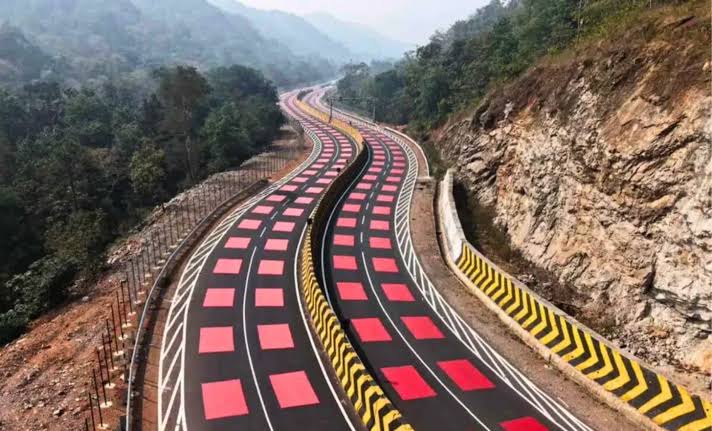
On a 2 km section of NH-45 passing through the Veerangana Durgavati Tiger Reserve in Madhya Pradesh, NHAI has tried something unusually simple. The road itself has been changed.
The carriageway has been covered with a 5 mm-thick, raised red thermoplastic surface. The bright red pattern catches the driver's attention, while the slightly raised surface creates tactile and audible feedback that encourages vehicles to slow down.
The red section sits within an 11.96 km wildlife-sensitive stretch that also has 25 animal underpasses. Fencing guides animals towards those crossings, while the road treatment is aimed at reducing the chance of an animal-vehicle collision in the first place.
It's a neat piece of behavioural engineering.
The highway doesn't need to physically stop the car. It gives the driver enough visual and physical information to change their behaviour.
And that's a useful addition to the bigger story. Wildlife-friendly roads aren't always about building another tunnel or bridge. Sometimes the intervention is much smaller: change the road, change the driver's behaviour, and give the animal a better chance of getting across alive.
The road is only half the structure
The most interesting development in all of this is that engineers are starting to get evidence about what happens after construction.
Samruddhi's camera-trap data showed species-specific preferences. Delhi-Dehradun showed that sound can influence whether animals use different sections of the same crossing system. In other words, building the structure is the beginning of the experiment, not the end.
That also changes the role of wildlife studies.
A wildlife consultant is no longer only someone who appears during approvals and tells a project where the sensitive areas are. Increasingly, ecology is becoming another design input, alongside traffic, drainage, geotechnical conditions and structural loads.
The animal still gets no vote in the tender document.
But its behaviour is starting to show up in the design.
And that may be the most interesting shift happening in India's road infrastructure.
We spent decades making highways faster, wider and more connected for people.
Now, on some of those same highways, engineers are building routes for the animals that were already moving through the landscape long before the road arrived.
Like seeing the engineering behind the infrastructure you pass every day? Subscribe to Bridging Room. We’ll bring you more stories about the roads, bridges, systems and ideas reshaping how India moves.