In October 2020, the National High Speed Rail Corporation invited tenders for a consultant to prepare the detailed project report for a Mumbai-Hyderabad high-speed corridor. This week, reports from Pune say that DPR is complete, cleared by the Railway Ministry, and that revenue officials have started identifying land.
Five and a half years, for the document.
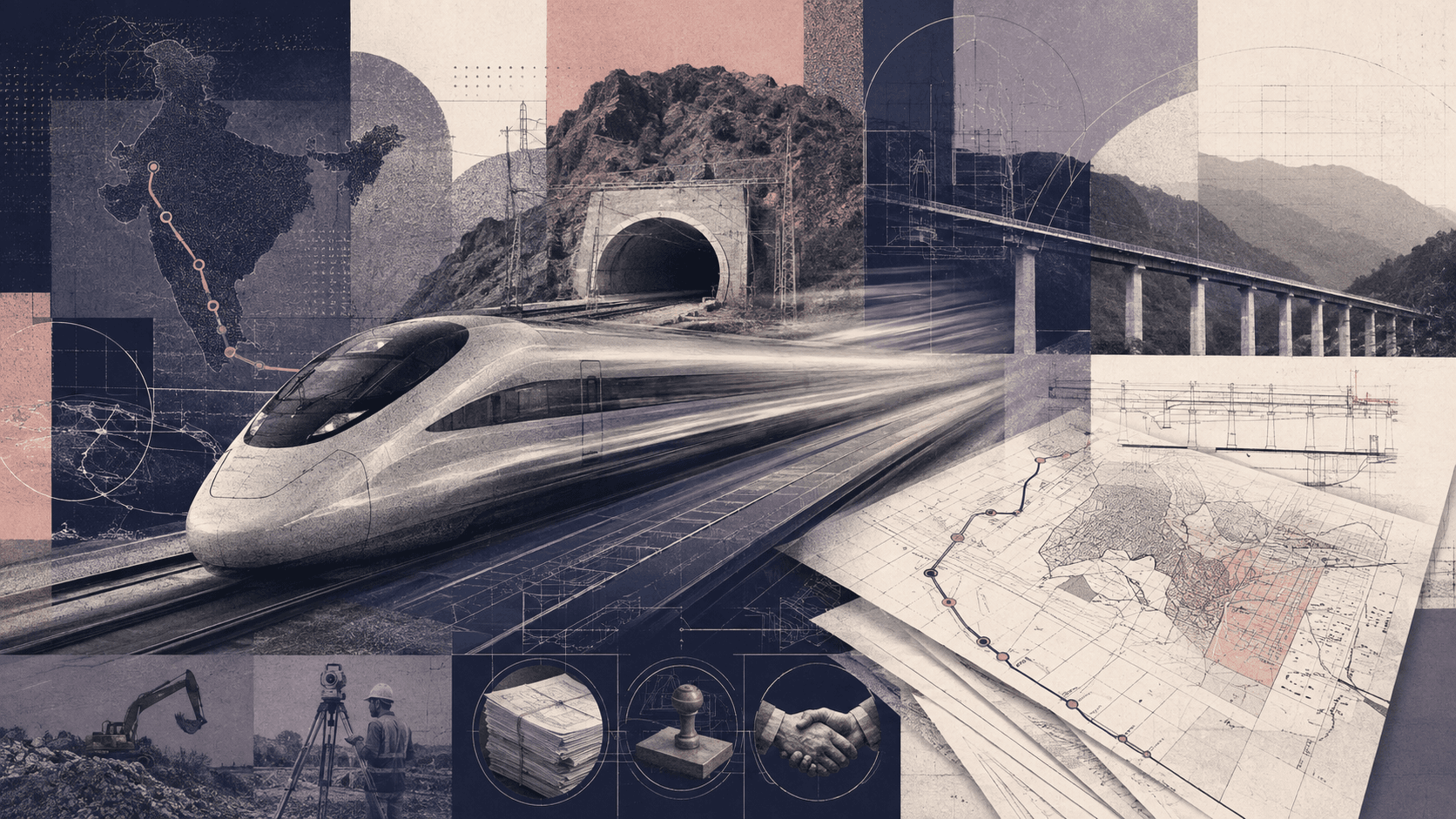
That number sets the clock for everything that follows. A DPR is the project on paper: alignment, stations, engineering, cost estimate. It carries no sanction, no funding, and no construction order. India's first bullet train, Mumbai-Ahmedabad, had all three by 2017 plus a Japanese loan covering most of the bill, and its first passenger service arrives in August 2027, a decade later. This week's news means the corridor has cleared the first of perhaps six gates. The remaining five are the ones that break schedules.
What exactly happened?
The short answer: the DPR is complete, confirmed to the Telangana government in May at a review chaired by Chief Secretary K. Ramakrishna Rao. Punekar News reported this week that the Railway Ministry has approved it and land identification has begun. The project has no cabinet sanction and no announced funding model.
Be precise where the headlines are loose. "DPR completed" is confirmed by multiple outlets and a government review meeting. "Approved by the ministry" appears, so far, only in local Pune reporting. "Project approved" has not happened. That step requires cabinet clearance of cost, funding, and delivery model. When Mumbai-Ahmedabad crossed the same gap, Japan closed it with ₹88,000 crore at near-zero interest. No funder has been named for this corridor.
The route is one of seven corridors announced in February's Union Budget. The Hyderabad-Bengaluru and Hyderabad-Chennai routes remain in survey. This one is furthest along.
What does the DPR describe?
The short answer: 671 km at up to 300 kmph, cutting Hyderabad-Mumbai from 12-15 hours to about three, with 13 stations, roughly 35 km of underground alignment, 101 bridges, and an estimate of ₹1.5 to 2 lakh crore.
Maharashtra carries 457 km of the route, 68 percent. Karnataka has 121 km with one stop at Kalaburagi. Telangana has 93 km, with stations at Kokapet and Vikarabad and depot land identified at Kokapet and Shamshabad. The Maharashtra stretch runs through Vikhroli, Thane, Navi Mumbai, Lonavala, Pimpri-Chinchwad, Pune, Baramati, Pandharpur, and Solapur.
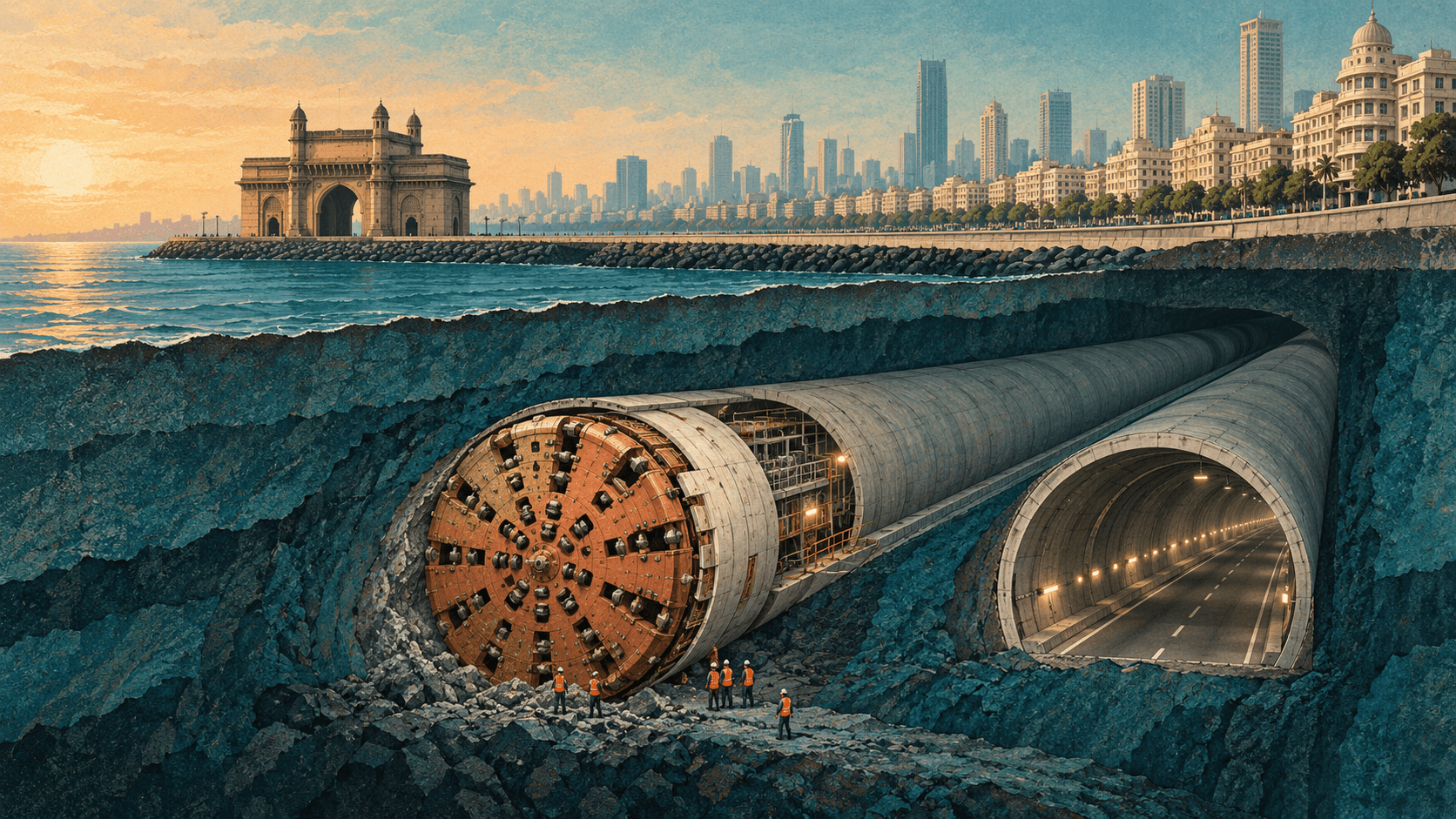
The engineering concentrates at the Western Ghats: 13 tunnels totalling about 24 km through the Khandala section, plus a major bridge over the Mula-Mutha in Pune. The Mumbai-Pune expressway's missing link, a smaller job in the same hills, has run years past its schedule.
Two numbers matter most. The 48-minute Mumbai-Pune leg is the corridor's economic engine: it would fuse India's most connected city pair into one labour market. And the ₹1.5 to 2 lakh crore estimate is a pre-land, pre-sanction figure. Mumbai-Ahmedabad's equivalent number was ₹1.08 lakh crore; it now stands near ₹1.98 lakh crore. This corridor is 32 percent longer, on harder terrain.

What stands between a DPR and a train?
The short answer: sanction, money, land, and time. Mumbai-Ahmedabad, the only Indian benchmark, needed twelve years from sanction to first service with full funding and the world's most experienced high-speed rail partner. This corridor has none of that yet.
Sanction and funding are the same conversation. At this price, the Railways cannot absorb the project alongside the roughly ₹90,000 crore escalation it already carries on Mumbai-Ahmedabad. The options are a bilateral loan on the JICA model, multilateral funding, or a public-private structure, each with its own technology and procurement strings. Until a funder is named, the corridor has no delivery model.
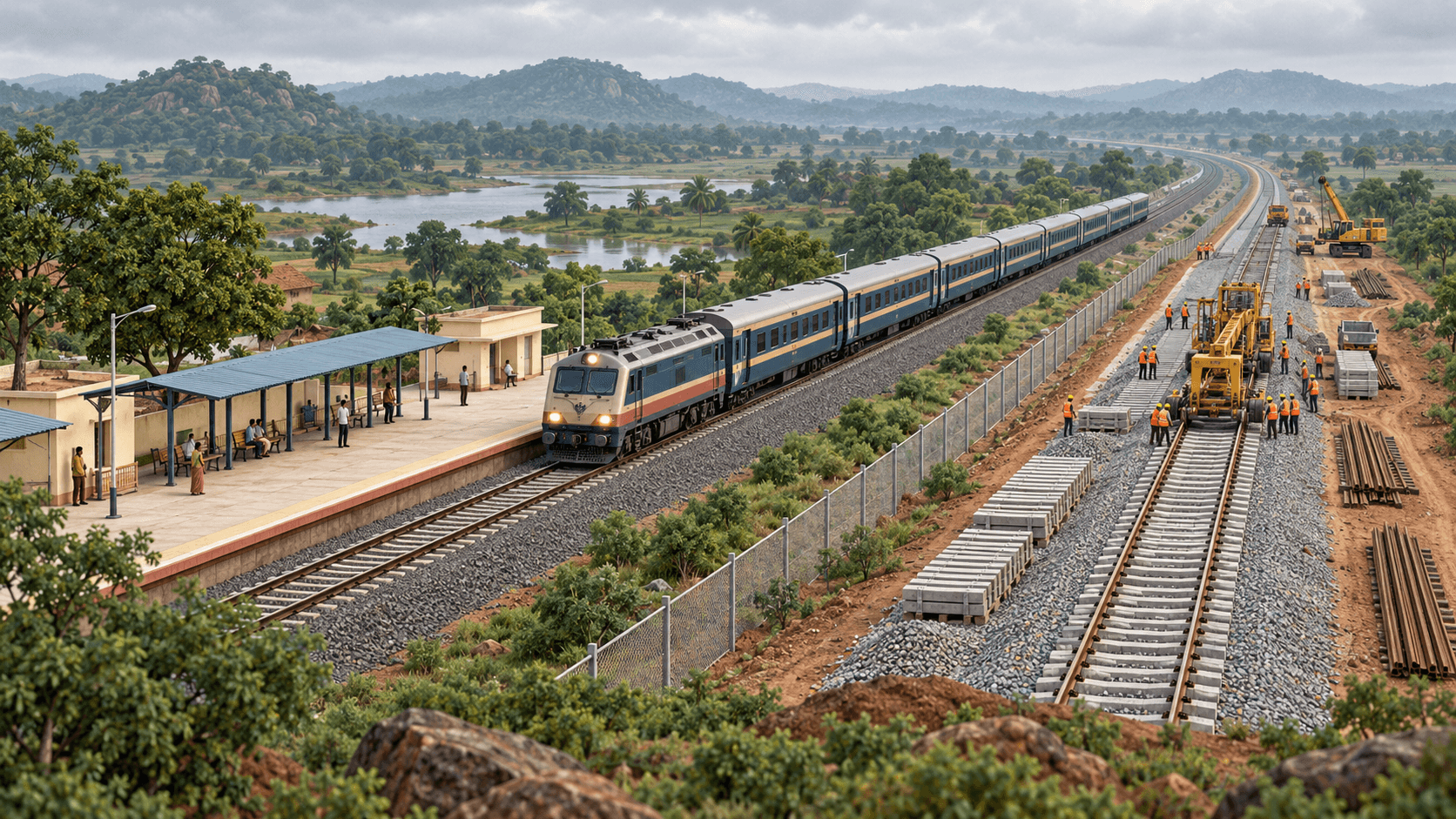
Land is where the benchmark bites. Mumbai-Ahmedabad needed about 1,390 hectares across 508 km and took roughly eight years to fully acquire, with Maharashtra the slowest stretch: 22 percent acquired three years after the foundation stone. This corridor puts over two-thirds of its length through the same state, through denser Pune-region geography. NHSRCL has asked all three states for cooperation, and June reporting said groundwork could begin by end-2026 if approvals hold.
Then the estimate meets the ghats. The 24 km of tunnels sit at the intersection of the delay reasons that fill every government project report: geological surprises, environmental clearances, design changes. The corridor's schedule will be decided there, one geology report at a time.
When will it actually run?
The short answer: no honest date exists, because sanction hasn't happened. The benchmark method says this: Mumbai-Ahmedabad took twelve years from sanction to first partial service. If this corridor is sanctioned by 2028 and matches that pace, first trains run around 2040.
That grants the project everything the last one had: immediate funding, a proven partner, no worse land luck, on a longer and harder route. Each assumption is currently unearned. Without a sanction and a named funder in the next two years, this DPR joins the ones completed for Delhi-Varanasi, Mumbai-Nagpur, and Delhi-Ahmedabad: finished documents awaiting a decision.
The corridor deserves that decision. Hyderabad-Mumbai in three hours competes directly with flights, and stops at Solapur, Kalaburagi, and Baramati would put second-tier cities on a first-tier network. The demand case is stronger than for most of the seven announced routes. The DPR file took five and a half years to close. The sanction file opened this week. Its pace will show whether this is a plan or a press release.
Frequently asked questions
Has the Mumbai-Hyderabad bullet train been approved? The DPR is complete, and August 2026 reports say the Railway Ministry has cleared it. The project has no cabinet sanction, no confirmed funding, and no construction timeline.
What is the route? 671 km with stations at Vikhroli, Thane, Navi Mumbai, Lonavala, Pimpri-Chinchwad, Pune, Baramati, Pandharpur, and Solapur in Maharashtra, Kalaburagi in Karnataka, and Vikarabad and Kokapet in Telangana.
How fast will it be? Up to 300 kmph. Hyderabad-Mumbai in 2 hours 55 minutes to 3 hours 13 minutes, against 12-15 hours today. Mumbai-Pune in about 48 minutes.
When will it be completed? No credible date exists before sanction. On the Mumbai-Ahmedabad benchmark of twelve years from sanction to first service, a 2028 sanction would mean first trains around 2040.
Sources: Deccan Chronicle, ETV Bharat, and Construction World on the May 2026 DPR completion; Punekar News on the August 2026 ministry approval report; The Hans India on groundwork timelines; Deccan Herald on the October 2020 DPR tender and Mumbai-Ahmedabad land acquisition; NHSRCL and Ministry of Railways disclosures.