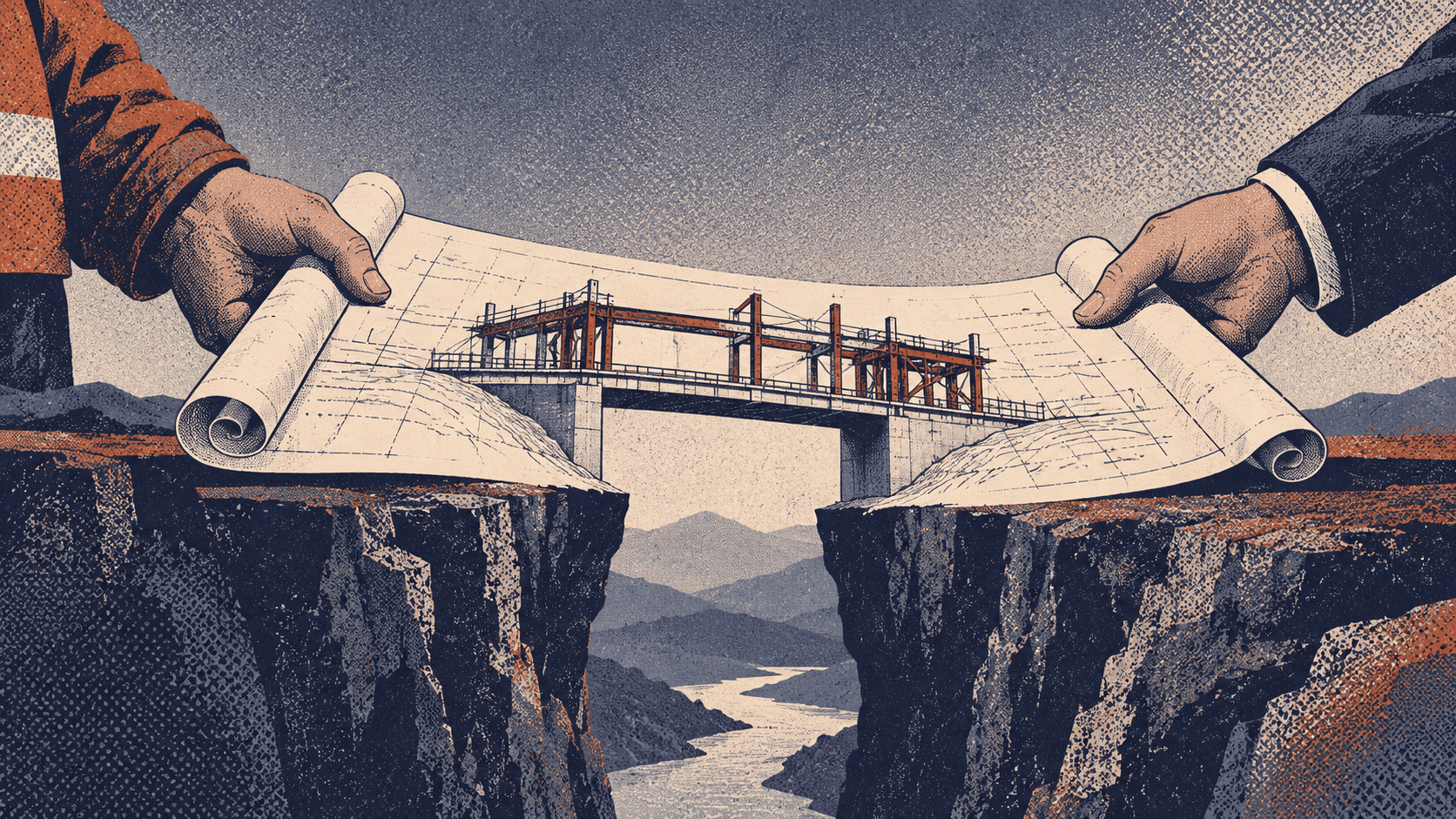
Infrastructure delays are often described as construction problems. Many begin earlier, when one public agency needs permission to cross an asset controlled by another.
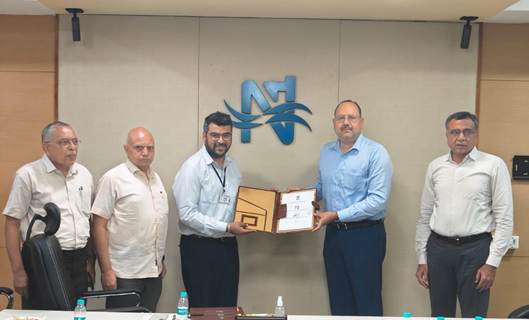
That is the problem behind a new agreement between the National Highways Authority of India and Sardar Sarovar Narmada Nigam Limited. Signed on 22 September, the memorandum of understanding establishes a simplified and time-bound framework for national highway, canal and pipeline crossings across Gujarat.
The official announcement identifies three practical changes. The agencies will share project information earlier. They will use standard engineering practices and define who is responsible for building and maintaining crossing structures. They will also waive fees, charges and other levies between themselves for crossings covered by the agreement.
Those provisions matter because a crossing is an interface between two operating systems. A highway embankment, bridge or utility alignment cannot compromise canal capacity, structural safety or access for maintenance. At the same time, a canal owner cannot treat every highway package as an open-ended redesign exercise. The engineering decision and the approval decision have to move together.
The MoU is therefore a management reform with an engineering core. It could reduce delay and duplicated cost. The public evidence does not yet show that it has done so.
What the agreement changes
The PIB release says the framework covers national highway, canal and pipeline crossings across Gujarat. It also names four operating principles: early sharing of project information, standardised engineering practices, defined construction and maintenance responsibilities, and mutual waiver of fees and charges.
Each addresses a familiar source of friction.
Early information sharing should move a crossing review closer to alignment design, before land plans and structures are fixed. Standard details can reduce repeated arguments over clearances, protection works, access and reinstatement. Defined responsibility matters after construction, when a leak, settlement, scour problem or damaged access road raises the question of which agency must act. Fee waivers remove a circular transfer of public money that can still delay files and complicate estimates.
The agreement does not remove the need for technical review. Canal geometry, hydraulic capacity, lining, inspection access and construction sequencing still have to be protected. Pipeline crossings need clear requirements for cover, casing, isolation and future maintenance. Highway designers still need site-specific geotechnical and drainage information.
The useful change is procedural consistency. A project team should know what information is required, which design standard applies, who decides, and how long that decision should take.
Why crossings become critical-path items
Linear infrastructure accumulates interfaces. A highway may cross canals, distributaries, pipelines, power lines, railway tracks, village roads and drainage channels. Each crossing can require a separate owner, drawing package, inspection and approval.
The delay is not always caused by a slow reviewer. Design teams may submit incomplete drawings. Survey levels may conflict. Land boundaries may still be changing. A highway contractor may seek an alternative detail after award because the priced solution is difficult to build. The asset owner may insist on shutdown conditions that were not considered in the programme.
These problems become expensive when they appear after mobilisation. A contractor can complete earthwork on both sides of a canal but leave a gap at the crossing. Traffic cannot use an incomplete corridor, so physical progress around the interface may not produce operational value. Teams then face idle resources, resequencing and claims over access or drawings.
A credible approval system needs to distinguish agency review time from applicant rework time. Without that distinction, a target can encourage fast rejection rather than faster resolution.
The fee waiver is useful, but time certainty is the larger prize
The government release presents mutual fee waivers as a way to reduce project costs and procedural bottlenecks. That may help, especially where one public agency raises a demand on another and the payment must pass through estimates, approvals and accounts.
The larger potential saving is time certainty.
A crossing approved late can affect temporary works, traffic blocks, utility shutdowns, material orders and monsoon sequencing. The financial effect can exceed the original approval charge, but it is harder to see because it appears through prolongation, revised methods and lost productivity.
The MoU does not publish the fees previously charged, how many crossings are in the pipeline or the average time taken under the old process. It is therefore too early to quantify savings. A zero-fee rule is documented. A lower final project cost is still a hypothesis.
What the public record still lacks
The announcement calls the framework time-bound, but it does not state the service levels. It does not say how many days SSNNL or NHAI will have for an initial review, a consolidated comment sheet, a site inspection or final approval.
It also does not identify the projects affected. That makes it impossible to test whether the framework is being applied first to major greenfield corridors, widening packages, canal rehabilitation works or pipeline schemes.
The maintenance provisions need detail too. Crossing structures age differently from the assets around them. Settlement at an approach, erosion near a culvert, leakage beside a retaining wall or restricted canal access may emerge years after construction. A clear handover record should identify the owner, inspection duty, defect process and funding responsibility.
The missing document is the MoU itself or an operating circular that converts its principles into steps, forms, standards and decision periods.
How to measure whether it works
The first useful ledger should be project-specific. For every crossing, it should record the highway package, canal or pipeline asset, submission date, completeness check, review comments, resubmission dates, approval date, conditions and any design change.
Four measures would make the reform testable.
First, the median calendar time from complete submission to approval. Second, the number of review cycles. Third, the share of crossings identified before detailed design or construction award. Fourth, the construction impact, including days of delay or avoided resequencing.
The agencies should also separate standard crossings from exceptional cases. A common culvert detail and a major canal bridge should not be judged against the same decision period.
A six-month comparison with the pre-MoU baseline would show whether the change is real. The strongest evidence would come from live packages that had both old-process and new-process crossings.
The next milestone is an operating rule
The 22 September agreement establishes a sensible direction. It recognises that infrastructure delivery depends on institutional interfaces as much as contracts and concrete.
What happened is clear: NHAI and SSNNL created a Gujarat-wide framework, waived inter-agency charges and committed to standard practices and defined responsibilities. Why it matters is also clear: unresolved crossings can hold back otherwise advanced road and irrigation works.
What is not yet clear is whether the framework has measurable deadlines, a single escalation route and a project ledger visible to both agencies.
The next milestone should be the operating procedure and the first list of affected projects. Until then, the MoU is an approved management mechanism. It is not yet evidence of faster construction.