Introduction
The AEC (Architecture, Engineering, and Construction) industry doesn't resist change—that's a myth.
We've embraced BIM, digital twins, AI, automation, modularisation, and cloud collaboration platforms. Yet across organisations, a familiar pattern persists:
- Promising initiatives stall
- Transformation plateaus
- Change fatigue sets in
So what's really holding AEC back?
The Real Problem: Fragmentation in the AEC Industry
The AEC ecosystem is inherently fragmented:
- Multiple stakeholders (owners, designers, contractors, regulators)
- Project-based delivery models
- Temporary teams with limited continuity
- Uneven risk distribution
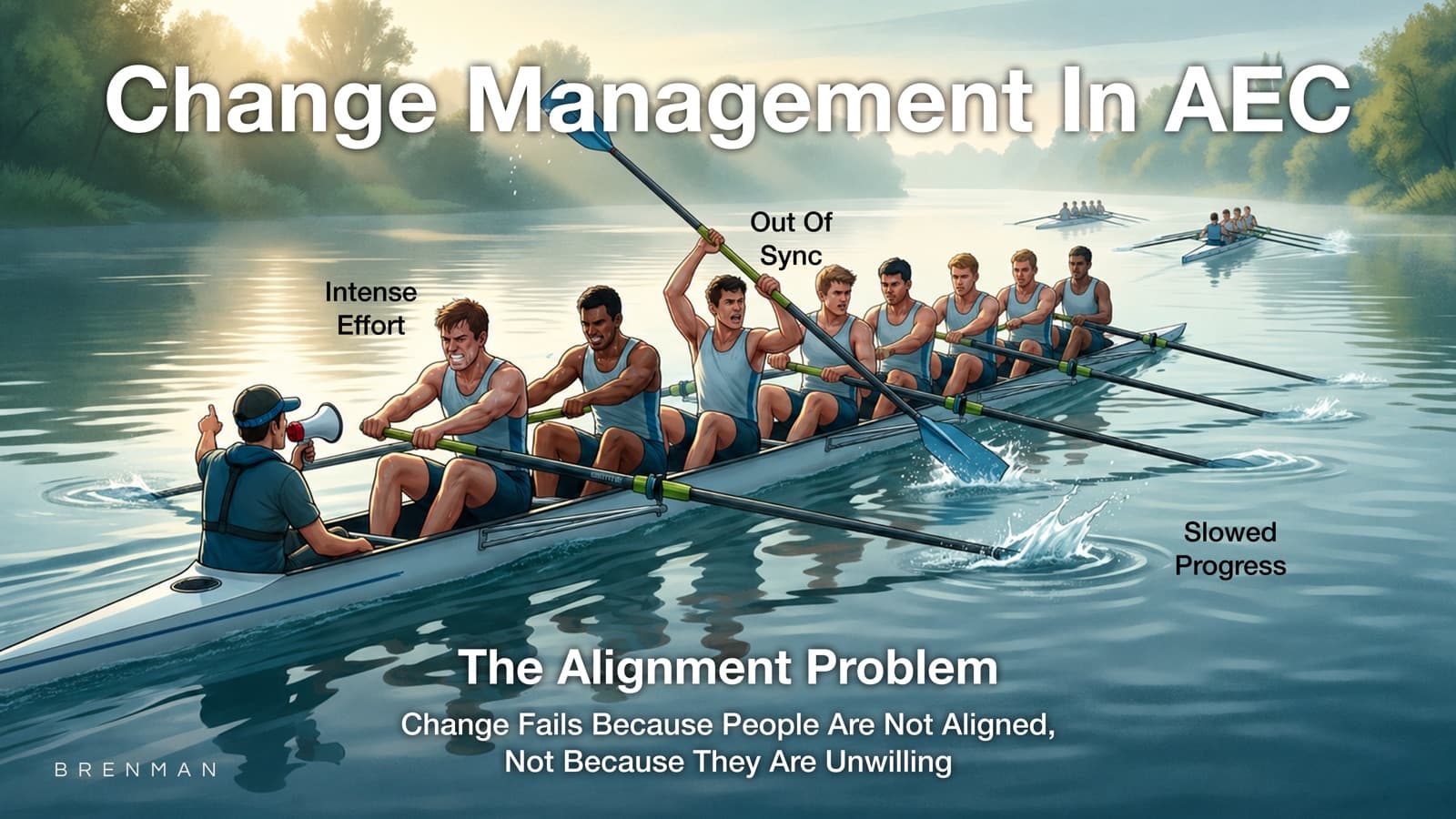
In this environment, change doesn't fail because it's flawed—it fails because alignment is fragile.
A new system or process may be technically sound, but if:
- Contractors see no incentive
- Designers see additional workload
- Asset owners see delayed ROI
the initiative collapses.
Key Insight: Successful change management in AEC is less about innovation and more about multi-party alignment across the value chain.
Why AEC Organisations Optimise Projects—But Not Systems
AEC firms excel at delivering projects. But transformation doesn't operate at the project level—it operates at the system level.
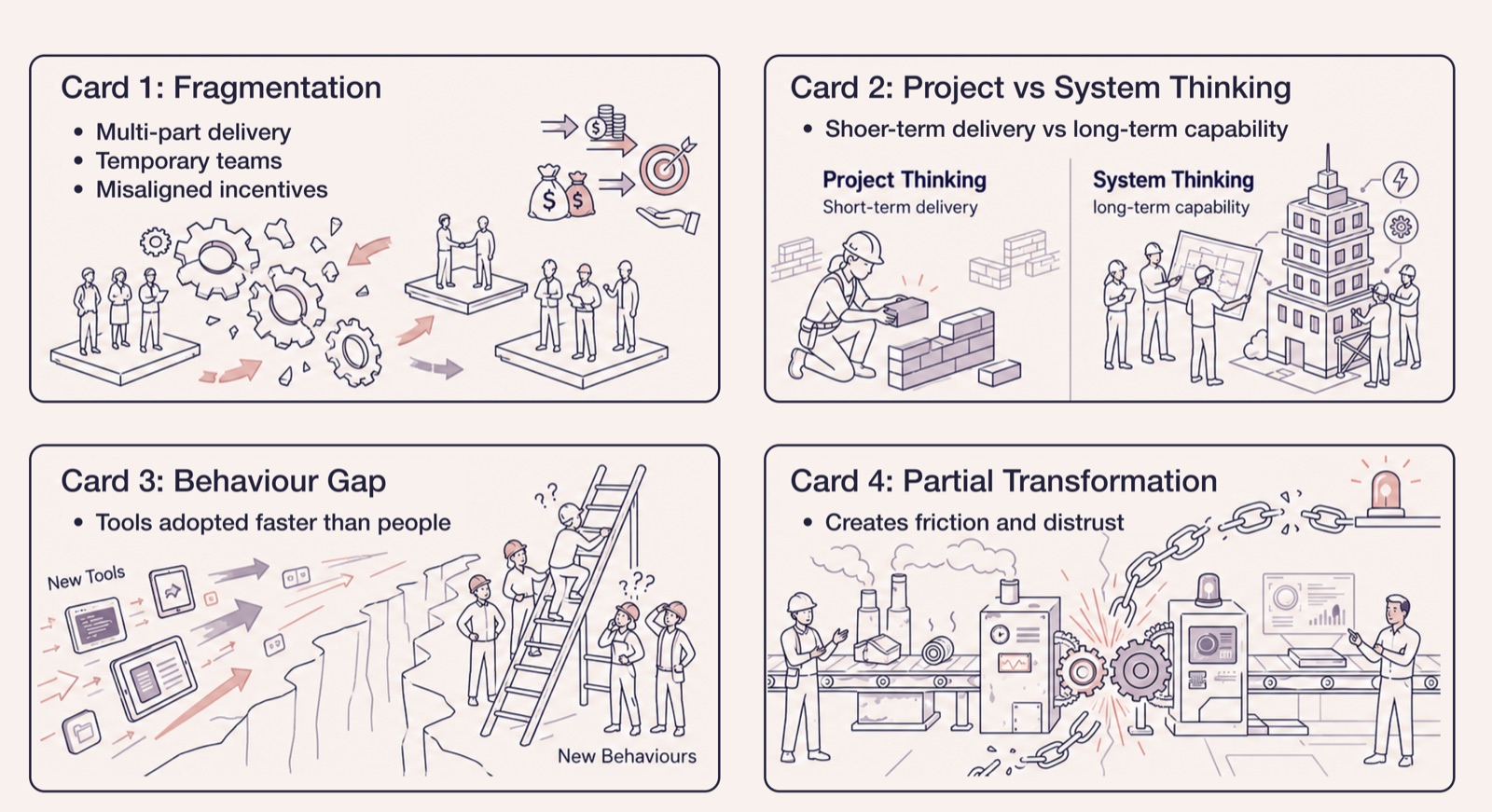
Project Mindset vs Change Mindset
- Short-term delivery becomes long-term capability
- Budget & schedule focus becomes behaviour & adoption focus
- Defined scope becomes evolving scope
- Clear ownership becomes diffused responsibility
When transformation is treated like a project, it often:
- Loses funding after initial rollout
- Lacks reinforcement mechanisms
- Fails to embed into workflows
Structural mismatch: Change is continuous, but projects are finite.
Technology Is Advancing Faster Than People
Today's AEC landscape includes:
- Advanced BIM capabilities
- AI-driven design tools
- Real-time data dashboards
- Integrated delivery platforms
Yet adoption still lags.
Why?
- Tools change faster than habits
- Processes evolve faster than incentives
- Skills lag behind expectations
Deploying technology does not equal transformation—it reveals the gap between systems and behaviour.
The Hidden Cost of Partial Digital Transformation
Many firms are neither traditional nor fully digital—they're partially transformed.
Common symptoms include:
- BIM used in design but ignored downstream
- Data collected but not used in decisions
- Digital tools implemented alongside shadow systems
This leads to:
- Duplicate work
- Poor data trust
- Misaligned expectations
- Lower confidence in future initiatives
Over time, this creates change fatigue:
We've tried this before—it didn't work.
Critical insight: Partial change can be more damaging than no change—it erodes trust.
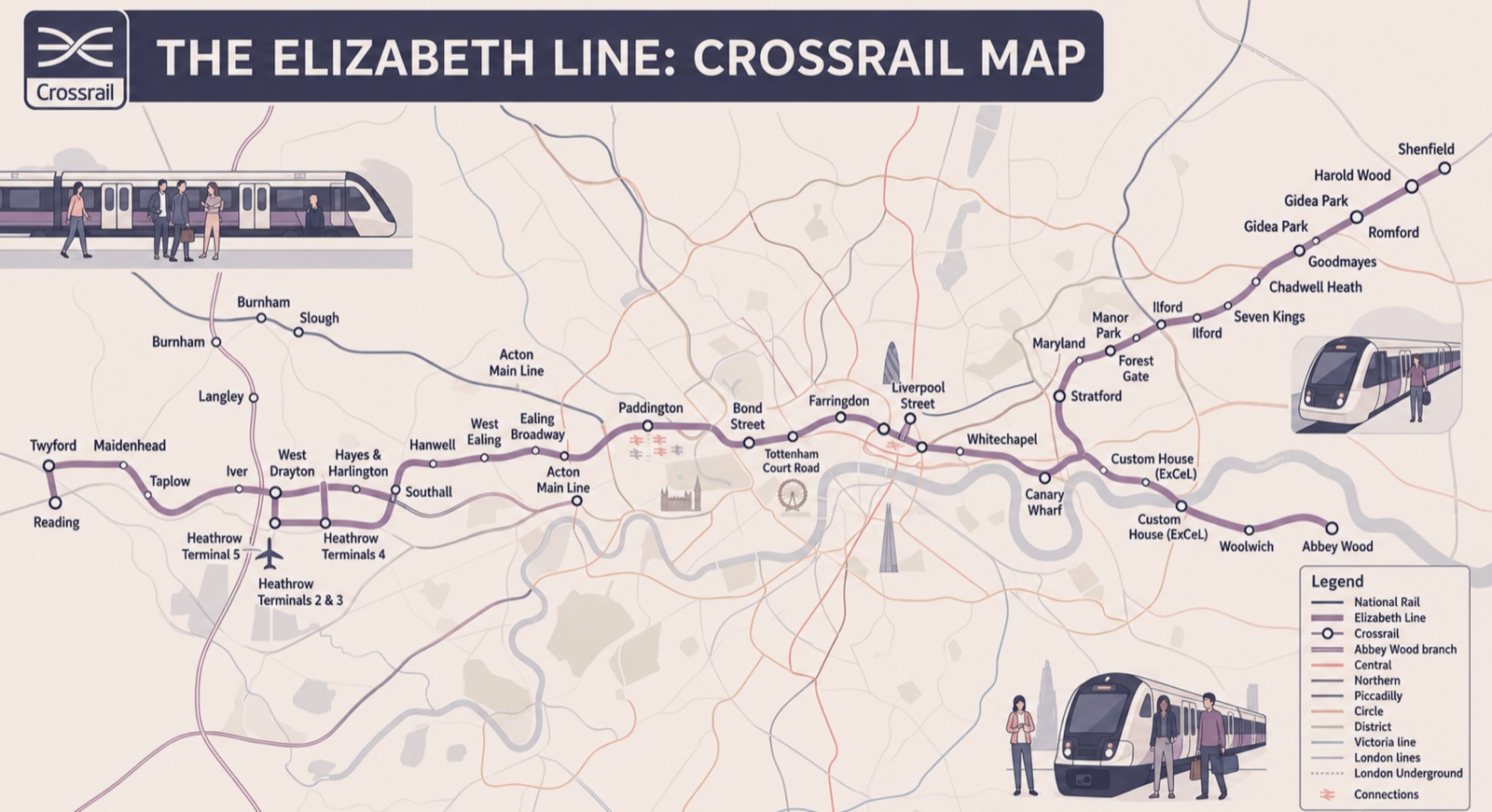
Case Study: Crossrail – A Change Management Success Story in AEC
Often cited as a BIM success, Crossrail is actually a change management success story.
What Happened
Europe's largest infrastructure project implemented BIM at scale across a complex supply chain, integrating:
- 3D/4D/5D models
- Asset data
- GIS systems
The Challenge
- Hundreds of stakeholders
- No standardised workflows
- Complex lifecycle data exchange
What They Did Differently
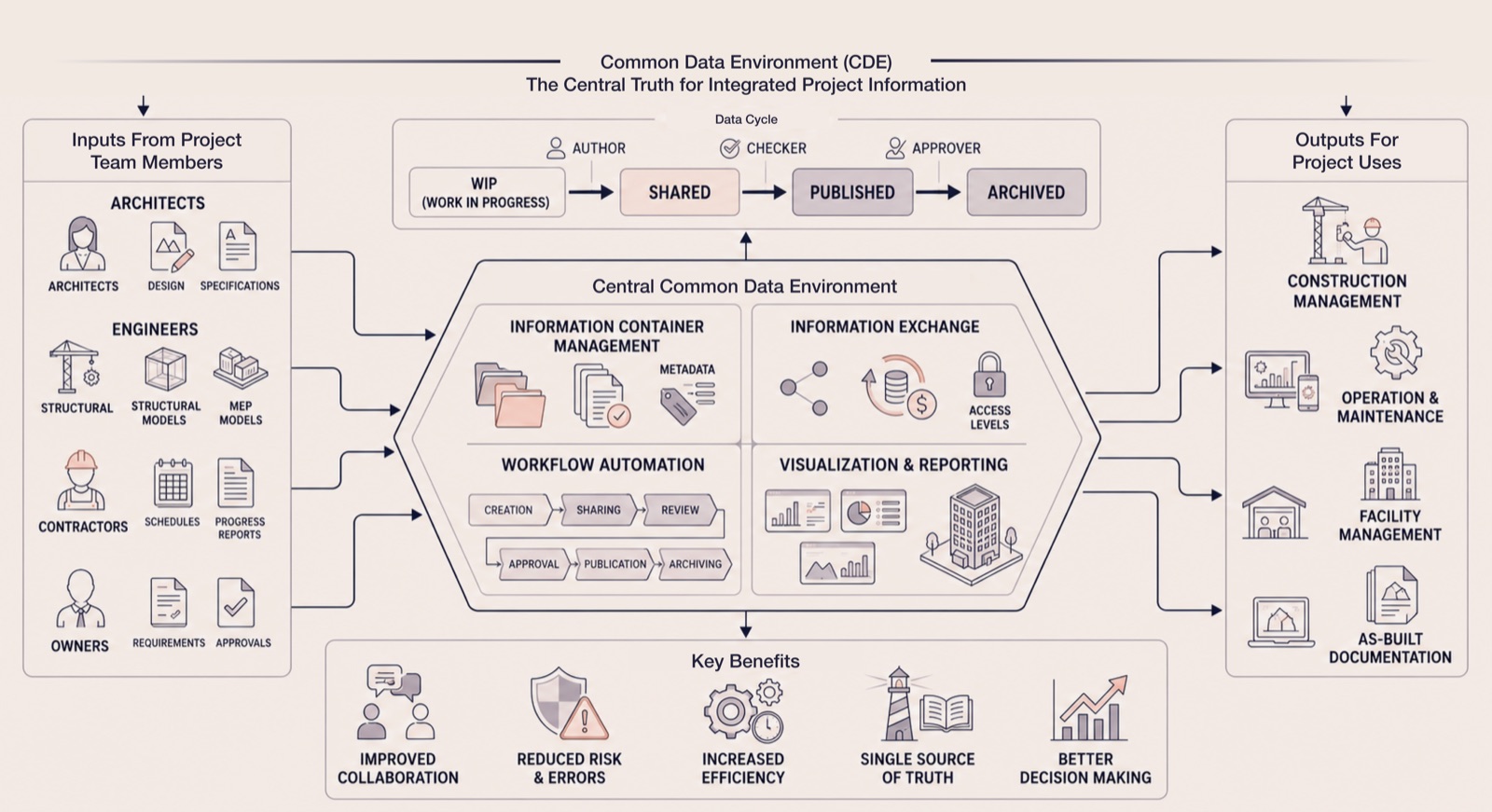
- Established a Common Data Environment (CDE) early
- Standardised information requirements across all stakeholders
- Focused on information governance, not just tools
Outcome
- Improved interdisciplinary coordination
- Better handover into operations
- Set a benchmark for digital delivery
Lesson: Crossrail succeeded not because of BIM, but because it standardised behaviour across a fragmented ecosystem.
What Actually Works in AEC Change Management
1. Start With Value, Not Technology
Ask:
- What problem are we solving?
- Who benefits across the lifecycle?
Clear value drives adoption.
2. Design for the Entire Project Lifecycle
Transformation must span:
- Design → Construction → Operations
- Data continuity
- Stakeholder incentives
If downstream stakeholders don't benefit, change won't stick.
3. Focus on Middle Management
Middle managers often:
- Absorb implementation friction
- Balance competing priorities
- Lack training and support
Transformation succeeds or fails in the middle layer.
4. Shift From Training to Enablement
Most organisations:
- Run training sessions
- Publish manuals
But real adoption requires:
- Continuous support
- Embedded workflows
- Project-based application
People don't change because they're trained—they change because the new way is easier.
5. Measure Adoption, Not Implementation
Typical metrics include:
- System deployment
- User onboarding
Better metrics include:
- Frequency of use
- Quality of outputs
- Behavioural changes
- Decision-making impact
From Change Management to Change Design
The term "change management" implies:
- Control
- Predictability
- Linear execution
But AEC transformation is:
- Complex
- Adaptive
- Socio-technical
Instead, we should design change ecosystems:
- Align incentives
- Enable behaviours
- Integrate workflows
- Build trust
Final Thoughts: AEC Needs Better Change—Not More Change
The AEC industry isn't short on innovation—it's short on cohesion.
The organisations that will lead the future will master:
- Alignment across fragmented stakeholders
- Behavioural adoption at scale
- Lifecycle thinking over project thinking
- Continuous transformation
Because ultimately:
In AEC, change doesn't fail because it's difficult—it fails because it's disconnected.