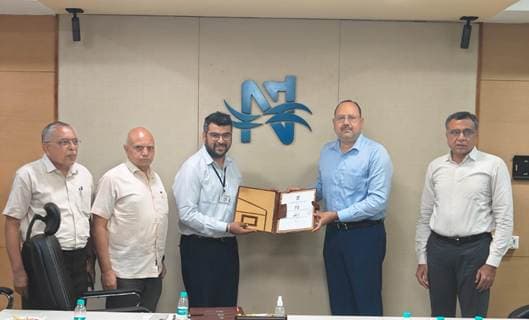
Five ITI clusters have secured approval for ₹1,194.92 crore of investment under PM-SETU. The National Steering Committee’s 16 October decision covers Maharashtra, Odisha and Jammu & Kashmir, pairing public institutes with named industry partners.
The approved amounts are ₹241 crore for Pune with BVG India and BVG Foundation; ₹238.01 crore for Chhatrapati Sambhajinagar with Belrise Industries; ₹240.50 crore for Kataka with Tata Steel Foundation; ₹240 crore for Jammu with Eagle Infra India; and ₹235.41 crore for Srinagar with Inderdeep Infra India.
These are Strategic Investment Plan approvals. The release does not report the money as spent, or separate the amounts for civil works, equipment and training. Treating the whole sum as a building programme would overstate what the announcement establishes.
Industry gets a management role
The delivery structure goes beyond an employer advising on a course. In a March parliamentary reply, the ministry explained that industry-led special-purpose vehicles would lead upgrades, with the anchor industry partner holding majority management control. States select institutions in consultation with industry, and investment plans support the selection process.
The framework allows those vehicles to propose changes to infrastructure, curriculum, training delivery and workplace exposure. That creates a reason to examine the operating plan alongside the construction scope: the organisation directing the upgrade is also expected to shape how the institute teaches.
For a campus project manager, equipment selection should inform the room layout, electrical loads, ventilation, foundations and access for installation. Procuring a machine before checking those requirements can leave an institute with equipment it cannot use. This is a delivery risk to investigate, rather than a problem documented at any of the five clusters.
Follow the workshop into use
The next useful evidence would be a campus-by-campus schedule linking works completion to equipment installation, instructor preparation and the first training cohort. Separate dates would reveal whether a finished room is waiting for a machine, or an installed machine is waiting for a trained instructor.
The public approval release gives no such schedule. It also does not publish cluster-level targets for additional training places, equipment availability or placement outcomes. Those gaps prevent a judgment about how much training capacity the approved investment will buy.
There is an advantage worth testing in the industry-led model. Employers may help specify equipment and exercises that resemble actual workplaces. But that proposition needs evidence from course design, access for students across the cluster, and subsequent employment. Naming an industry partner does not establish those outcomes.
Dated record: 11 March 2026: the ministry explained the governance model in Parliament. 16 October: the committee approved these five investment plans. The next reporting documents are the approved plans and implementation schedules, followed by releases and expenditure recorded separately. For contractors and institute managers, the immediate question is which campus packages are authorised to proceed, and when.