Introduction
Maintenance Management in the Architecture, Engineering, and Construction (AEC) industry refers to the systematic process of planning, monitoring, and executing activities required to preserve buildings, infrastructure, and assets throughout their lifecycle. It ensures that facilities remain safe, functional, cost-efficient, and compliant with regulatory standards.
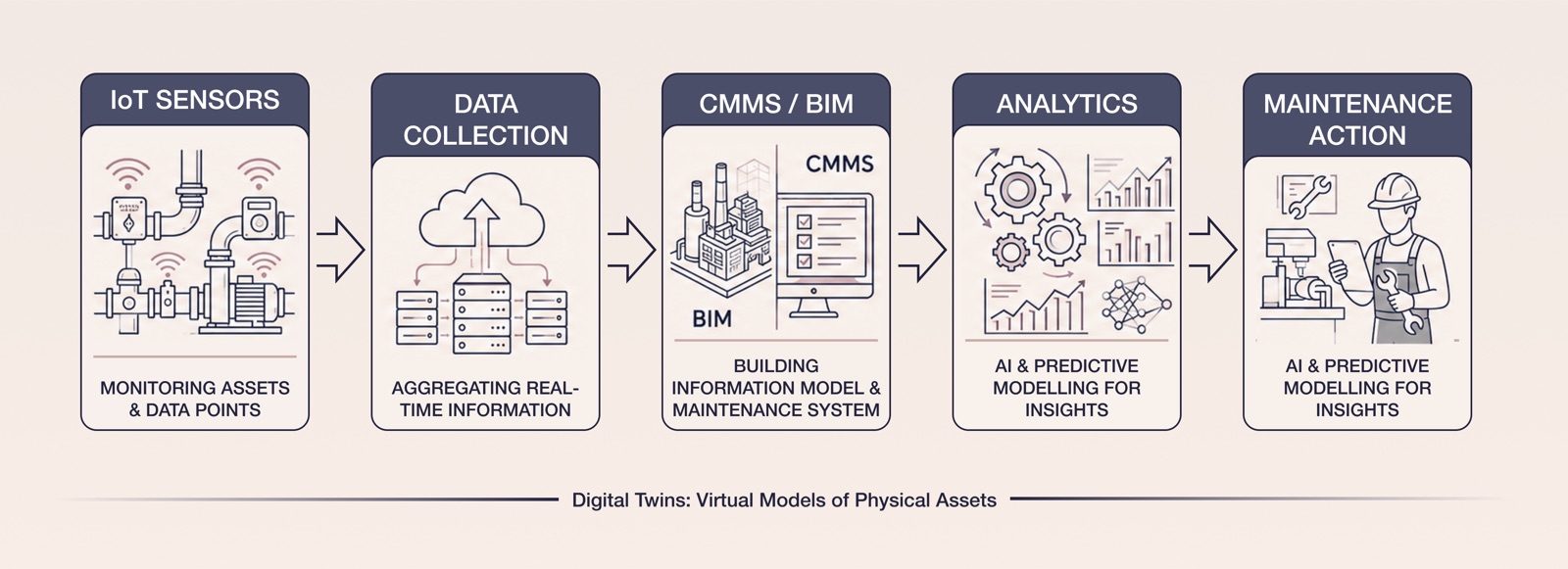
In the modern AEC environment, maintenance management is no longer limited to repairing defects after failures occur. It has evolved into a strategic discipline supported by digital technologies such as Building Information Modeling (BIM), IoT sensors, Computerized Maintenance Management Systems (CMMS), and predictive analytics.
Why Maintenance Management Matters in AEC
The AEC industry deals with long-life assets such as:
- Commercial buildings
- Airports
- Bridges
- Hospitals
- Highways
- Industrial plants
- Residential complexes
These assets require continuous upkeep to maintain operational efficiency and avoid deterioration.
Key Objectives
Asset Longevity
Proper maintenance extends the service life of buildings and infrastructure.
Safety Assurance
Routine inspections help identify structural weaknesses, electrical faults, or equipment failures before they become hazardous.
Cost Optimization
Preventive maintenance reduces expensive emergency repairs and operational downtime.
Sustainability
Efficient maintenance reduces material waste, energy consumption, and carbon emissions.
Regulatory Compliance
Maintenance activities ensure compliance with building codes, environmental regulations, and workplace safety standards.
Types of Maintenance Management in AEC
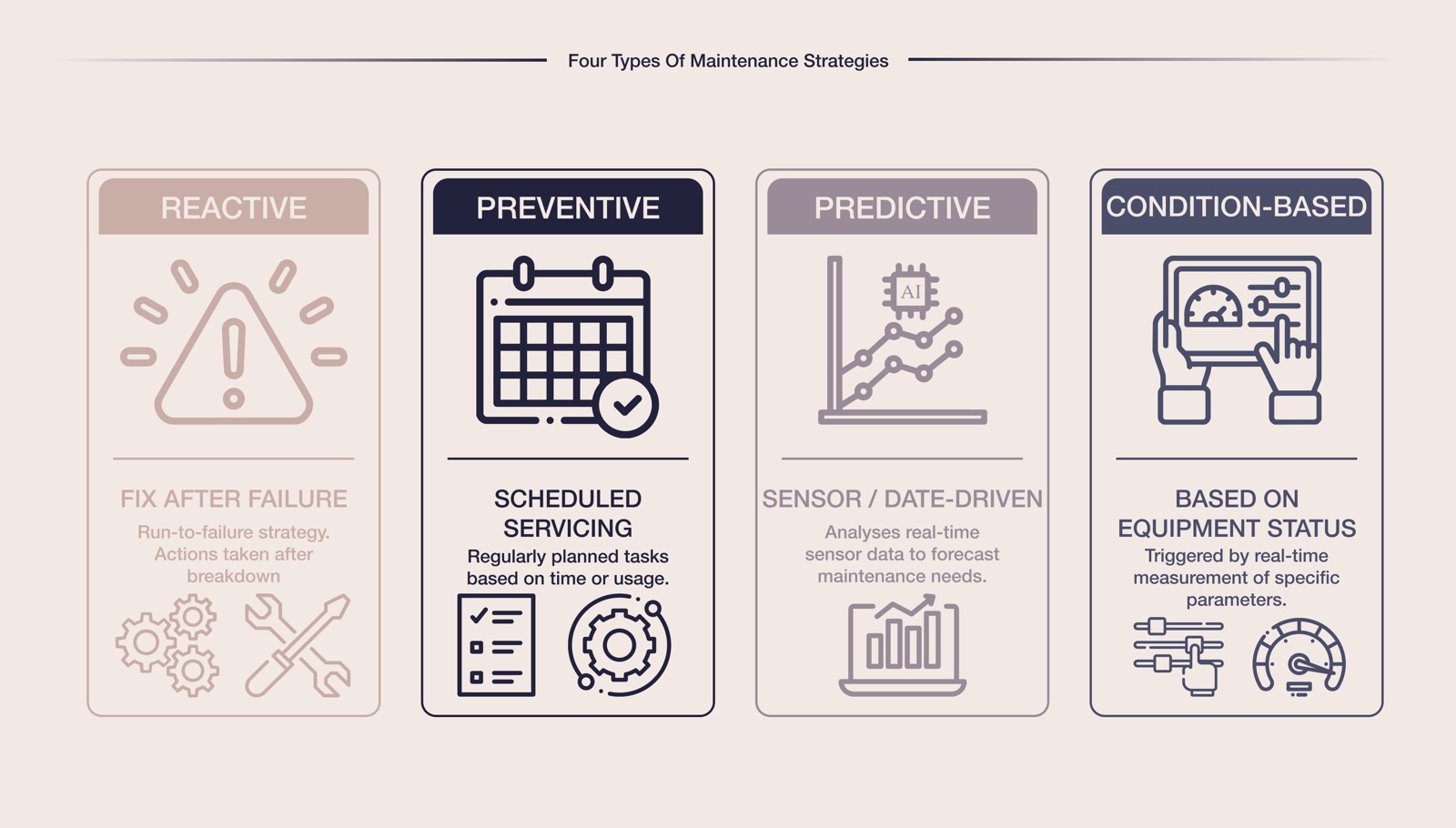
Reactive Maintenance
Also known as "run-to-failure" maintenance, this approach addresses problems only after equipment or infrastructure fails.
Example: Repairing a broken HVAC system after occupants report discomfort.
Advantages:
- Low initial planning cost
- Simple implementation
Disadvantages:
- Higher long-term repair costs
- Increased downtime
- Risk of safety incidents
Preventive Maintenance
Maintenance activities are scheduled periodically to reduce the likelihood of failures.
Example: Monthly inspection of elevators in a commercial building.
Advantages:
- Reduces unexpected breakdowns
- Improves reliability
- Extends asset life
Disadvantages:
- Requires planning and scheduling
- May involve unnecessary maintenance activities
Predictive Maintenance
Uses sensors, real-time monitoring, and data analytics to predict failures before they occur.
Example: IoT sensors monitoring vibration levels in bridge components to detect structural stress.
Advantages:
- Highly efficient
- Minimizes downtime
- Optimizes maintenance cost
Disadvantages:
- High initial investment
- Requires advanced technology and expertise
Condition-Based Maintenance
Maintenance is performed when asset conditions indicate deterioration beyond acceptable limits.
Example: Replacing roofing materials after moisture sensors detect water penetration.
Technologies Transforming Maintenance Management
Building Information Modeling (BIM)
BIM enables facility managers to access digital information about building components, maintenance history, and asset specifications.
Benefits include:
- Improved asset tracking
- Better coordination
- Lifecycle management
Computerized Maintenance Management Systems (CMMS)
A CMMS helps organizations:
- Schedule maintenance tasks
- Track work orders
- Manage spare parts inventory
- Monitor asset performance
Popular CMMS platforms include:
- IBM Maximo
- SAP PM
- Oracle Primavera
Internet of Things (IoT)
IoT devices provide real-time data from:
- HVAC systems
- Elevators
- Pumps
- Structural components
- Lighting systems
This supports predictive and condition-based maintenance strategies.
Challenges in Maintenance Management
Despite technological advancements, the AEC industry faces several maintenance challenges:
- Aging infrastructure
- Budget constraints
- Lack of skilled workforce
- Data integration issues
- Poor documentation
- Unplanned downtime
- Resistance to digital transformation
Best Practices for Effective Maintenance Management
Develop a Maintenance Strategy
Organizations should select appropriate maintenance methods based on asset criticality and operational goals.
Use Lifecycle Cost Analysis
Evaluate long-term maintenance and operational costs during project planning.
Implement Digital Asset Management
Adopt BIM and CMMS platforms for centralized information management.
Conduct Regular Inspections
Routine assessments help detect deterioration early.
Train Personnel
Skilled maintenance teams improve efficiency and reduce operational risks.
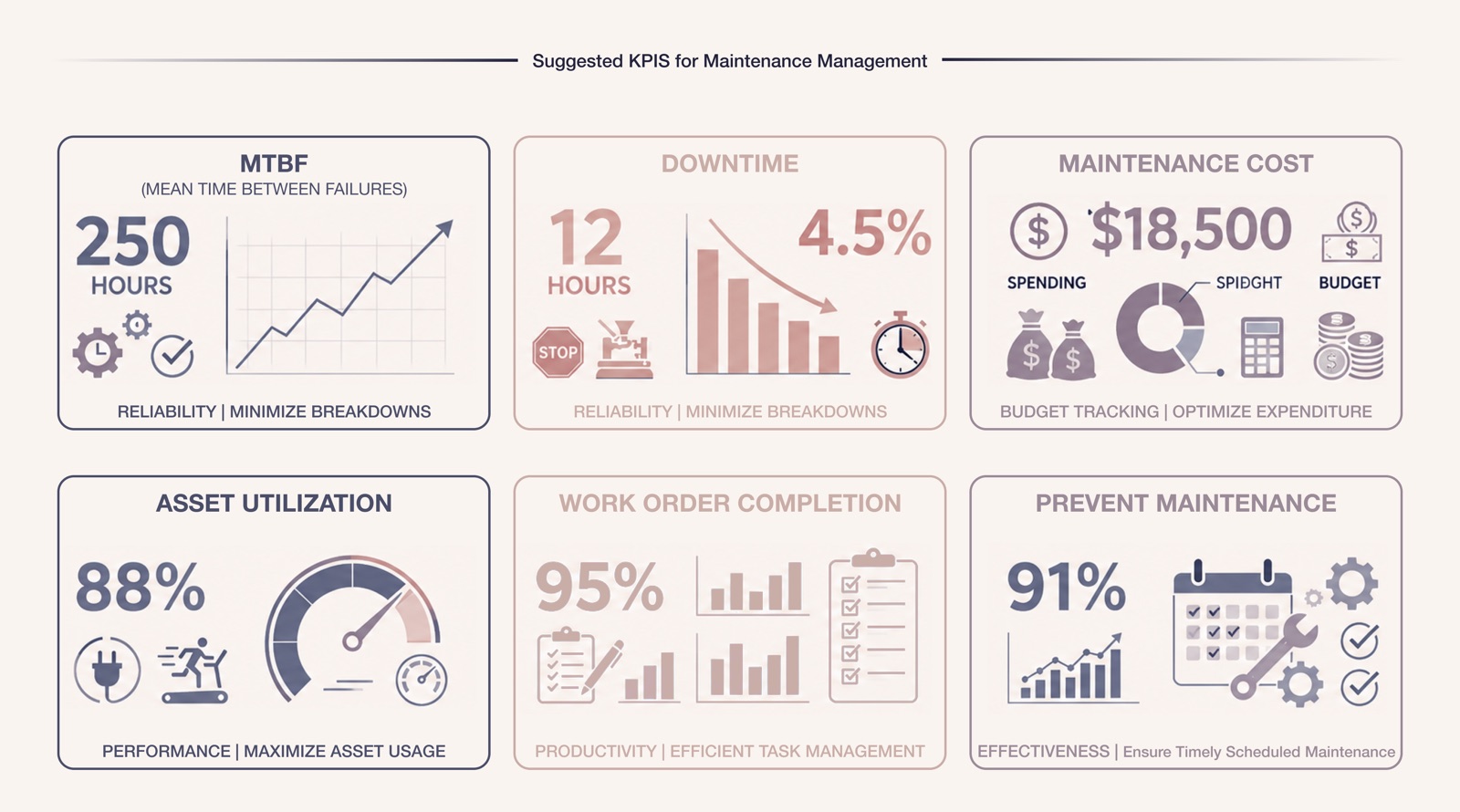
Track Key Performance Indicators (KPIs)
Important KPIs include:
- Mean Time Between Failures (MTBF)
- Maintenance Cost per Asset
- Equipment Downtime
- Work Order Completion Rate
Case Study: London Underground
The London Underground is an outstanding example of maintenance management in the AEC industry because it combines aging infrastructure with modern engineering systems that must operate continuously for millions of passengers every day.
Background
The London Underground, often called "the Tube," is one of the oldest and largest metro systems in the world. It includes:
- Underground tunnels
- Railway tracks
- Stations
- Escalators
- Ventilation systems
- Electrical infrastructure
- Signaling systems
Since many sections were built more than a century ago, maintenance management is critical for:
- Passenger safety
- Operational reliability
- Asset preservation
- Service continuity
Maintenance Management Practices
Preventive Maintenance
Routine maintenance activities are scheduled during non-operational hours to minimize disruptions.
Activities Include:
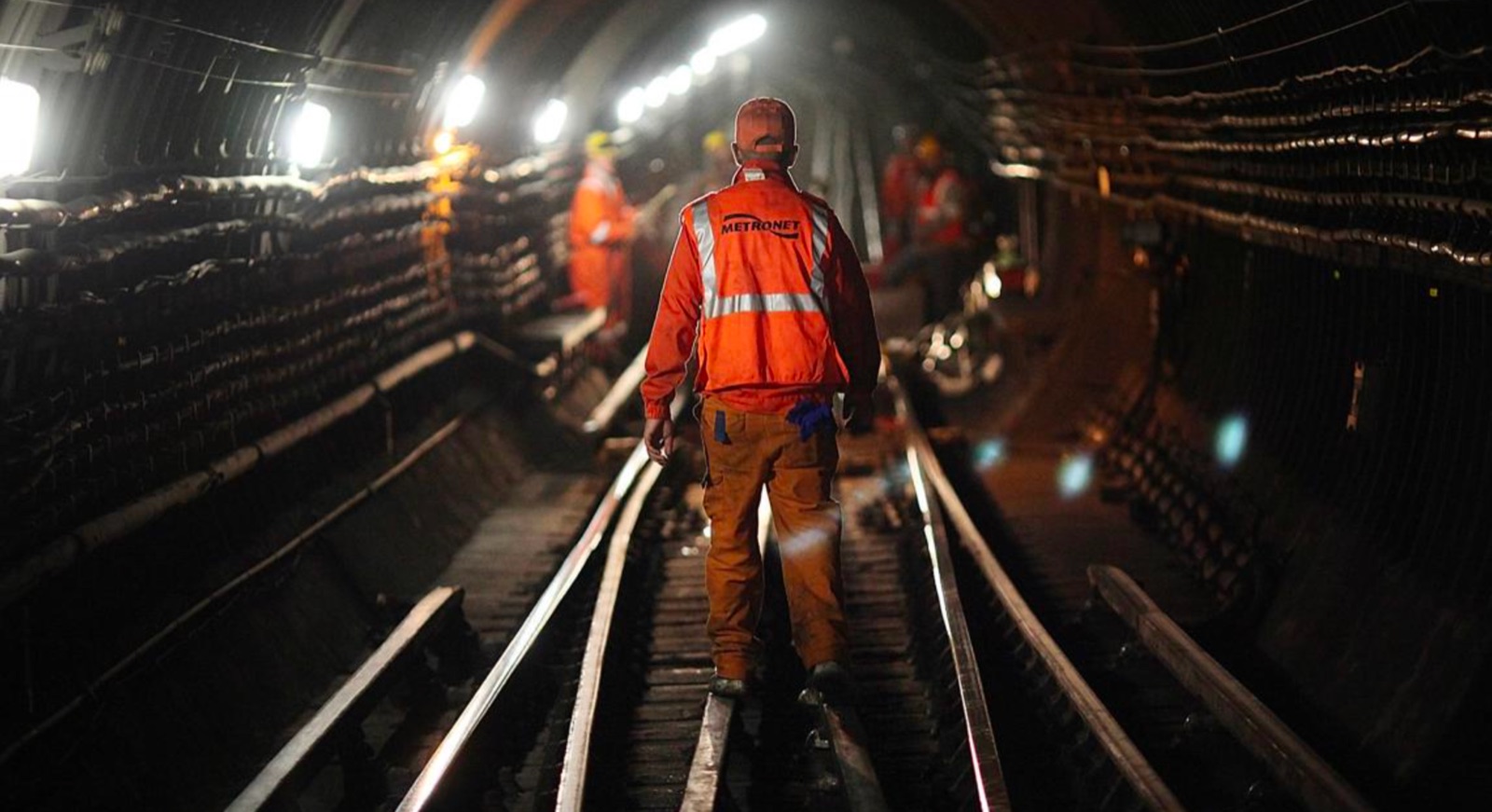
- Rail grinding and track replacement
- Escalator servicing
- Signal testing
- Tunnel inspections
- Electrical equipment checks
Benefit: Regular maintenance reduces unexpected service failures and improves passenger safety.
Predictive Maintenance
The Underground uses sensors and monitoring technologies to identify problems before breakdowns occur.
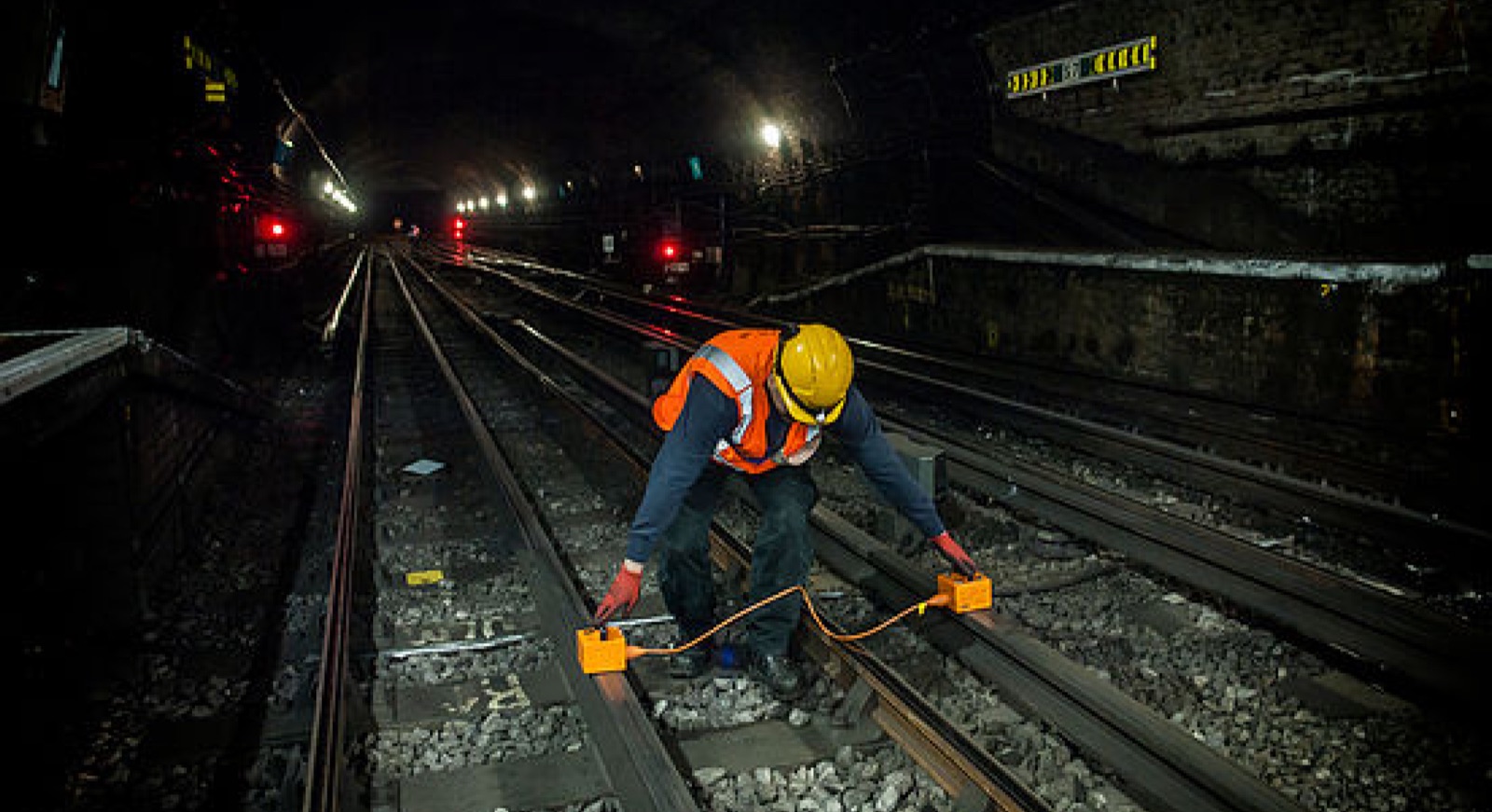
Example: Track condition monitoring systems detect:
- Rail wear
- Vibrations
- Structural stress
- Temperature changes
This allows engineers to repair components before failures affect operations.
Asset Management Systems
Digital asset management platforms help engineers track:
- Maintenance history
- Asset condition
- Inspection schedules
- Lifecycle costs
This enables data-driven decision-making and long-term infrastructure planning.
Tunnel and Structural Maintenance
Because many tunnels are extremely old, structural inspections are conducted regularly.
Key Activities:
- Water leakage control
- Concrete repair
- Corrosion treatment
- Ventilation upgrades
These activities ensure long-term structural stability.
Smart Monitoring Systems
The London Underground uses:
- CCTV inspection systems
- Thermal imaging
- Automated track inspection vehicles
- Remote monitoring sensors
These technologies improve inspection accuracy and reduce manual labor risks.
BIM and Digital Twins
New infrastructure upgrades increasingly use:
- BIM models
- Digital twins
- Real-time asset data
This helps maintenance teams visualize asset conditions and plan repairs efficiently.
Challenges Faced
Aging Infrastructure: Maintaining tunnels and systems built in the 19th century is highly complex.
Limited Maintenance Windows: Most maintenance work must occur overnight after passenger services stop.
High Passenger Demand: Millions of daily passengers mean that system failures can cause major disruptions.
Safety Requirements: Strict safety regulations require continuous inspections and compliance checks.
Outcomes and Benefits
Effective maintenance management has enabled the London Underground to:
- Maintain operational reliability
- Improve passenger safety
- Reduce unexpected failures
- Extend infrastructure lifespan
- Optimize maintenance costs
- Support sustainable urban transportation