
In construction project management, clarity and alignment are essential before the first brick is laid or the foundation is poured. One document plays a critical role in setting this direction—the project charter.
A project charter in construction establishes the project's purpose, scope, authority, and strategic alignment. It acts as both a formal authorization document and a high-level roadmap, ensuring stakeholders share a common understanding of the project's objectives.
Without a well-defined project charter, construction projects risk scope creep, budget overruns, delays, and misaligned stakeholder expectations.
What is a Project Charter?

A project charter is a formal document that authorizes a project and grants the project manager the authority to allocate resources and initiate project activities.
In construction projects, the charter serves several critical functions:
- Defines the project purpose and strategic justification
- Establishes high-level scope and deliverables
- Identifies key stakeholders and responsibilities
- Sets the initial budget and timeline
- Provides the foundation for project planning
Most importantly, the project charter evaluates whether the project should proceed at all, based on business needs and feasibility.
Key Components of a Construction Project Charter
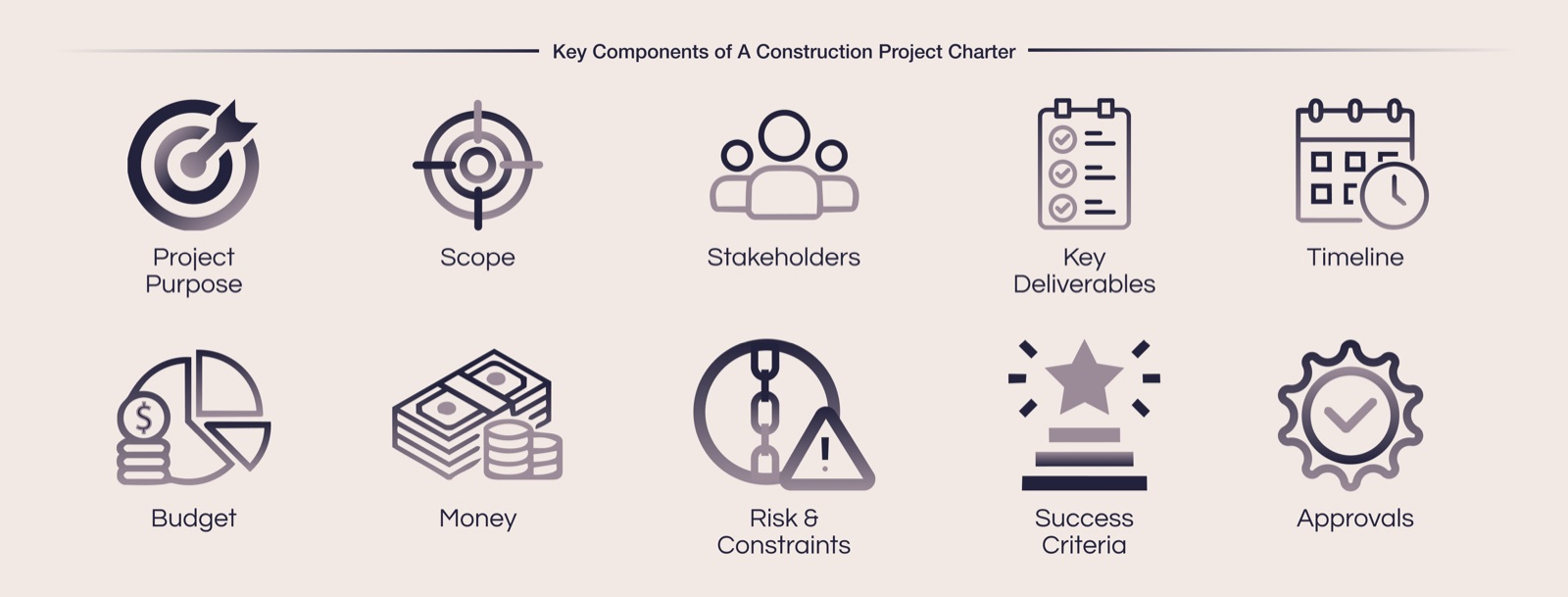
A well-structured construction project charter typically includes the following elements:
1. Project Name and Description
A concise overview of the construction project and its purpose.