Introduction
A Work Breakdown Structure (WBS) is one of the most important tools in construction project management. It helps break large and complex projects into smaller, manageable work packages that are easier to plan, schedule, cost, and monitor.
In construction, a WBS supports better planning, cost control, scheduling, procurement, reporting, resource allocation, and long-term asset management. Without a clear WBS, it becomes difficult to coordinate contractors, track progress, and manage project risks.
What Is a Work Breakdown Structure in Construction?
A Work Breakdown Structure is a hierarchical system that divides the total project scope into smaller work packages. Each package is detailed enough to:
- Assign to a team or contractor
- Estimate costs
- Develop a schedule
- Allocate resources
- Track performance and progress
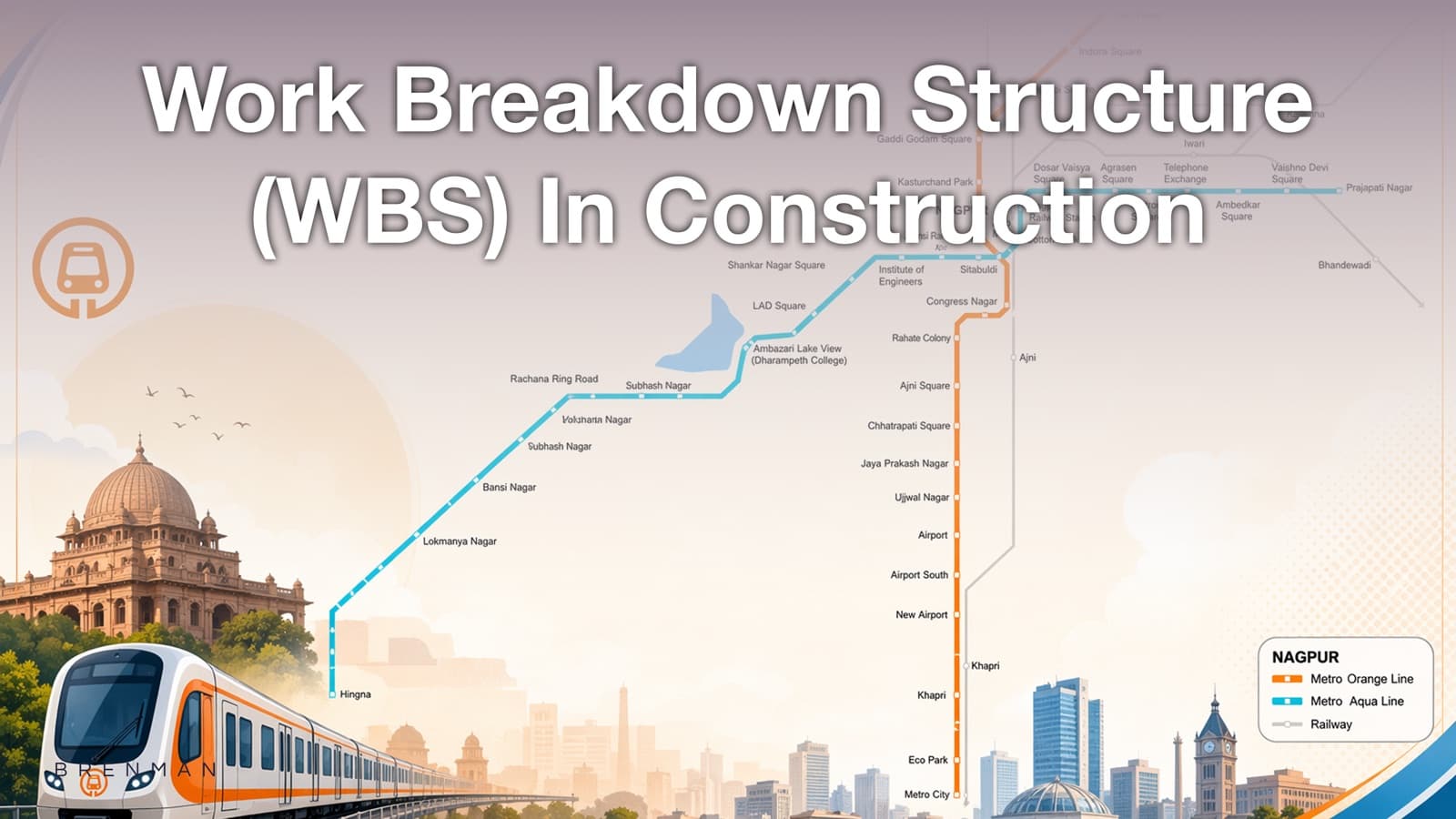
For example, in a metro rail project, the top level of the WBS may include:
- Civil works
- Stations
- Track works
- Signaling systems
- Electrical systems
- Rolling stock
- Testing and commissioning
Each of these categories can then be broken into smaller sections until the work becomes manageable.
This approach gives project managers visibility into every part of the project and ensures no scope is overlooked.
Product Breakdown Structure (PBS) and Activity Breakdown Structure (ABS)
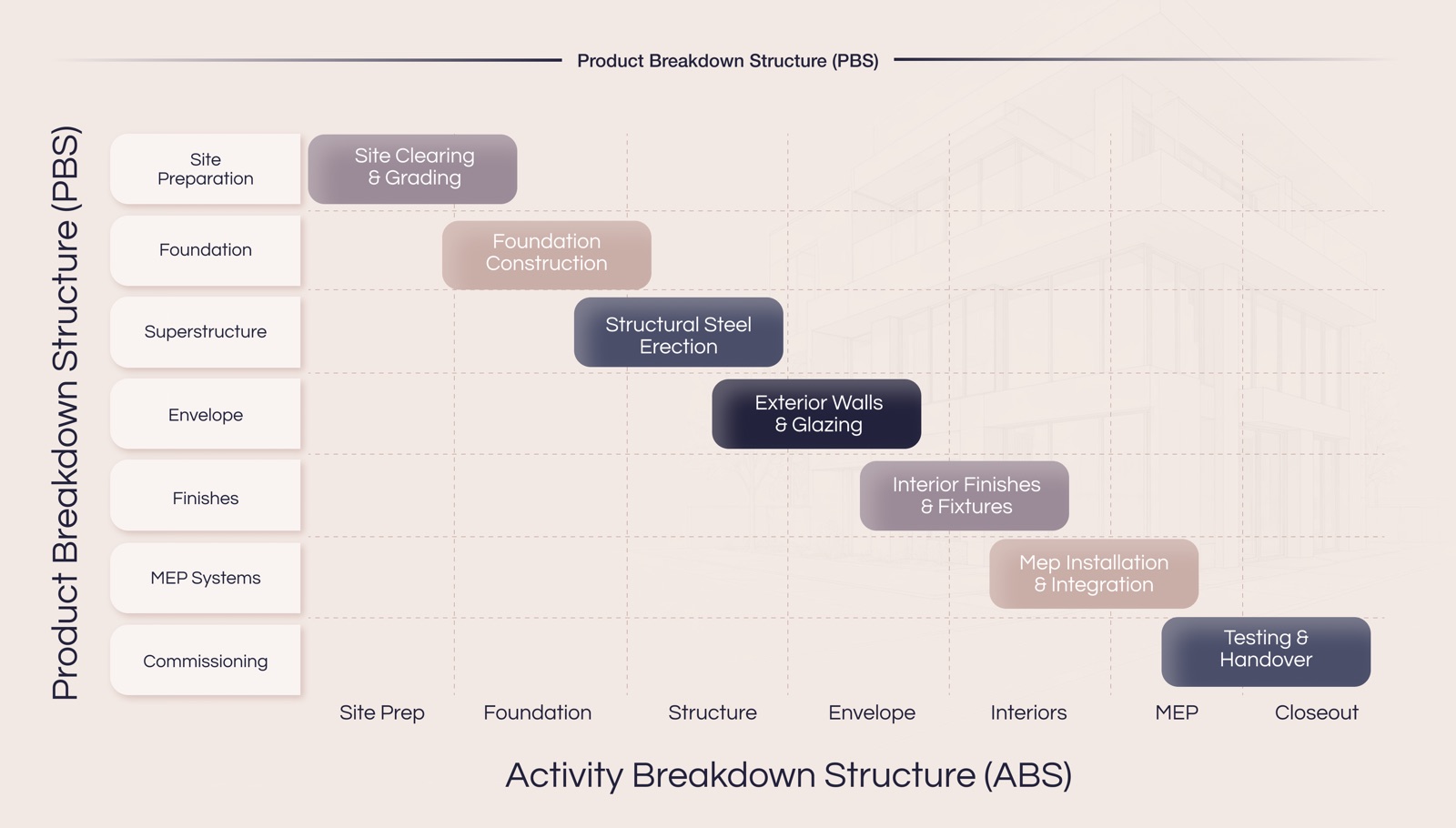
A construction WBS is often developed from two perspectives: Product Breakdown Structure (PBS) and Activity Breakdown Structure (ABS).
Product Breakdown Structure (PBS)
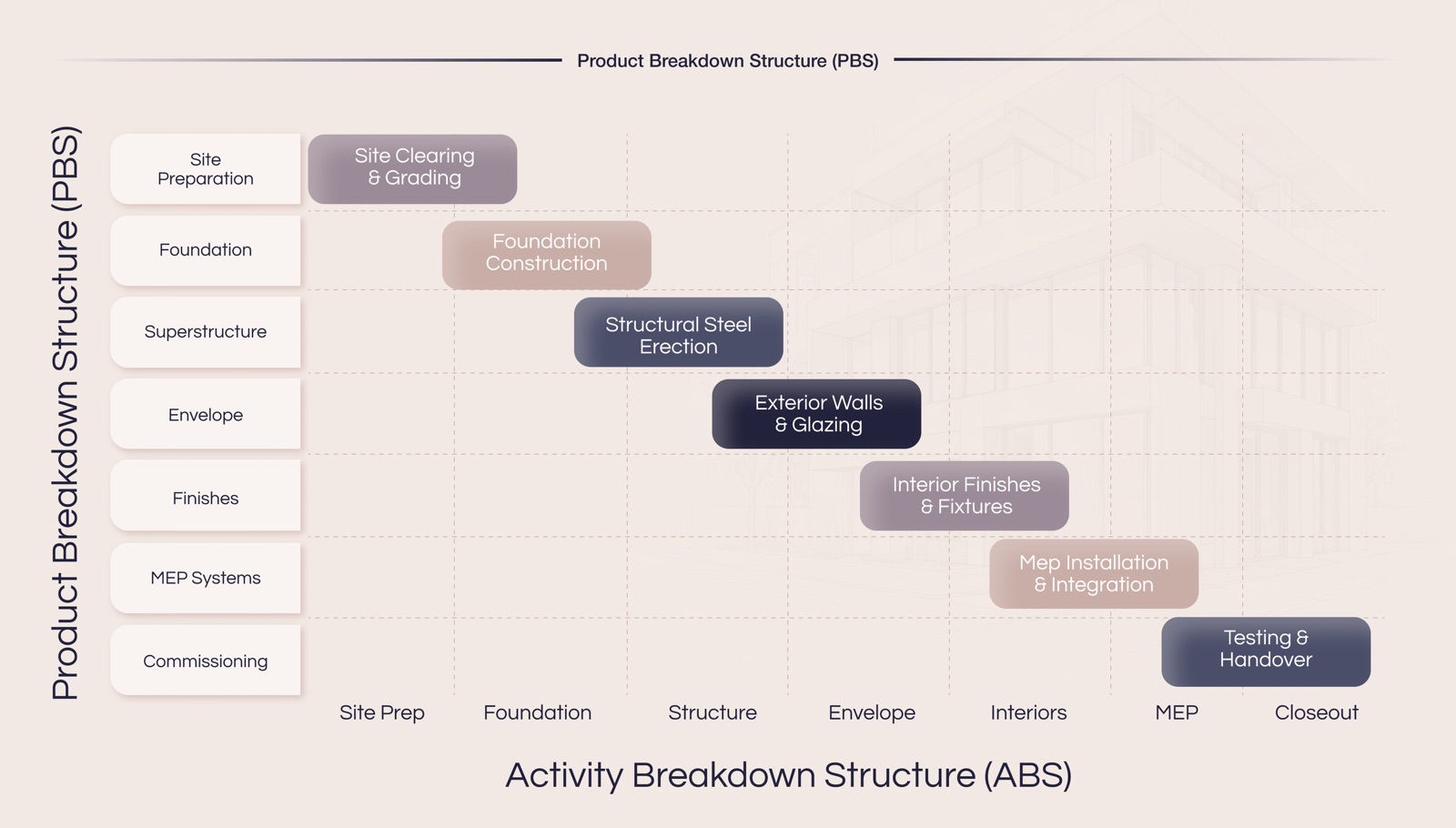
PBS focuses on the physical components of the project, such as: