Introduction
Construction delays once meant bad weather, labour shortages, or design changes. Today, they can stem from conflicts thousands of kilometres away disrupting fuel supplies, blocking material imports, or making key shipping routes unsafe.
The construction industry is no longer insulated from global events. It is operating on the frontlines of geopolitics.
A New Reality: Global Events, Local Consequences
Geopolitical instability has shifted from a distant macroeconomic concern to a direct operational risk. At the same time, strategic rivalries between major economies are fragmenting trade systems and reshaping supply chains.
For construction, the impact is immediate: cost assumptions are destabilised, timelines are uncertain, and reliability is no longer guaranteed.
The Shockwaves Through Construction
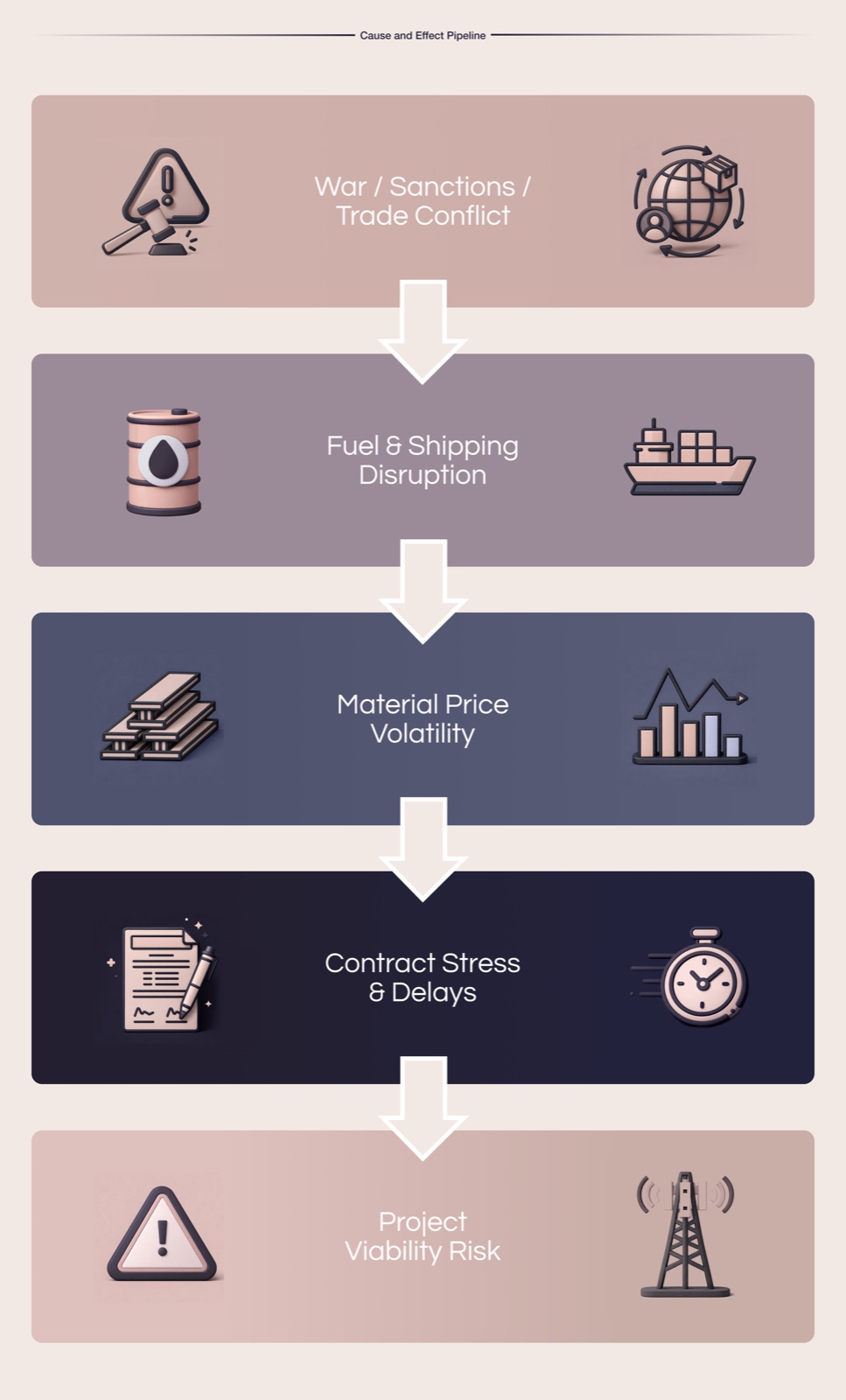
1. Fragile Supply Chains
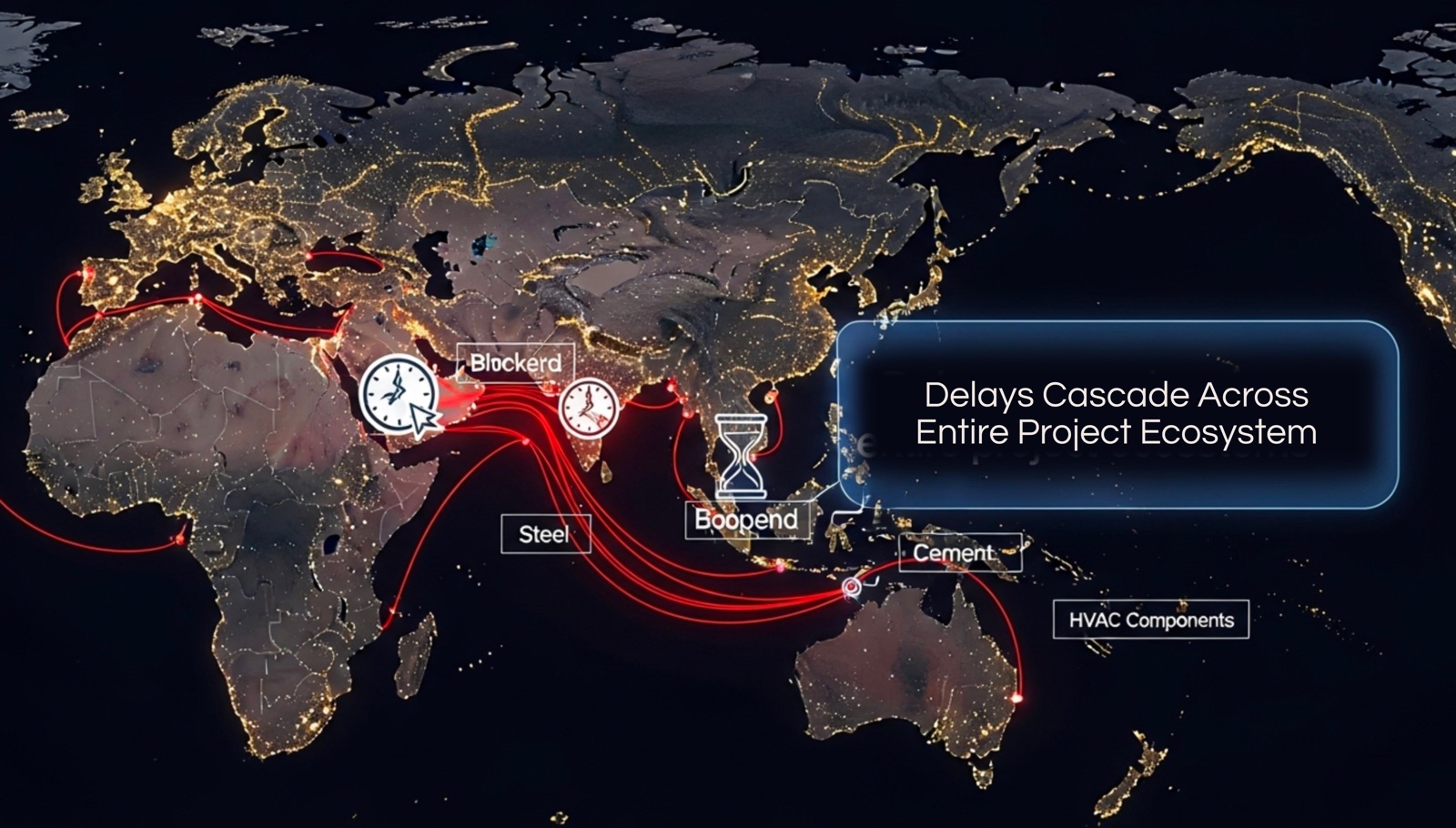
The long-standing reliance on just-in-time supply chains is breaking down. Critical materials such as steel, cement, and mechanical components are now exposed to export restrictions, sanctions, and shipping disruptions.
Delays are no longer isolated; they cascade across entire project ecosystems.
2. Energy as a Central Risk Driver
Construction is energy-intensive, from material production to on-site operations. Disruptions in oil and gas supply are driving fuel price spikes, increasing logistics costs, and escalating overall project expenses.
Energy is no longer a background variable; it is a core risk.