December 2023 came and went quietly.
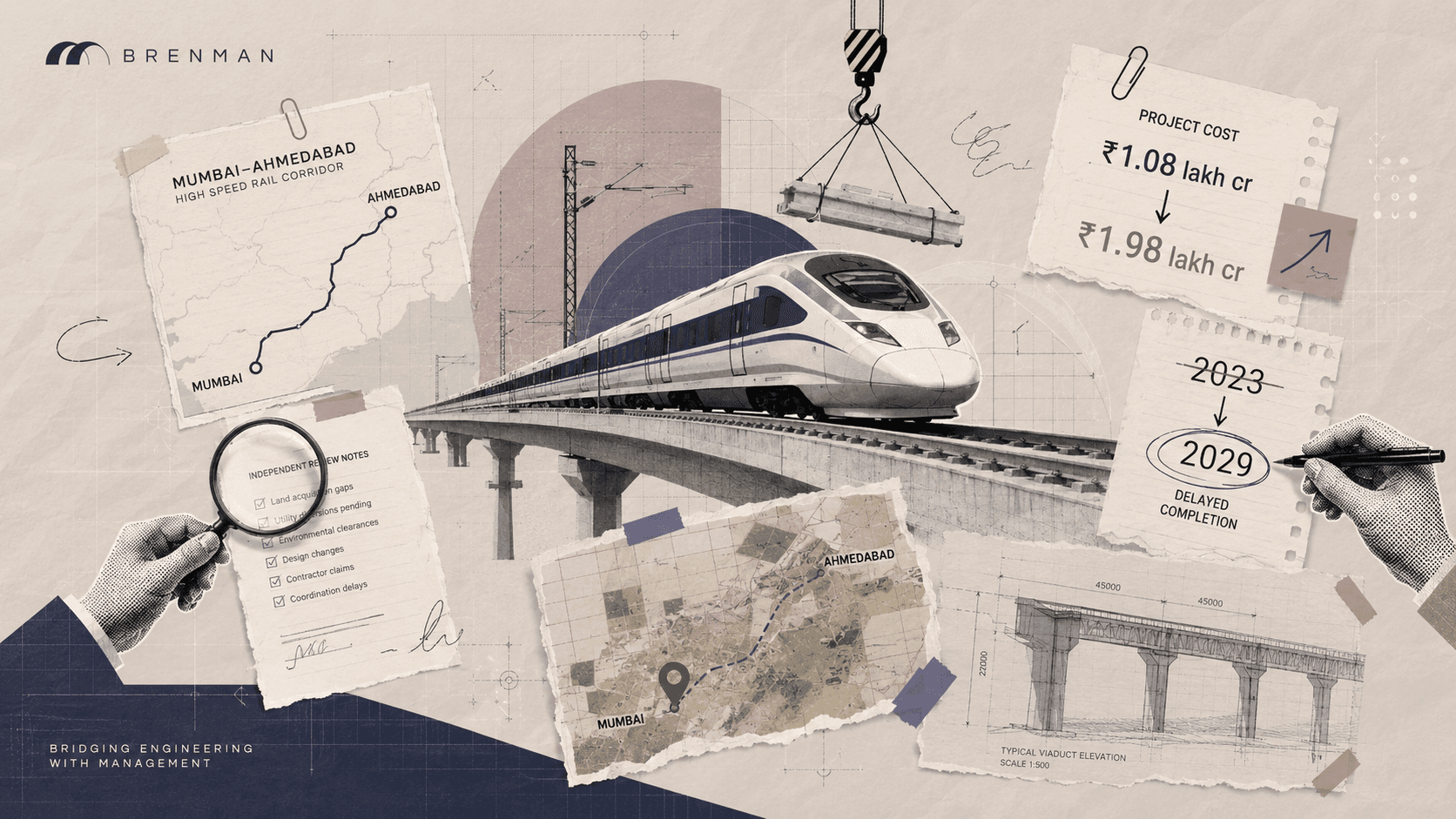
That was the month India's first bullet train was supposed to start running. The Mumbai-Ahmedabad High Speed Rail corridor was sanctioned in December 2015 at ₹1.08 lakh crore, its foundation stone laid in 2017 with two prime ministers watching. The feasibility study said December 2023. The Railways repeated the date for years, even as the land under the project refused to cooperate.
Today, the official story is this: the first stretch between Surat and Bilimora opens on August 15, 2027. The full 508 km corridor gets done by the end of 2029. And the revised cost estimate being finalised sits near ₹1.98 lakh crore, roughly 83 percent above sanction.
Six years late. Nearly a lakh crore over. And here's the uncomfortable part: nobody in the industry is surprised. Not the contractors, not the consultants, not the officials who signed the original estimate. The bullet train isn't an outlier. It's the system working exactly as designed.
This piece is about that system. How the numbers get made, why the delays are baked in before the first pile is driven, and who quietly absorbs the cost when the schedule collapses.
How big is the problem, actually?
The short answer: as of July 2026, the central government was tracking 1,775 infrastructure projects worth ₹150 crore or more. Their original combined cost was ₹33.7 lakh crore. Their revised cost is ₹37.1 lakh crore. That's a cumulative overrun of about ₹3.4 lakh crore, on central projects alone, before you count state PWDs, urban bodies, or anything below the ₹150 crore reporting threshold.
Now the longer answer, because the headline number is slipperier than it looks.
The Ministry of Statistics and Programme Implementation (MoSPI) publishes a monthly flash report on these projects. The overrun figure bounces around: ₹5.4 lakh crore in May 2026, ₹4.9 lakh crore in June, ₹3.4 lakh crore in July. Projects enter the tracker, projects exit on completion, revised costs get approved and quietly become the new baseline. The number you see is a snapshot, not a scoreboard.
What has grown without ambiguity is the size of the machine. In 2001, this report tracked 191 projects. In 2014, it tracked 727. Today it tracks close to 2,000. India is building more than it ever has, which makes the honesty of these reports matter more than it ever has.
And that's where it gets interesting. In early 2024, when MoSPI still published the detail, the numbers looked like this: of 1,821 tracked projects, 780 were delayed against their original schedules. That's roughly four in ten. Of those, 115 were running more than five years late. The average delay across the portfolio had hovered around three and a half years for most of the past decade.
Recent flash reports have gone quieter on this. They give you the cost totals and the expenditure percentage, described as "steady progress in implementation." The count of delayed projects, the thing a citizen would actually want to know, has become harder to find. We'll come back to why.
Why do infrastructure projects in India get delayed?
The short answer: because land is acquired after projects are approved, estimates are optimistic by design, and once construction starts, every problem the planning skipped comes due with interest.
Every MoSPI report carries the same paragraph of official reasons, and it has barely changed in twenty years: delay in land acquisition, delay in forest and environment clearances, delay in tie-up of project financing, delay in finalisation of detailed engineering, change in scope, delay in tendering and equipment supply, law and order problems, geological surprises, contractual issues.
Read that list carefully. Almost none of it is construction. It's everything that was supposed to happen before construction.
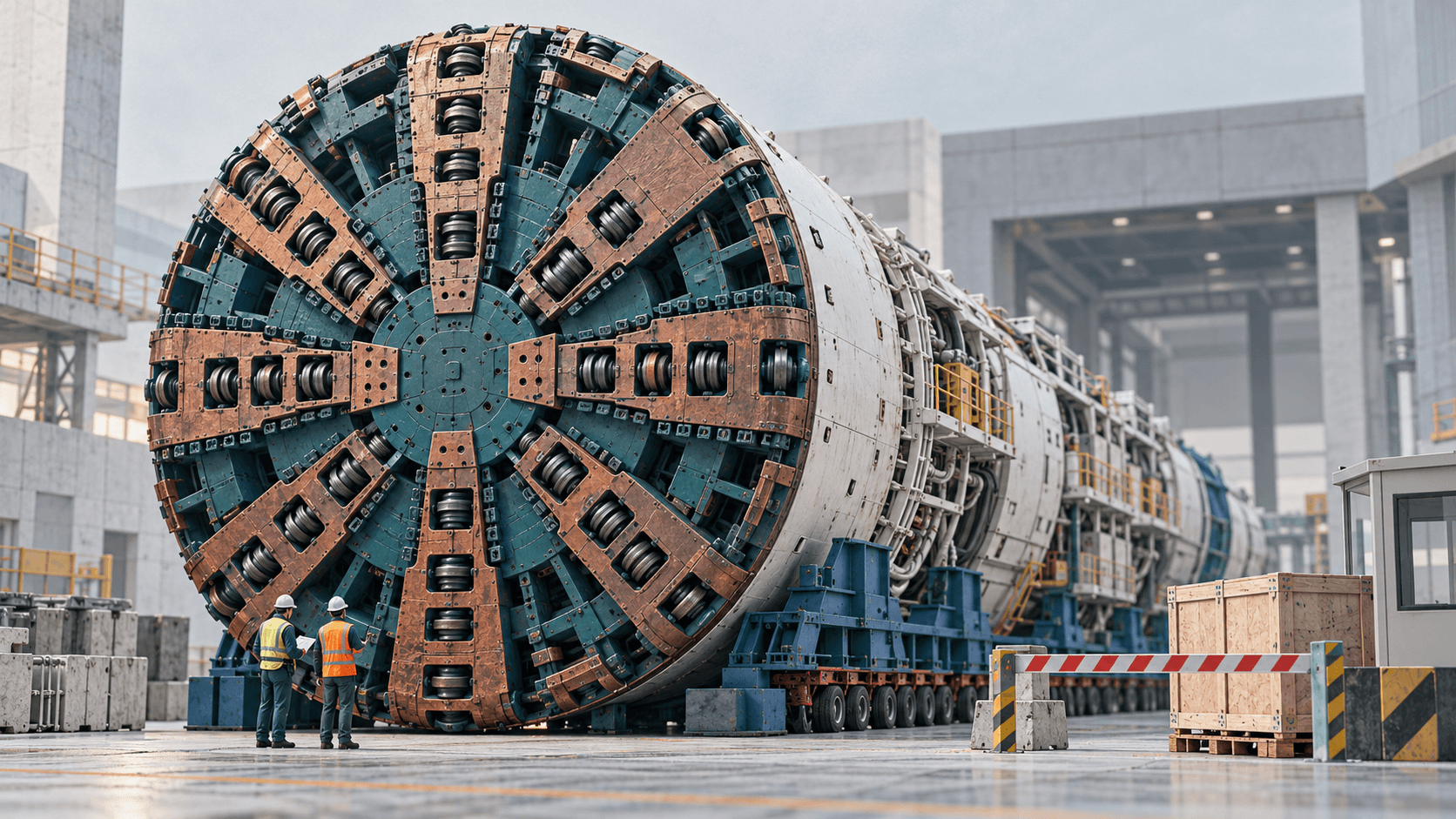
This is the core design flaw, and the bullet train is the cleanest demonstration of it. The project was sanctioned in 2015 and its foundation stone laid in 2017. In 2019, four years before the official deadline, only 45 percent of the land had been acquired. By late 2020, it was around 63 percent, with Maharashtra at just 22 percent. The December 2023 deadline stayed on the books anyway. Contractors mobilised, tunnel boring machines were ordered, a Japanese soft loan covering roughly 80 percent of the cost started ticking, and the single input the entire schedule depended on wasn't there.
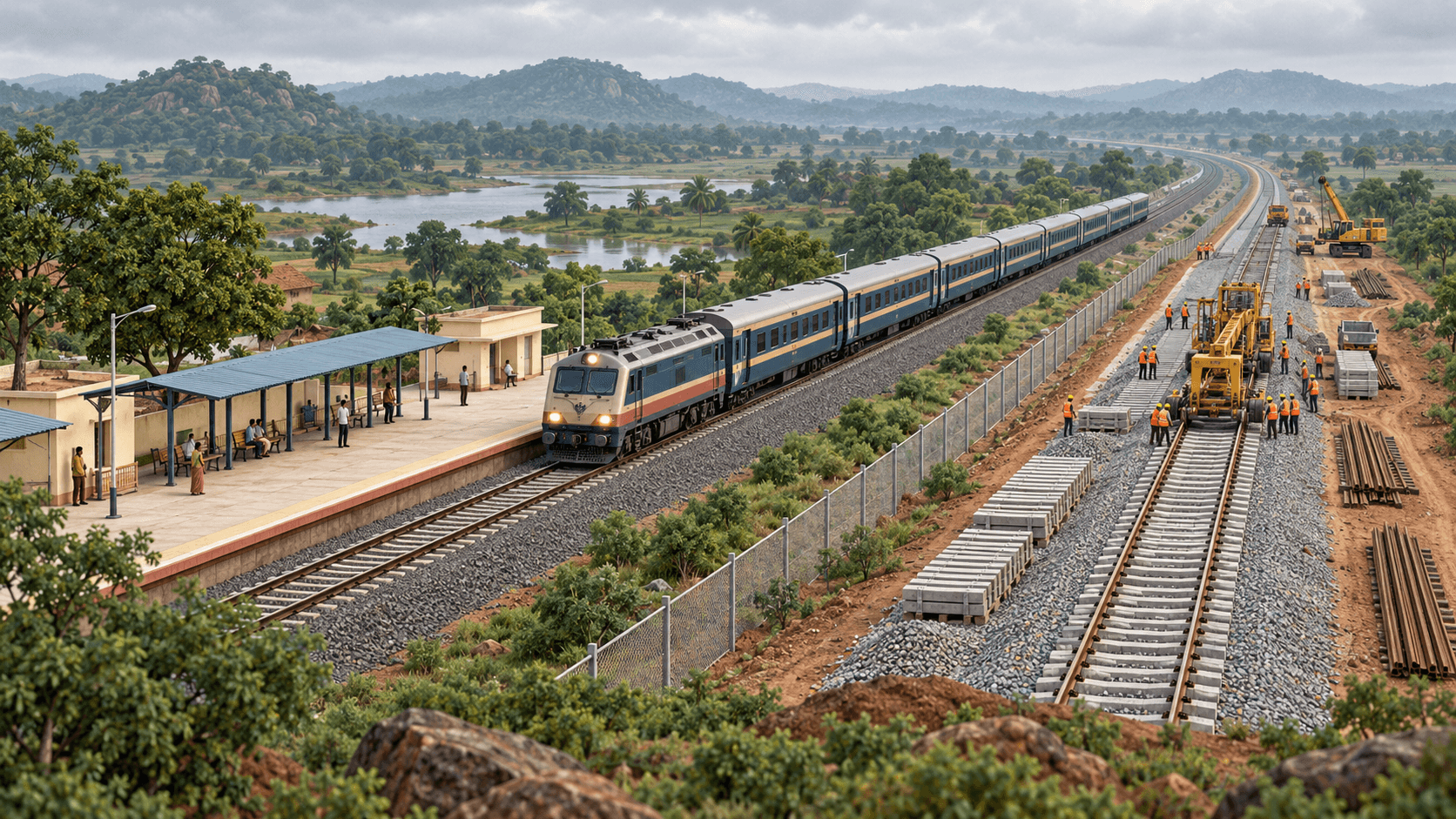
Ask anyone who has run a project site and they'll tell you what "delay in land acquisition" actually means on the ground. It means your alignment is frozen but three villages in the middle of it are in litigation. It means you build the viaduct in disconnected stretches and pay to remobilise every time a new parcel clears. It means idle cranes on hire, idle engineers on payroll, and a contractor burning working capital while the client and the district administration exchange letters.
The second layer is the estimate itself. At sanction time, everyone in the room has a reason to keep the number low. The sponsoring ministry needs cabinet approval, and a lean estimate gets approved faster. The consultant who prepared the DPR is rarely around when reality arrives. Politicians want a foundation stone before an election, not after a land survey. So the estimate assumes best-case land timelines, best-case clearances, and unit rates that will be two monsoons old by the time tenders close.
Bent Flyvbjerg, who has studied megaprojects globally, calls this strategic misrepresentation. Sites in India have a simpler phrase for it: sanction now, discover later. The overrun isn't a surprise that happens to the project. It's the gap between the number that got the project approved and the number it was always going to cost.
The third layer is what happens once the slip begins. A delayed project doesn't just cost the same amount later. Steel and cement escalate. Labour rates escalate. Interest during construction compounds, which on a borrowed-money project like the bullet train is its own quiet monster. Scope grows because a design frozen in 2015 meets codes, technology, and political preferences of 2024. Delay doesn't add cost. Delay multiplies it.
Who actually pays for the delays?
The short answer: you do, three times. Once as a taxpayer, once as a user, and once through everything that didn't get built with the money the overrun consumed.
Follow the bullet train's money. The original plan was elegant: JICA funds about 80 percent through a soft loan at near-zero interest, repayable over decades. But the roughly ₹90,000 crore escalation is not part of that elegance. The Railways' plan, per reporting from early 2026, is to cover the increase mainly through gross budgetary support. That is a technical phrase for the Union budget. Which is a technical phrase for taxpayers. The escalation caused by slow land acquisition, a sovereign responsibility, lands on the sovereign's citizens.
Then come the users. Fare and toll models are built to recover project cost. When the cost base rises 83 percent, either fares rise, ridership assumptions get more heroic, or the viability gap gets plugged with, again, public money. There is no fourth option.
The contractors pay too, in a way the trade press rarely details. On a delayed project, a contractor's claims for idle resources and prolongation sit in dispute for years. India's construction sector has tens of thousands of crores locked in arbitration against government entities, money that is working capital for an industry that runs on it. The big players price this risk into their next bid, which makes the next project more expensive. The small ones simply die. Delay on one project becomes inflation on every future project.
And the landowners, the people the "land acquisition delay" line is really about, get their own fight. In mid-2026, NHSRCL's chief project manager moved the Gujarat High Court against compensation awards made by the state's own land acquisition authority, arguing that revised valuations, in one case a near-tenfold jump, could inflate the land bill substantially. Sit with that. The project agency is litigating against the compensation process of the state sponsoring the project. Whoever wins, the schedule loses.
The last payer is invisible: opportunity cost. A lakh crore absorbed by one corridor's escalation is a lakh crore not spent on the seven other high-speed corridors on the drawing board, or the water and sewage projects that never make headlines. Overruns don't just make projects expensive. They make the pipeline behind them smaller.
Why is nobody held accountable?
The short answer: because the yardstick keeps getting replaced. When a project falls behind, the schedule is revised, and the delay is then measured against the revision. On paper, the problem shrinks. On the ground, nothing changes.
This is the quietest trick in Indian project reporting, and it's hiding in plain sight in MoSPI's own reports. For years, each report carried a version of this line: the number of delayed projects "decreases if delay is calculated on the basis of the latest schedule of completion." In January 2024, that single change of baseline turned 780 delayed projects into 583. Nearly 200 projects stopped being late, not because work accelerated, but because the definition of "on time" moved.
The bullet train will get the same treatment. Once the 2029 date and the ₹1.98 lakh crore estimate are formally approved, the project becomes, administratively speaking, on schedule and on budget. The six lost years and the ₹90,000 crore don't disappear. They just stop being anyone's problem.
Add to this the reporting gaps MoSPI itself discloses. In report after report, hundreds of projects, at times over 900, had not reported commissioning dates at all. You cannot be counted as delayed if you never committed to a date. And as observers like The Wire have noted, the recent flash reports have shifted toward aggregate cost figures and expenditure percentages, softening precisely the delay metrics that assigned discomfort.
None of this involves anyone lying. That's what makes it durable. Every individual step, the revised estimate, the re-baselined schedule, the summary reporting, is procedurally correct. The system doesn't hide failure. It reclassifies it.
Can this be fixed?
Some of it, yes. And the fixes are not exotic, because other countries and even some Indian agencies already use them.
Acquire before you award. Projects where 80 to 90 percent of land is secured before contracts are signed consistently outperform the sanction-first model. NHAI has moved partially in this direction for highways. It should be the rule, not the aspiration, for every linear project.
Report against the original baseline, forever. Revised schedules are legitimate management tools. But public reporting should always show slippage against the sanctioned date and cost, in one column, for every project, every month. The data exists. Publishing it is a choice.
Price honesty into approvals. Independent review of DPR estimates, with reference-class comparisons against completed projects, would strip out some of the strategic optimism. If your metro DPR assumes land in 18 months and the last five metros took four years, the estimate should say four years.
Unclog the disputes. Faster, binding dispute resolution on government contracts would release locked contractor capital and stop delay on one project from repricing the entire market.
None of this is technically hard. All of it is institutionally hard, because the current arrangement suits everyone at the table in the short run. The optimistic estimate gets the ribbon cut. The revised baseline makes the delay vanish. The budget absorbs the difference.
The bullet train will be a genuine engineering achievement when it runs, and 357 km of completed viaduct says it will. But the honest ledger of the project reads: promised in 2015 at ₹1.08 lakh crore for 2023, delivered around 2029 at close to ₹2 lakh crore. Until India starts measuring its projects against what was promised rather than what was revised, that ledger will keep repeating, corridor after corridor, at ₹3.4 lakh crore and counting.
Someone always pays. It's just never the people who wrote the first number.
Frequently asked questions
How many infrastructure projects are delayed in India? As of the last detailed disclosures in 2024, roughly 40 percent of centrally monitored projects above ₹150 crore were running behind their original schedules, with over 100 projects delayed by more than five years. Recent MoSPI flash reports no longer publish clear delay counts.
What is the total cost overrun on Indian infrastructure projects? MoSPI's July 2026 flash report puts the cumulative cost overrun at about ₹3.4 lakh crore across 1,775 central sector projects, against an original combined cost of ₹33.7 lakh crore. The figure varies month to month as projects enter and exit the tracker.
What is the biggest reason for project delays in India? Land acquisition. Most large Indian projects are sanctioned and awarded before land is fully acquired, so construction schedules depend on an input the project doesn't control. Clearances, financing tie-ups, and design changes follow close behind.
How delayed is the Mumbai-Ahmedabad bullet train? The corridor was sanctioned in December 2015 with a December 2023 completion target. The first section (Surat to Bilimora) is now targeted for August 2027 and the full corridor for end-2029, roughly six years late, with costs revised from ₹1.08 lakh crore to about ₹1.98 lakh crore.
Who bears the cost of infrastructure overruns? Ultimately the public: taxpayers through budgetary support that covers escalations, users through higher fares and tolls, and the wider economy through contractor capital locked in disputes and projects that never get funded because the money went to overruns.
Sources: MoSPI Flash Reports (2024-2026), Ministry of Railways and NHSRCL disclosures, PRAGATI briefing statements (January 2026), reporting by Business Standard, Deccan Herald, The Economic Times, and The Wire.